CapMetro officials say they wanted to start providing connectivity even though buses won’t run as frequently as planned.


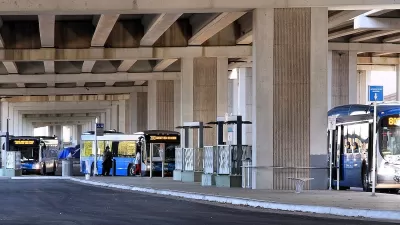
After a two-year delay, Austin’s CapMetro launched limited service on two new Rapid bus routes last weekend, with buses running every 20 to 30 minutes.
As Nathan Bernier explains in Austin Monitor, “CapMetro views this ‘introductory service’ as a way to offer increased connectivity in areas historically deprived of transit while working to get the full service up and running.”
The service will start and end at temporary stations until the adjacent park-and-ride lots are ready. CapMetro says full service, which will see buses running every 10 minutes, should begin in 12 to 18 months.
While the agency originally planned to use electric buses, a lack of charging infrastructure held back that part of the project, which now operates with diesel buses. “CapMetro’s planned switch to a Tap-to-Pay fare system, originally scheduled for March, is also facing delays. The agency says getting certification to conduct those transactions wirelessly is taking longer than expected, and could push back the rollout by one to two months or more.”
Read the full story: Austin’s new CapMetro Rapid lines debut with buses every 20 minutes


Austin Tests Self-Driving Bus
Autonomous buses could improve bus yard operations for electric fleets, according to CapMetro.

Austin’s Project Connect Funding Safe for 2025
The light rail project is moving ahead with plans to finalize its environmental impact review by late 2025.

Can Better Transit Get Austinites Out of Cars?
The city's ambitious transit plan will bring light rail and bus connections to more areas of the city.

Planetizen Federal Action Tracker
A weekly monitor of how Trump’s orders and actions are impacting planners and planning in America.

California plans to bury El Niño’s downpour
If the state plays its cards right, it may be able to store a billion acre-feet of El Niño’s water in aquifers.

Desperate measures: Advocates weigh draining Lake Powell to fill Colorado River
Draining the reservoir could reduce evaporation losses by a couple hundred thousand acre-feet.

40 years after approval, Chicago breaks ground on new park
The park honors Jean Baptiste Point du Sable, the city’s first permanent non-native settler.

‘Hoodwinked:’ New Mexico bill aimed at microgrids paves way for data center development
In an interview with High Country News, Padilla said the legislation “ignited” New Mexico's economy.

California’s ‘unrecognizable’ water plan may go down the drain
After four years of regulatory processes, water agencies say the plan to overhaul how cities and farms take water from the Sacramento-San Joaquin Delta has changed dramatically.

FREE Course: Walkable City 1: Why Walkability?
After describing his path towards focusing on walkability as the essence of good planning, Jeff Speck marches through his five principal reasons for making more walkable places.
Reinventing Malls: Planning Alchemy—Turning Gray Fields Into Gold
The course focuses on the opportunities and imperatives that shape reinvention of mall sites.


City of Rosemead
Rutgers University, Edward J. Bloustein School of Planning and Public Policy
One Hundred Miles
Hunter College, City University of New York (CUNY)
The Architects Foundation
University of Cincinnati Online
City of Cambridge
Montrose County
The Pocatello Development Authority