A new study ranks California State University campuses among the top institutions in California for economic mobility, demonstrating their success in providing affordable education that significantly boosts students’ long-term earnings.


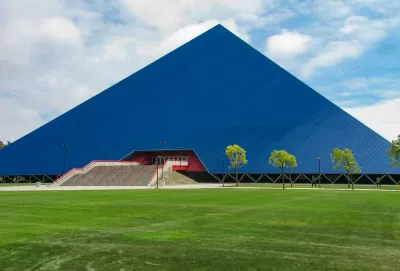
A new study, the California Mobility Index (CMI), ranks Cal State L.A. as the top university in California for boosting economic mobility among low- and moderate-income students. The study, created by the HEA Group and College Futures Foundation, evaluates how effectively four-year colleges improve students' socioeconomic standing based on educational costs and post-graduation earnings. As reported by Daniel Miller, nine of the top ten schools in the ranking are California State University (CSU) campuses, reinforcing the system’s role in providing affordable, high-quality education. The experiences of students like Marco Florez, whose mother’s CSU education transformed their family's trajectory, highlight the CSU’s impact in making higher education a vehicle for upward mobility.
The CMI’s methodology focuses on affordability and return on investment, showing that top CSU schools enable students to recover their educational costs quickly. At Cal State L.A., for instance, students from low-income backgrounds typically spend just over $18,000 on a four-year degree but earn a median of $59,000 a decade after enrolling. The study contrasts CSU’s accessibility with the higher costs of private institutions, which often take longer for students to financially justify. CSU’s strong placement in the rankings signals the system’s commitment to economic opportunity, with leaders like Cal State L.A. President Berenecea Johnson Eanes emphasizing the university's intentional focus on social mobility and community impact.
Despite the CSU system’s success in elevating students' economic standing, it faces financial challenges, including a proposed $375-million funding cut in the state budget. Advocates argue that continued investment in CSU is critical for sustaining its role as a leading engine of economic mobility. The findings of the CMI challenge traditional college rankings, which often prioritize exclusivity and prestige over affordability and long-term financial benefits. By centering on student outcomes, the CMI underscores the importance of institutions like CSU that provide accessible education while significantly improving graduates’ economic prospects.
Read the full story: When it comes to elevating livelihoods, a CSU degree is tops in California, study says

General or specialized training: Is US planning education fit for the future?
For certain demographics, a more flexible pedagogy may be necessary.

Evidence-based planning in a time of information overload
The field of academic publishing has become complex and crowded. What does it mean for urban planners?
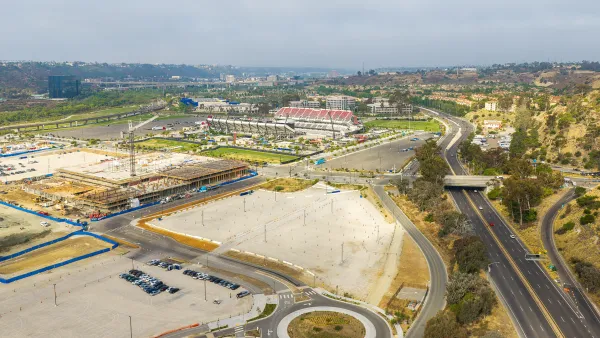
San Diego State intergenerational housing project will bring 250 homes for older adults to campus
The project is part of the university's Mission Valley campus that includes 4,600 housing units.

Desperate measures: Advocates weigh draining Lake Powell to fill Colorado River
Draining the reservoir could reduce evaporation losses by a couple hundred thousand acre-feet.

Eastern Nebraska is running out of electricity
Data centers and electrification are straining eastern Nebraska’s grid, throttling economic development.

Malls are becoming the midtowns of the future
Mall and office park redevelopments are a generational opportunity to create new nodes of urbanity.

NYC breaks ground on anti-flooding infrastructure project
New York City's new system will reduce stormwater flows to local sewers by 90%.

One Kentucky town’s secret to affordable housing
The Smoketown Community Land Trust has already built seven affordable homes for community members.

Houston gains petal-shaped cooling infrastructure to make streets more ‘delightful’
The city has installed the pavilions along 15 blocks in Houston.

FREE Course: Walkable City 1: Why Walkability?
After describing his path towards focusing on walkability as the essence of good planning, Jeff Speck marches through his five principal reasons for making more walkable places.
Reinventing Malls: Planning Alchemy—Turning Gray Fields Into Gold
The course focuses on the opportunities and imperatives that shape reinvention of mall sites.

City of Rosemead
Rutgers University, Edward J. Bloustein School of Planning and Public Policy
One Hundred Miles
University of Michigan School for Environment and Sustainability (SEAS)
Hunter College, City University of New York (CUNY)
The Architects Foundation
City of Cambridge
Montrose County
The Pocatello Development Authority