Low-income families living in high-sprawl neighborhoods are limited in their access to education, jobs, and other amenities, often trapping them in a cycle of poverty.


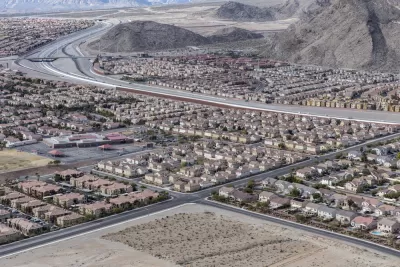
New research from the University of Utah reveals that sprawl can have a measurable, negative economic impact on low-income American households.
According to a piece in Science Blog, “A series of studies from the University of Utah has found that children from low-income families who grow up in areas characterized by urban sprawl face significantly reduced earning potential compared to those raised in denser neighborhoods. The research provides the most detailed evidence yet of how city planning decisions could be reinforcing cycles of poverty across generations.”
The researchers used data from more than 71,000 U.S. census tracts, defining sprawl as “urban environments with poor pedestrian access, heavy car dependency, and sharp separation between residential, commercial and business areas.” According to the study, the annual expected income of a person growing up in a very low sprawl tract is, on average, roughly 10 percent higher than that of people brought up in high-sprawl neighborhoods.
Perhaps most striking is how sprawl affects families differently based on income level. While children from low-income families see reduced earning potential in sprawling areas, the opposite appears true for wealthy families.
The researchers note that while their study does link sprawl and lowered social and economic mobility, the causation is not entirely clear. However, “local city planners and officials need to consider the broader social implications and choose zoning patterns and regulations that are best for all residents, particularly trying to reduce sprawl and increase infill development may have a long-lasting positive impact on children’s economic possibilities.”
FULL STORY: Urban Sprawl May Trap Low-Income Families in Poverty Cycle

Zoning for Good
A new book highlights the power of zoning to change communities for the better.

Cleveland: The Nation’s Most Equitably Walkable City
A new study assesses which cities have the broadest access to walkable neighborhoods.
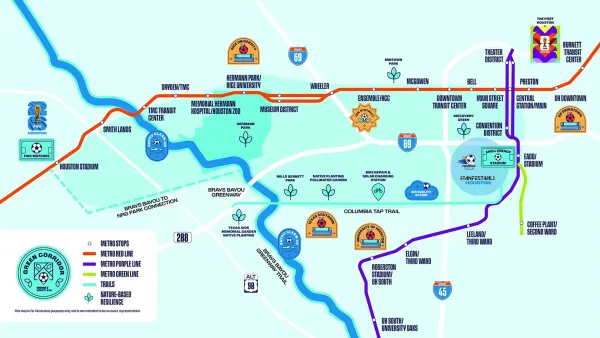
Houston improved walkability ahead of the World Cup. Will it last?
Some mobility advocates say the city's 'Green Corridor' amounts to 'lipstick on a pig' rather than a true commitment to better transit and walking infrastructure.

The state-sanctioned urbicide of Austin
People don’t kill cities. Freeways do.

US to reduce Colorado River water deliveries to Mexico
A new Colorado Treaty amendment reduces Mexico’s Colorado River water allocation by 250,000 acre feet.

New Jersey’s second-largest city bans standalone data centers
Jersey City will continue to allow co-location facilities, such as those meant for research institutions that store their own data.

Amtrak not solely to blame for New Jersey commuter rail's unreliability, report finds
A new study from the Garden State Initiative found that NJ Transit’s budget grew 20% across a 4 year period, but reliability declined significantly over the same period.

EPA erases limits on planet-warming pollution from power plants
Under Monday’s plan, power plants would still have some limits on how much mercury, arsenic and other contaminants they can emit.

Phoenix announces new on-demand transit service, more frequent RAPID buses
Both new services will launch in October, and are part of Phoenix's Project Effective Access Solutions for Easing Congestion.

FREE Course: Walkable City 1: Why Walkability?
After describing his path towards focusing on walkability as the essence of good planning, Jeff Speck marches through his five principal reasons for making more walkable places.
Reinventing Malls: Planning Alchemy—Turning Gray Fields Into Gold
The course focuses on the opportunities and imperatives that shape reinvention of mall sites.

Eagle County Government
Harvard University Graduate School of Design
Nashville Planning Department
The Architects Foundation
University of Cincinnati Online
The Pocatello Development Authority
The Urban Renewal Agency of the City of Pocatello
Journal of the American Planning Association