A new rule aims to clarify accessibility requirements to help state and local DOTs upgrade their facilities more quickly to meet ADA standards.


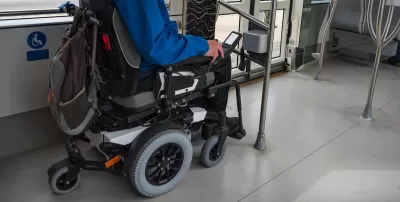
The U.S. Department of Transportation has issued finalized guidelines for accessibility on public transit, reports Dan Zukowski in Smart Cities Dive.
According to the article, “The rule applies only to new or rebuilt public transit stops and shelters in the public right-of-way, including boarding areas, pedestrian access paths, fare vending machines and signage.”
The rule aims to create a set of uniform guidelines to help state and local DOTs understand accessibility needs and how to implement changes. “The 2021 infrastructure law made $1.75 billion available to state and local governments to help fund projects that repair, modify or retrofit public transportation rail stations for accessibility. In addition, DOT recently worked with Amtrak to increase accessibility at some of its train stations.”
Recently, USDOT has also issued recommendations for making electric vehicle charging stations accessible and improving accessibility on airplanes.
Read the full story: US DOT issues final rule on accessibility standards for transit riders
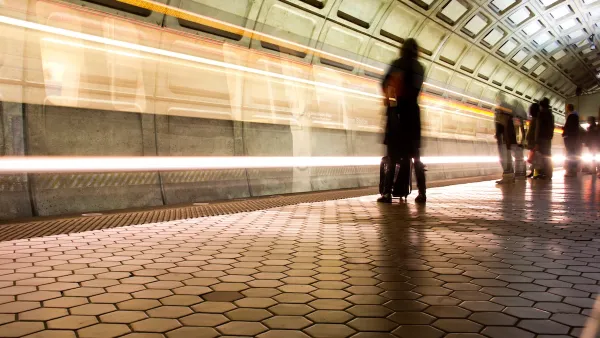
Mobile App Makes DC Transit Easy to Navigate for Visually Impaired Riders
The app gives step-by-step directions and audio and visual cues accessible from anywhere for thousands of bus stops and rail stations.
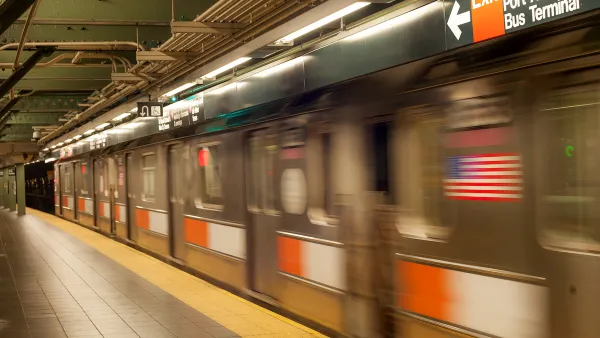
Report: NYC Transit Accessibility Depends on Congestion Pricing Revenue
The ability of the MTA to complete its accessibility upgrades relies on funding from the upcoming congestion pricing program.
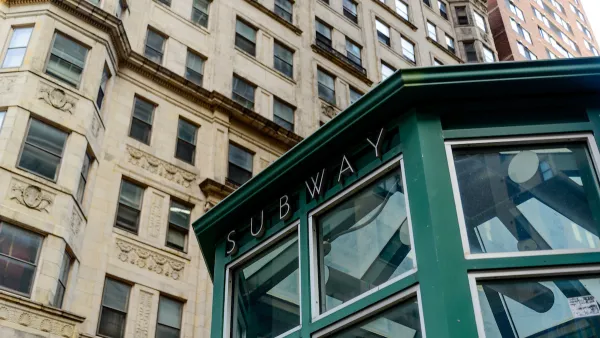
FTA Announces Accessibility Funding for ‘Legacy Stations’
The 2024 budget includes close to $350 million for accessibility improvements at transit stations.

Planetizen Federal Action Tracker
A weekly monitor of how Trump’s orders and actions are impacting planners and planning in America.

California plans to bury El Niño’s downpour
If the state plays its cards right, it may be able to store a billion acre-feet of El Niño’s water in aquifers.

Desperate measures: Advocates weigh draining Lake Powell to fill Colorado River
Draining the reservoir could reduce evaporation losses by a couple hundred thousand acre-feet.

Housing is the top priority of Seattle’s sole new councilmember
Jenks campaigned on building 1,000 new units of affordable housing.

New tax cuts may slash $1.5 billion in funding for Miami transit, public parks
Amendment 3 will save Miami-Dade homeowners $2,700 in 2028.

Arizona, Wisconsin, Pennsylvania hope to finally advance climate goals post-midterms
The three states have spent years under Republican or divided control.

FREE Course: Walkable City 1: Why Walkability?
After describing his path towards focusing on walkability as the essence of good planning, Jeff Speck marches through his five principal reasons for making more walkable places.
Reinventing Malls: Planning Alchemy—Turning Gray Fields Into Gold
The course focuses on the opportunities and imperatives that shape reinvention of mall sites.

City of Rosemead
Rutgers University, Edward J. Bloustein School of Planning and Public Policy
One Hundred Miles
University of Michigan School for Environment and Sustainability (SEAS)
Hunter College, City University of New York (CUNY)
The Architects Foundation
City of Cambridge
Montrose County
The Pocatello Development Authority