The manufacturer of the electric mail trucks ordered by the Postal Service is plagued by problems that are slowing production to around one truck per day.


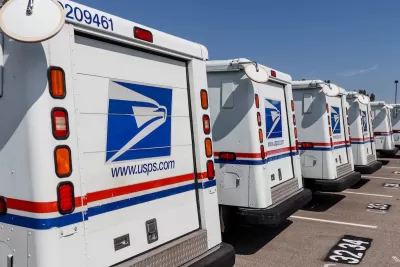
The Biden administration’s plan to electrify the U.S. Postal Service truck fleet is behind schedule as the manufacturer lags in delivering vehicles, reports Jacob Bogage for The Washington Post.
“The Postal Service is slated to purchase 60,000 “Next Generation Delivery Vehicles,” or NGDVs — mostly electric — from defense contractor Oshkosh, which has a long history of producing military and heavy industrial vehicles, but not postal trucks,” Bogage explains. The government has, as of November, only received 93 trucks, far short of the 3,000 they expected to date.
According to sources, the company is struggling to calibrate air bags, and the vehicles suffered significant water leaks in testing. Oshkosh is only producing one truck per day. “The wide-ranging production problems have not been previously reported and were not mentioned in an inspector general audit published in October.”
To avoid losing funding for the project under the next administration, the Postal Service could switch to another contractor: USPS already uses over 1,000 Ford eTransit vans for deliveries.
Read the full story: The Postal Service’s electric mail trucks are way behind schedule
Postal Service Commits to Electrifying Half its New Fleet
In the wake of condemnation from environmental groups, the USPS revised its plan to replace its gas-powered fleet of trucks.

Companies Eyeing EV Charging as Next Big Opportunity
More electric vehicles on the road will mean more demand for charging stations where drivers can power up away from home.
USPS Says It Needs More Money To Electrify Fleet
The agency claims the federal government isn't providing enough funding to switch more of its delivery trucks to electric vehicles.

Planetizen Federal Action Tracker
A weekly monitor of how Trump’s orders and actions are impacting planners and planning in America.

Washington state to charge fee to drivers with fuel-efficient cars
Revenue from the fee will go towards supporting the state’s highways.

Trump to blast ‘hydrocarbon highway’ through ‘world’s longest art gallery’
Environmental and historic preservation groups are suing to stop the project.

A data center developer is going back on its promises to nearby residents
Data center developer HostDime originally promised free at-home Wi-Fi to residents of Eatonville, Florida.

Trump administration takes another swing at Solar for All
Since the Environmental Protection Agency announced its intent to end Solar for All in August 2025, two federal judges have ruled in favor of protecting it.

The MTA wants to entice international bus manufacturers to set up shop in America
The MTA hopes to create more competition for better bus options while still "buying American."

FREE Course: Walkable City 1: Why Walkability?
After describing his path towards focusing on walkability as the essence of good planning, Jeff Speck marches through his five principal reasons for making more walkable places.
Reinventing Malls: Planning Alchemy—Turning Gray Fields Into Gold
The course focuses on the opportunities and imperatives that shape reinvention of mall sites.

City of Charlotte
City of Rosemead
Rutgers University, Edward J. Bloustein School of Planning and Public Policy
University of Michigan School for Environment and Sustainability (SEAS)
Hunter College, City University of New York (CUNY)
The Architects Foundation
University District Partnership