The plan is the result of a lawsuit brought by residents who say the city has failed to maintain safe, accessible sidewalks and streets for people with disabilities.


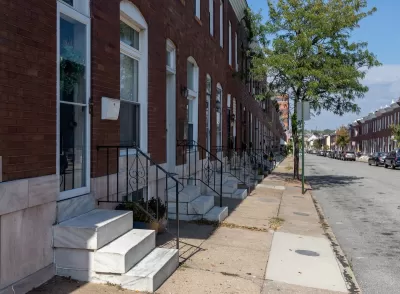
Baltimore will spend at least $44 million on accessibility upgrades for city sidewalks following a lawsuit by three residents.
As Mark Reutter explains in Baltimore Brew, “Under the agreement, which will go before the BOE for approval on November 20, the city will allocate at least $8 million in state Highway User Revenues to install and upgrade curb ramps and walkways to ADA standards in fiscal 2025, followed by a minimum of $12 million annually between 2026 and 2028.” Bringing all of the city’s sidewalks and streets in compliance with ADA would cost $657 million in 2019 dollars, based on a study commissioned by the Department of Transportation.
A 2019 study found that just over 1 percent of Baltimore curb ramps were ADA-compliant, and the city had 3,000 miles of non-compliant sidewalks. The city has pledged to install 533 curb ramps by June 30, 2025 and fix or install more than 2,000 more in the next three years.
According to Reutter, “The Scott administration further promises to appoint an ADA coordinator to implement a sidewalk inspection program, establish a maintenance program to clear vegetation and clutter on sidewalks ‘on an annual basis’ and communicate with the public about the importance of accessibility on public rights of way.”
FULL STORY: Baltimore pledges to spend $44 million on ADA-compliant ramps and sidewalks

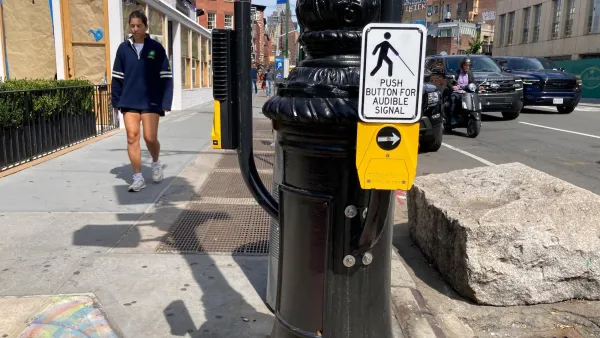
90% of NYC Intersections Lack Audible Crossing Signals for Blind Pedestrians
People with vision impairments rely on a complex network of tactile and audible signals to navigate cities.
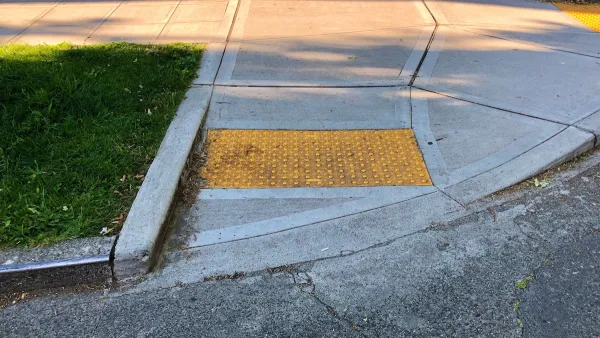
Baltimore Ordered to Improve Sidewalk Accessibility
The city is one of many to face lawsuits for failing to comply with the Americans with Disabilities Act.
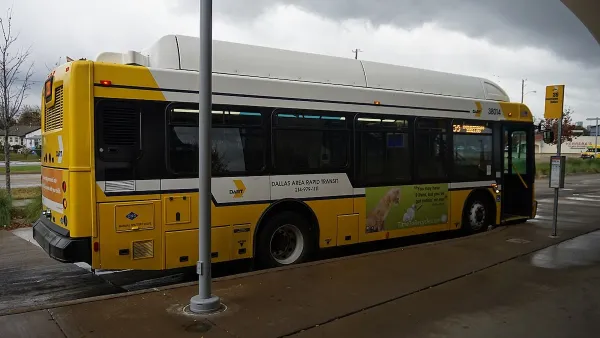
Dallas to Make Accessibility Improvements Near Bus Stops
The city approved over $30 million in contracts to fix broken sidewalks and add curb ramps near DART stations.

Planetizen Federal Action Tracker
A weekly monitor of how Trump’s orders and actions are impacting planners and planning in America.

The state-sanctioned urbicide of Austin
People don’t kill cities. Freeways do.

US to reduce Colorado River water deliveries to Mexico
A new Colorado Treaty amendment reduces Mexico’s Colorado River water allocation by 250,000 acre feet.

Mamdani overhauls NYC's Vision Zero plan with 100 new policy goals
The overhaul aims to reduce traffic deaths and make streets safer for pedestrians, cyclists and drivers through lower speed limits, new safety infrastructure and more.

Amtrak not solely to blame for New Jersey commuter rail's unreliability, report finds
A new study from the Garden State Initiative found that NJ Transit’s budget grew 20% across a 4 year period, but reliability declined significantly over the same period.

EPA erases limits on planet-warming pollution from power plants
Under Monday’s plan, power plants would still have some limits on how much mercury, arsenic and other contaminants they can emit.

FREE Course: Walkable City 1: Why Walkability?
After describing his path towards focusing on walkability as the essence of good planning, Jeff Speck marches through his five principal reasons for making more walkable places.
Reinventing Malls: Planning Alchemy—Turning Gray Fields Into Gold
The course focuses on the opportunities and imperatives that shape reinvention of mall sites.

Eagle County Government
Harvard University Graduate School of Design
Nashville Planning Department
The Architects Foundation
University of Cincinnati Online
The Pocatello Development Authority
The Urban Renewal Agency of the City of Pocatello
Journal of the American Planning Association