President Trump's election might not be a disaster for local transit.



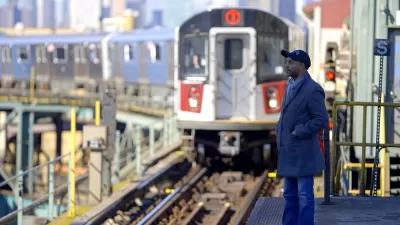
The most recent version of Streetsblog (a news site focusing on transportation issues) was full of bad news for transit users, proclaiming that the Trump Administration “is expected to severely cut funding for Amtrak, transit and high-speed rail unless Democrats somehow manage to take back the House” and that “Donald Trump's victory is a blow against transit, traffic safety and urbanism in general.”
But Republicans had complete control of government for part of President Trump's first term in 2017 and 2018, and somehow managed to avoid destroying public transit. Moreover, there is one reason why Congressional Republicans might actually be less hostile to transit than they were seven years ago.
In the 2016 election, the nation was sharply polarized along urban/rural lines. For example, Trump won most rural counties in New York but received less than 10 percent of the vote in the Bronx and Manhattan, less than 20 percent of the vote in Brooklyn, and only 22 percent of the vote in Queens. By contrast, in 2024 urban voters swung right. Even in Manhattan, Trump got 17 percent of the vote, nearly double his 2016 share. Trump's vote share rose to 27 percent in Brooklyn and 37 percent in Queens.
Trump made more modest gains in other transit-oriented cities and counties between 2016 and 2024. In Philadelphia, his share rose from 15 percent to 20 percent. In Cook County, Illinois (which includes Chicago) his share rose from 20 percent to 29 percent. In Suffolk County, Massachusetts (which includes Boston) his vote share appears to have risen from 16 percent to 23 percent. Even in San Francisco, Trump's vote share rose from 9 percent to 15 percent. Republican gains showed up in non-Presidential races as well: for example, so far Republican Senate candidate David McCormick has gotten about 18 percent of Philadelphia votes, while his 2018 counterpart Lou Barletta got only 12 percent.
Why does this matter? Because politicians listen to their voters, and if a higher percentage of Republican voters are transit users, this should (other things being equal) lead to more transit-friendly Republican politicians.
Of course, I realize not everything else is equal. Who becomes Secretary of Transportation, who chairs relevant committees, and the future Trump administration's general attitude toward the size of government will matter. My sense is that generally, Trump has favored spending-heavy, debt-friendly “big government conservatism” over more libertarian conservatism. But that attitude might not be reflected in what lower-level political appointees do, and might change over time.

Downtown Pittsburgh to Oakland BRT Moving Forward, With or Without Federal Money
Expect more cities and transit agencies around the country to wrestle with funding quandaries if the Trump Administration gets its way with existing capital investment grants.
Report: BUILD Act would strip over $2B in transit projects from California and New York alone
The proposed federal transportation bill would eliminate billions in funding from the Federal Transit Administration, the Federal Railroad Administration and other federal agencies that fund transit and multimodal transportation programs.

April must-reads: Top 10 articles from last month
The world's longest car-free bridge opens in Finland, Amtrak's new Mardi Gras line shatters ridership predictions, and Bay Area commuters could lose a third of Caltrain stations.

Planetizen Federal Action Tracker
A weekly monitor of how Trump’s orders and actions are impacting planners and planning in America.

HUD modernizes 50-year-old manufactured housing framework
The Next Generation Manufactured Housing Action Plan establishes new energy-efficiency standards for manufactured homes, and new guidelines for anchoring them.

Data reveals that NYC’s bet on congestion pricing has paid off
After almost two years of the program, reports show positive impacts on traffic and air quality and no disruptions to parking.

How Chicago, New York and Seattle are funding transit projects amid tough times
Notes from the American Public Transportation Association's TransForm conference in Chicago.

Transport for London tackles hate crime spike with free bystander training
Recorded hate crime offences on the London's transport network have increased by 36 per cent.

Denver is solving homelessness. Why aren't the rest of us?
Since 2023, Denver's street homeless population has decreased by 64%, proving that effective tools exist to support those in need of housing.

FREE Course: Walkable City 1: Why Walkability?
After describing his path towards focusing on walkability as the essence of good planning, Jeff Speck marches through his five principal reasons for making more walkable places.
Reinventing Malls: Planning Alchemy—Turning Gray Fields Into Gold
The course focuses on the opportunities and imperatives that shape reinvention of mall sites.

One Hundred Miles
County of Mendocino
planning NEXT
The Architects Foundation
University of Cincinnati Online
Montrose County
Northern Illinois Transit Authority (NITA)
The Pocatello Development Authority

