Transit agencies around the country are boosting their efforts to serve historically marginalized communities and make transit work better for the households that rely on it the most.


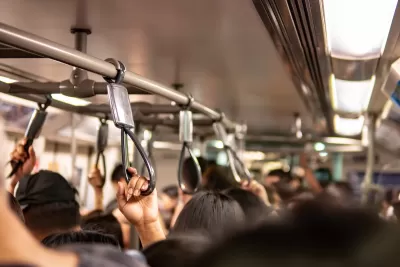
A new report from the American Public Transportation Association (APTA) highlights the efforts transit agencies around the country are making to increase equity and provide effective transit service to the low-income households that often depend on it the most.
According to an article by Dan Zukowski in Smart Cities Dive, “The report summarizes equity-related actions from 75 organizations and takes an in-depth look at efforts by 11 transit agencies.”
Some agencies, like the Chicago Transit Authority (CTA) and the Central Puget Sound Regional Transit Authority, have created positions specifically dedicated to addressing equity. “The Massachusetts Bay Transit Authority requires an equity analysis for all proposed fare changes and major service changes,” while the Los Angeles County Metropolitan Transportation Authority (Metro) created an equity dashboard to increase transparency and appraise the public of its efforts.
In some cases, transit agencies are expanding their scope to support transit-oriented development with affordable housing and multimodal infrastructure near their stations. “Other agencies are getting directly involved with the communities they serve to address homelessness. The Metropolitan Atlanta Rapid Transit Authority is partnering with a homeless shelter to provide individual-level resources. The Lane Transit District in Eugene, Oregon, partnered with the city to find vacant land the transit agency owned that could be used as safe sleep areas for people experiencing homelessness,” Zukowski adds.
The APTA report offers three recommendations for transit agencies seeking to improve equity: develop an equity mission statement to guide goals and priorities; ensure the necessary internal resources to consider equity during all processes; and build community through initiatives that provide tangible benefits to the agency’s constituent communities.
Read the full story: Transit agencies document equity efforts in APTA report
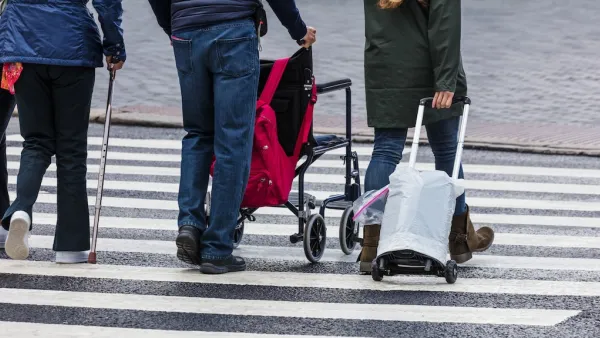
‘Week Without Driving’ Highlights Needs of Non-Drivers
The event encourages public officials to use their local public transit and engage with the people who rely on it every day.
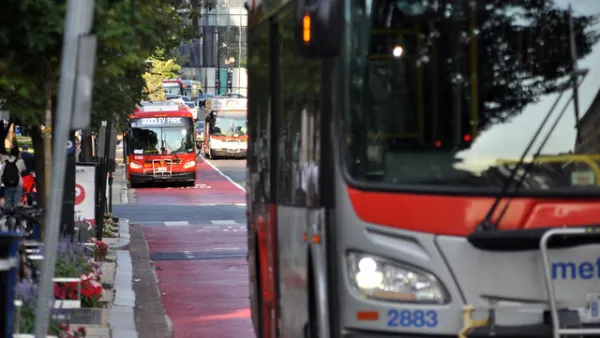
DC Improving Transit Equity
The Transit Equity Dashboard reveals a more marked improvement in transit access in the District of Columbia than in other metro areas.
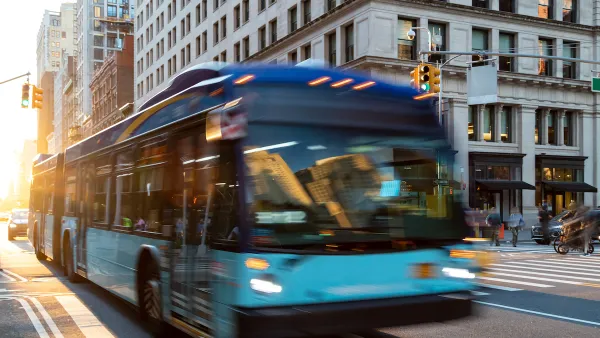
How to Measure Transit Equity
A new report highlights the need to go beyond traditional equity metrics to assess how public transit systems are serving the lowest-income and most disadvantaged riders.

Planetizen Federal Action Tracker
A weekly monitor of how Trump’s orders and actions are impacting planners and planning in America.

Eastern Nebraska is running out of electricity
Data centers and electrification are straining eastern Nebraska’s grid, throttling economic development.

Study reveals best places in the U.S. for cycling, walking
New research from Streetlight Data examines bicycle and pedestrian miles per capita in the 100 largest U.S. cities by population.

San Antonio is using environmental review to stall ICE detention center
San Antonio sued last month to pause work on the new detention center until the federal government studied its effect on the surrounding area.

Austin plans light rail extension — before breaking ground on light rail
The planned extension is three miles long and will take riders straight to Austin-Bergstrom International Airport.

Chicago cuts ribbon on $300,000, self-cleaning public toilet
The public toilet is the city’s first, and may pave the way for a rollout of similar facilities.

FREE Course: Walkable City 1: Why Walkability?
After describing his path towards focusing on walkability as the essence of good planning, Jeff Speck marches through his five principal reasons for making more walkable places.
Reinventing Malls: Planning Alchemy—Turning Gray Fields Into Gold
The course focuses on the opportunities and imperatives that shape reinvention of mall sites.

City of Charlotte
City of Rosemead
Rutgers University, Edward J. Bloustein School of Planning and Public Policy
University of Michigan School for Environment and Sustainability (SEAS)
Hunter College, City University of New York (CUNY)
The Architects Foundation
City of Cambridge
The Pocatello Development Authority
The Urban Renewal Agency of the City of Pocatello