Rent stabilization typically limits the amount that rent can go up every year—but a newly appointed rent guidelines board in Kingston, New York took it a step further.


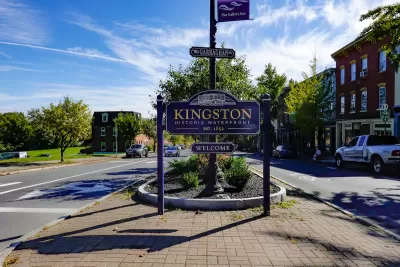
Kingston, New York, a small city 90 minutes from Manhattan, has become an unexpected trailblazer in rent stabilization policy. Facing rapidly rising housing costs that saw median rents jump 46.1 percent in just a few years, Kingston took the unprecedented step of becoming the first municipality in New York outside of New York City and its neighboring counties to opt into the Emergency Tenant Protection Act (ETPA). This decision, made possible by the 2019 Housing Stability and Tenant Protection Act, allowed Kingston to implement rent stabilization measures in response to its growing housing affordability crisis.
The path to rent stabilization in Kingston highlights the crucial role of accurate data in urban policy decisions. An initial vacancy survey showing a 6.7 percent rate nearly derailed the effort, as it exceeded the 5 percent threshold required to declare a housing emergency. However, grassroots organizers pushed for a more thorough, city-conducted survey, which revealed a stark 1.57 percent vacancy rate. This finding not only enabled Kingston to proceed with rent stabilization but also exposed the severity of the city's housing shortage, challenging conventional methods of assessing housing needs.
In a move that has sent ripples through the state's housing policy landscape, Kingston's Rent Guidelines Board ordered a 15 percent rent reduction for stabilized units - the first such reduction in New York State history. The board also declared that any rent increase exceeding 16 percent between January 2019 and July 2022 constituted an overcharge, empowering tenants to seek refunds. While these decisions face ongoing legal challenges from landlord associations, they represent a significant shift in the approach to tenant protections and affordable housing policy.
See the source article to learn more about how they did it.
Read the full story: Kingston Agreed the Rent Was Too Damn High—So It Lowered It

In Upstate New York, the Fight for ‘Good Cause’ Continues
This week, Ithaca became the latest city to opt into New York’s new Good Cause Eviction Law. What are tenant organizers doing to make the law work better for their communities?

Proposed Bill Would Strengthen California’s Renter Protections
The bill would improve on the 2019 Tenant Protection Act by further limiting rent increases and adding more eviction protections for California renters.

L.A. Tenants Hit With Sudden Rent Hikes Under 'Discounted Rent' Loophole
A legal loophole has allowed some Los Angeles landlords to sharply raise rents on apartments that would otherwise fall under the city's rent stabilization ordinance and pandemic-related rent freeze.

Planetizen Federal Action Tracker
A weekly monitor of how Trump’s orders and actions are impacting planners and planning in America.

The state-sanctioned urbicide of Austin
People don’t kill cities. Freeways do.

US to reduce Colorado River water deliveries to Mexico
A new Colorado Treaty amendment reduces Mexico’s Colorado River water allocation by 250,000 acre feet.

Nation's most wind-powered state turns to coal as data centers increase energy demand
For the first time in decades, Iowa has increased its generation of coal power.

NYC cools commuters with city's first rain garden above a bus stop
New York City officials say the plants in the rain garden can absorb 16 gallons of rainwater during heavy storms.

Brightline West’s future may rely on $6 billion federal loan
The company has until Nov. 2 to make a $400 million equity investment into its proposed high-speed rail line.

FREE Course: Walkable City 1: Why Walkability?
After describing his path towards focusing on walkability as the essence of good planning, Jeff Speck marches through his five principal reasons for making more walkable places.
Reinventing Malls: Planning Alchemy—Turning Gray Fields Into Gold
The course focuses on the opportunities and imperatives that shape reinvention of mall sites.

Eagle County Government
Harvard University Graduate School of Design
Nashville Planning Department
The Architects Foundation
University of Cincinnati Online
The Pocatello Development Authority
The Urban Renewal Agency of the City of Pocatello
Journal of the American Planning Association