A team of researchers found much higher levels of particulate matter inside the City Hall subway station than on the street-level sidewalks directly above the station.


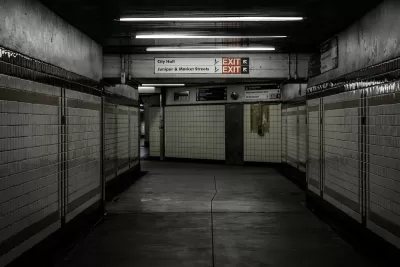
A study by Villanova University researchers Kabindra Shakya and Aimee Eggler reveals that air quality in downtown Philadelphia’s City Hall subway station is significantly worse than the street-level sidewalks in the same location.
As the authors explain in an article in The Conversation, “We focused on this station because our previous study found it to have the highest levels of particulate matter among 12 Philly subway stations we measured on the busy Market-Frankford or Broad Street lines.” They found 10 times more black carbon — also known as soot — in the station than outdoors, generated by the subway system itself.
“Limited access to outside air, the frequency of trains, a large number of passengers and its location in the heart of Center City may be some of the reasons for the high concentrations of particulate matter at the 15th Street station,” the authors add.
The city could improve air quality in the subway by replacing aging equipment and rails, adding platform screen doors, and increasing ventilation. However, the authors stress that they are not recommending people avoid the subway. “Air pollution levels are highly variable across stations and over time, and commuters spend relatively short periods of time inside subway stations.”
FULL STORY: Air pollution inside Philly’s subway is much worse than on the streets

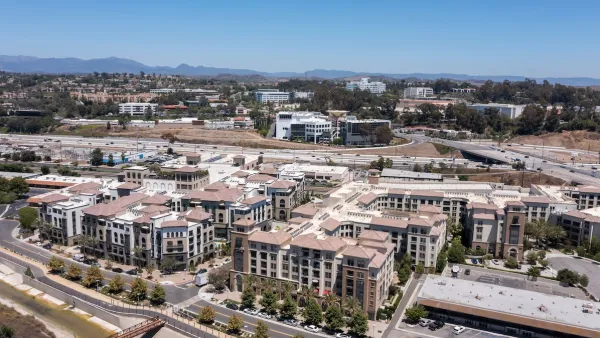
Balancing TOD and Public Health
Building housing near transportation networks can improve density and walkability, but can also have serious health consequences for residents.
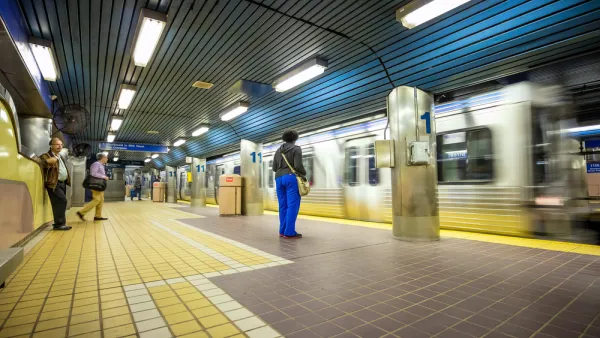
Riders Getting Stuck in SEPTA Tunnels Due to Increased Security Measures
As ridership dropped during the pandemic, Philadelphia's transit agency started locking station doors to keep unhoused people from using the tunnels as shelter. Now, riders are becoming trapped inside.
Philadelphia Leaders Dream Big With New Transit Plan
The plan, which looks more than two decades into the future, seeks to modernize the city's transit system, address inequities, and improve regional connectivity.

Planetizen Federal Action Tracker
A weekly monitor of how Trump’s orders and actions are impacting planners and planning in America.

The state-sanctioned urbicide of Austin
People don’t kill cities. Freeways do.

US to reduce Colorado River water deliveries to Mexico
A new Colorado Treaty amendment reduces Mexico’s Colorado River water allocation by 250,000 acre feet.

5 New England states march closer to 800 megawatt wind energy project
Securing federal approval for the project may be complicated under the Trump administration, which has historically been hostile towards domestic wind power.

Baltimore to break ground on $50 million Transit Priority Project
The project will bring faster bus trips, safer streets and better bike connections to Baltimore.

Airbnb launches $250 million 'last-dollar financing' housing accelerator, makes first investment in Austin
The company will put $6.4 million towards affordable housing development in Texas’ capital.

FREE Course: Walkable City 1: Why Walkability?
After describing his path towards focusing on walkability as the essence of good planning, Jeff Speck marches through his five principal reasons for making more walkable places.
Reinventing Malls: Planning Alchemy—Turning Gray Fields Into Gold
The course focuses on the opportunities and imperatives that shape reinvention of mall sites.

Eagle County Government
Harvard University Graduate School of Design
Nashville Planning Department
The Architects Foundation
University of Cincinnati Online
The Pocatello Development Authority
The Urban Renewal Agency of the City of Pocatello
Journal of the American Planning Association