The plan outlines thousands of suggestions for mitigating flood risk, which pose a threat in all of the state’s planning regions.


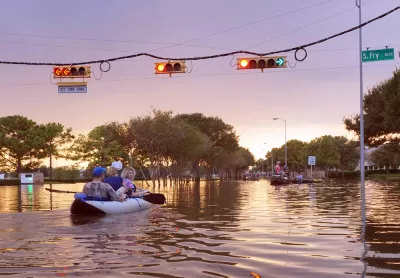
The Texas Water Development Board (TWDB) has approved the 2024 State Flood Plan, a statewide assessment of risks and strategies for mitigating them, according to an article in the Panola Watchman.
“The plan incorporates the findings of 15 regional flood plans and includes legislative and floodplain management recommendations to guide state, regional, and local flood control policy to reduce the risk and impact of flooding.” While conditions vary, the plan found ‘significant risk’ in all 15 of the state’s planning regions, with one in six of the state’s residents living in an area with flood risk.
The plan’s roughly 4,600 proposed solutions and mitigation strategies are estimated to cost over $54.5 billion. “Planning groups reported an estimated 843,339 people and 214,292 buildings would be removed from the 1% annual chance (100-year) floodplain if the state flood plan is implemented.” The plan will be updated every five years.
Read the full story: Texas Water Development Board adopts first state flood plan

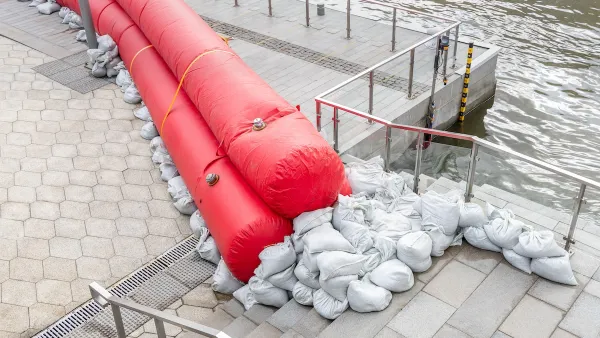
Planning for Future Floods
New climate and flood models are needed to understand growing flood risks.
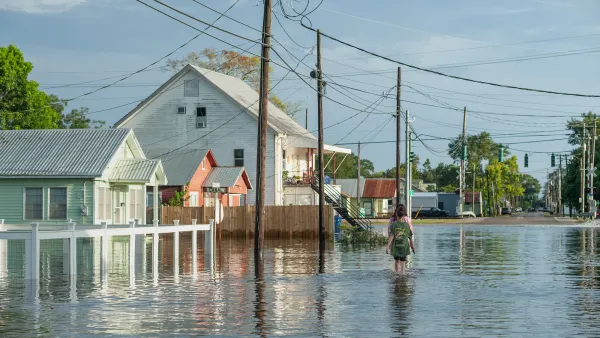
Study: Historically redlined neighborhoods face higher risk of extreme flooding
A new study indicates that structural disinvestment can translate into serious risk for vulnerable communities.
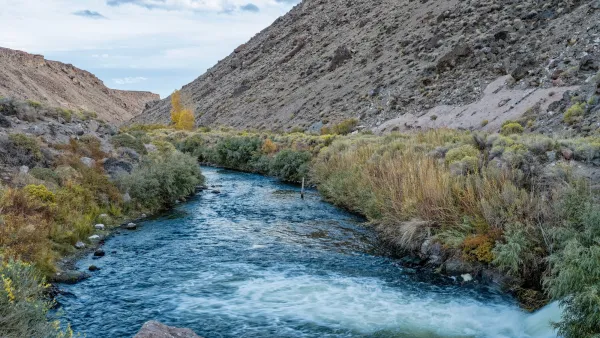
California is Out of Drought for First Time in 25 Years
The state’s reservoirs are reaching capacity for the first time in decades, but more rain could prompt flooding in downstream communities.

Planetizen Federal Action Tracker
A weekly monitor of how Trump’s orders and actions are impacting planners and planning in America.

The state-sanctioned urbicide of Austin
People don’t kill cities. Freeways do.

Colorado’s Largest Data Center Could Rise Next to Homes — Without a Public Hearing
The proposed campus would consume 11 times the power of Denver International Airport; as it has across the country, opposition mounts.

Nation's most wind-powered state turns to coal as data centers increase energy demand
For the first time in decades, Iowa has increased its generation of coal power.

NYC cools commuters with city's first rain garden above a bus stop
New York City officials say the plants in the rain garden can absorb 16 gallons of rainwater during heavy storms.

Brightline West’s future may rely on $6 billion federal loan
The company has until Nov. 2 to make a $400 million equity investment into its proposed high-speed rail line.

FREE Course: Walkable City 1: Why Walkability?
After describing his path towards focusing on walkability as the essence of good planning, Jeff Speck marches through his five principal reasons for making more walkable places.
Reinventing Malls: Planning Alchemy—Turning Gray Fields Into Gold
The course focuses on the opportunities and imperatives that shape reinvention of mall sites.

Greater Baltimore Committee
Eagle County Government
Harvard University Graduate School of Design
The Architects Foundation
University of Cincinnati Online
The Pocatello Development Authority
The Urban Renewal Agency of the City of Pocatello
Journal of the American Planning Association