A USDOT report calls for a set of strategies including but not limited to electrification of the transportation sector.


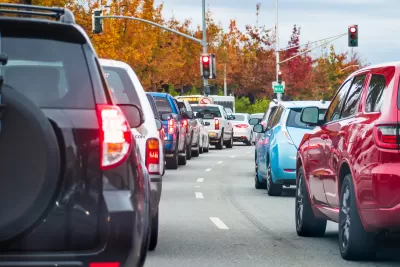
A report from the U.S. Department of Transportation highlights the need to reduce driving in addition to adopting electric vehicles to reach decarbonization goals, writes Kea Wilson in Streetsblog USA — “but it's unclear if any level of government is prepared to take the steps necessary to do both,” Wilson adds.
Assuming that no further climate legislation is passed, one study cited in the report found that transport emissions are on track to grow a staggering 23 percent by 2050, rather than falling to net zero, which experts say is necessary to avoid the worst impacts of climate change.
According to the report, no level of government has taken sufficient steps to reduce driving. “The U.S. will not be able to decarbonize the transportation sector by midcentury without addressing increased demand,” the report emphasizes.
The report calls for increasing convenience “by decreasing the distance Americans need to travel to key destinations (and the safety they can expect along the journey), as well as ‘improving efficiency’ by supporting mass transportation and better freight strategies.”
Wilson points out that, despite the report’s findings, USDOT continues to award grants to projects that perpetuate car-centric planning and transportation systems.
FULL STORY: USDOT Warns Congress That Americans Need to Drive Less to Survive Climate Change

Providence Could Ban New Gas Stations
The city could prohibit the construction of new fueling stations within city limits to discourage driving and pave the way for more renewable transportation infrastructure.
Vehicle Miles Travelled, Level of Service, and a Soon-to-be-Insolvent Transportation Trust Fund
Level of Service and the gas tax have served our transportation needs for a long time. Now, it’s time for a change.
Research Shows More Roads = More Driving
A national study shows, once again, that increasing road supply induces additional vehicle travel, particularly over the long run.

Planetizen Federal Action Tracker
A weekly monitor of how Trump’s orders and actions are impacting planners and planning in America.

The state-sanctioned urbicide of Austin
People don’t kill cities. Freeways do.

US to reduce Colorado River water deliveries to Mexico
A new Colorado Treaty amendment reduces Mexico’s Colorado River water allocation by 250,000 acre feet.

Mamdani overhauls NYC's Vision Zero plan with 100 new policy goals
The overhaul aims to reduce traffic deaths and make streets safer for pedestrians, cyclists and drivers through lower speed limits, new safety infrastructure and more.

Amtrak not solely to blame for New Jersey commuter rail's unreliability, report finds
A new study from the Garden State Initiative found that NJ Transit’s budget grew 20% across a 4 year period, but reliability declined significantly over the same period.

EPA erases limits on planet-warming pollution from power plants
Under Monday’s plan, power plants would still have some limits on how much mercury, arsenic and other contaminants they can emit.

FREE Course: Walkable City 1: Why Walkability?
After describing his path towards focusing on walkability as the essence of good planning, Jeff Speck marches through his five principal reasons for making more walkable places.
Reinventing Malls: Planning Alchemy—Turning Gray Fields Into Gold
The course focuses on the opportunities and imperatives that shape reinvention of mall sites.

Eagle County Government
Harvard University Graduate School of Design
Nashville Planning Department
The Architects Foundation
University of Cincinnati Online
The Pocatello Development Authority
The Urban Renewal Agency of the City of Pocatello
Journal of the American Planning Association