An RTA report highlights a need for state funding to bridge an imminent $730 budget shortfall, calling for an approach that relies less heavily on fare revenue.



A report from the Chicago area’s Regional Transit Authority (RTA) highlights the system’s overreliance on fare revenue and recommends additional state funding for free and reduced-fare programs for low-income riders.
According to a Streetsblog Chicago article by John Greenfield, “The RTA, the CTA, Metra, and Pace have at least 15 specialized free and reduced fare programs, such as the RTA's Ride Free and Reduced Fare programs, which currently have 317,000 people enrolled and provided more than 82 million rides last year.” The report asserts that fully funding the Paratransit and reduced fare programs is necessary, but will raise the projected budget gap to roughly $730 million by 2026.
“The RTA report recommends addressing that challenge by creating an income-based reduced fare program called Regional Access. It also calls [for] full state funding of ADA Paratransit and Regional Access, which would help reduce the $730 million budget gap. Lastly, it proposes unlocking collaborative pricing policies across the region by investing in technology and funding reform.” The report also highlights the benefits of a regional fare that would let riders transition seamlessly across systems.
FULL STORY: New RTA Report recommends income-based fare programs

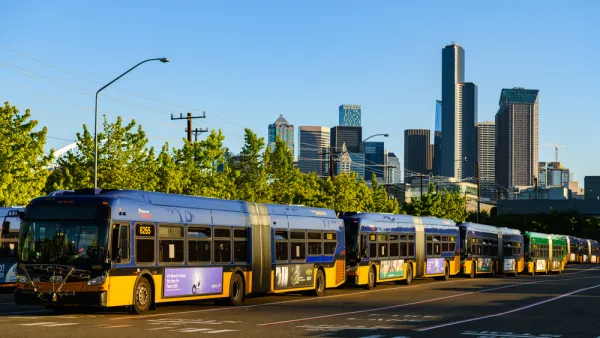
Seattle to Reinstate Bus Fare Enforcement
After a COVID-era move to eliminate fare inspections on city buses, King County Metro is reinstating checks for fare evasion.
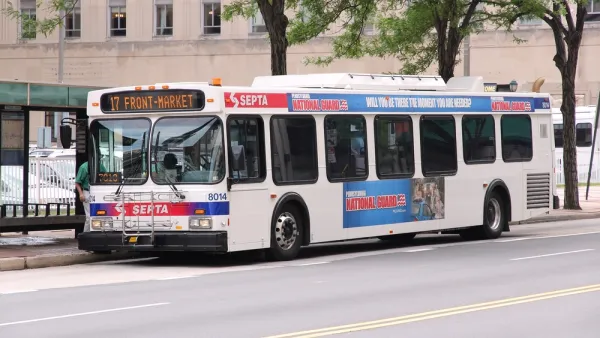
SEPTA Awarded $153 Million to Stave Off Fare Hikes
Philadelphia’s struggling transit system will be able to delay a 30 percent fare raise, but the temporary fix won't do nearly enough to close its budget gap.
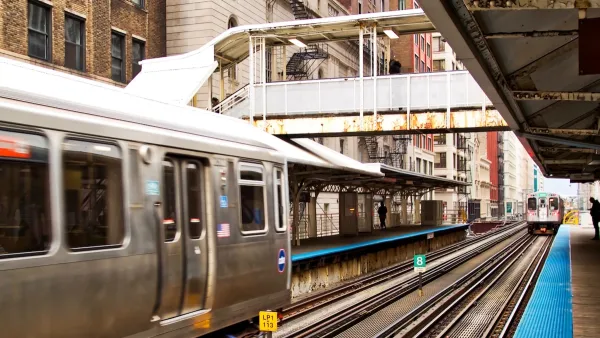
Chicago Commute Times Could Double Without New Transit Funding
A dire warning from regional transit leaders paints a bleak scenario for traffic if agencies are forced to cut service.

Planetizen Federal Action Tracker
A weekly monitor of how Trump’s orders and actions are impacting planners and planning in America.

The state-sanctioned urbicide of Austin
People don’t kill cities. Freeways do.

US to reduce Colorado River water deliveries to Mexico
A new Colorado Treaty amendment reduces Mexico’s Colorado River water allocation by 250,000 acre feet.

5 New England states march closer to 800 megawatt wind energy project
Securing federal approval for the project may be complicated under the Trump administration, which has historically been hostile towards domestic wind power.

Baltimore to break ground on $50 million Transit Priority Project
The project will bring faster bus trips, safer streets and better bike connections to Baltimore.

Airbnb launches $250 million 'last-dollar financing' housing accelerator, makes first investment in Austin
The company will put $6.4 million towards affordable housing development in Texas’ capital.

FREE Course: Walkable City 1: Why Walkability?
After describing his path towards focusing on walkability as the essence of good planning, Jeff Speck marches through his five principal reasons for making more walkable places.
Reinventing Malls: Planning Alchemy—Turning Gray Fields Into Gold
The course focuses on the opportunities and imperatives that shape reinvention of mall sites.

Eagle County Government
Harvard University Graduate School of Design
Nashville Planning Department
The Architects Foundation
University of Cincinnati Online
The Pocatello Development Authority
The Urban Renewal Agency of the City of Pocatello
Journal of the American Planning Association