State and local officials say explicitly naming heat and wildfire smoke would give local agencies more certainty in developing their mitigation strategies.


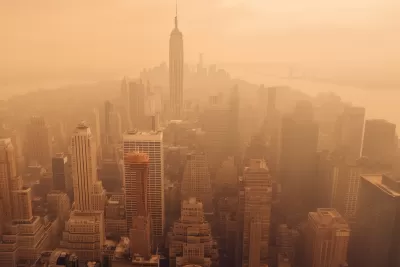
Attorneys general from 13 states and Washington, D.C. are calling on the Federal Emergency Management Agency (FEMA) to classify extreme heat and wildfire smoke as major disasters, which would unlock federal resources to help local governments prepare and respond.
“Neither an extreme heat event nor a wildfire smoke event has ever been recognized by FEMA as a major disaster eligible for federal aid,” explains Ysabelle Kempe in Smart Cities Dive. The group is requesting a change to the Stafford Act, a 1988 law that guides federal emergency response and which explicitly names other weather-related disasters like hurricanes and earthquakes.
While FEMA administrator Deanne Criswell told Congress that the agency considers requests based on local governments’ capacity, “The attorneys general say that explicitly adding heat and smoke into the Stafford Act will provide more certainty to state and local emergency management agencies. That would allow those agencies to make more informed decisions about how to prioritize their emergency management investments.”
FULL STORY: 14 attorneys general press FEMA to define heat, wildfire smoke as major disasters


Modular Homes Offer ‘Dignified’ Shelter for Maui Wildfire Survivors
FEMA is replacing traditional trailers, which quickly deteriorate and are unfit for long-term habitation, with modular, fire-resistant homes designed to last.
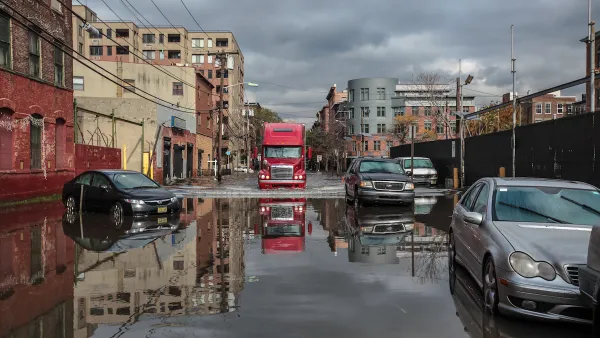
FEMA Resilience Program Cuts Grant Funding
The Building Resilient Infrastructure and Communities program funded projects from flood prevention to power station upgrades.
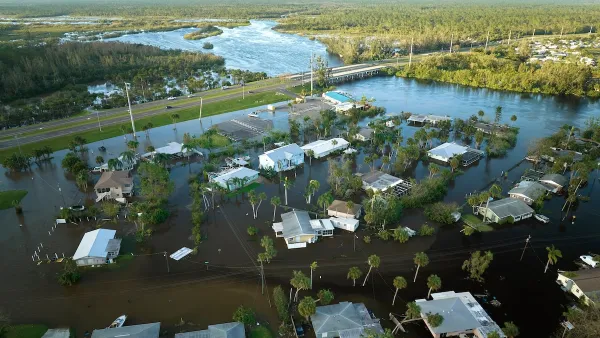
Research Shows White Communities Gain Affluence After Climate Disasters
People of color and lower-income residents tend to lose wealth despite the stated goals of federal assistance programs to restore communities impacted by disasters.

Planetizen Federal Action Tracker
A weekly monitor of how Trump’s orders and actions are impacting planners and planning in America.

The state-sanctioned urbicide of Austin
People don’t kill cities. Freeways do.

US to reduce Colorado River water deliveries to Mexico
A new Colorado Treaty amendment reduces Mexico’s Colorado River water allocation by 250,000 acre feet.

5 New England states march closer to 800 megawatt wind energy project
Securing federal approval for the project may be complicated under the Trump administration, which has historically been hostile towards domestic wind power.

Baltimore to break ground on $50 million Transit Priority Project
The project will bring faster bus trips, safer streets and better bike connections to Baltimore.

Airbnb launches $250 million 'last-dollar financing' housing accelerator, makes first investment in Austin
The company will put $6.4 million towards affordable housing development in Texas’ capital.

FREE Course: Walkable City 1: Why Walkability?
After describing his path towards focusing on walkability as the essence of good planning, Jeff Speck marches through his five principal reasons for making more walkable places.
Reinventing Malls: Planning Alchemy—Turning Gray Fields Into Gold
The course focuses on the opportunities and imperatives that shape reinvention of mall sites.

Eagle County Government
Harvard University Graduate School of Design
Nashville Planning Department
The Architects Foundation
University of Cincinnati Online
The Pocatello Development Authority
The Urban Renewal Agency of the City of Pocatello
Journal of the American Planning Association