The state is exploring a program that gives people a cash incentive for paying rent to offer renters some of the financial incentives homeowners receive.



A Colorado state program helps renters build equity for paying their rent on time. As Roshan Abraham reports in Next City, the program gives renters a cash stipend that amounts to roughly 2 percent of their rent every time they pay rent. The stipend accumulates in a card and can be transferred to a checking account.
The program is part of a 2022 state affordable housing package, Proposition 123, that included “a unique program that would allow tenants of new affordable housing financed by the initiative to be paid the ‘equity’ for the homes they rent, in theory giving them some of the financial benefits a homeowner might get.”
Colorado’s Tenant Equity Vehicle Program, which has not been fully developed, aims to help renters build equity and save up emergency funds. “Under the plan, the state provides cheap loans to developers to build affordable housing. As developers pay back the interest on those loans, the state forgoes profits, instead routing some of the interest payments directly to tenants. In theory, this means the often-predatory element of private debt has been removed from the equation.” So far, smaller, private pilot programs are underway in the state, which could serve as a model for the statewide program.
Read the full story: Colorado Is Pioneering A Way To Let Renters Earn Cash Back for Paying Rent

NYC Bans Charging Tenants Broker’s Fees
Landlords can no longer tack on thousands of dollars in fees to new tenants to pay brokers who show rental units.
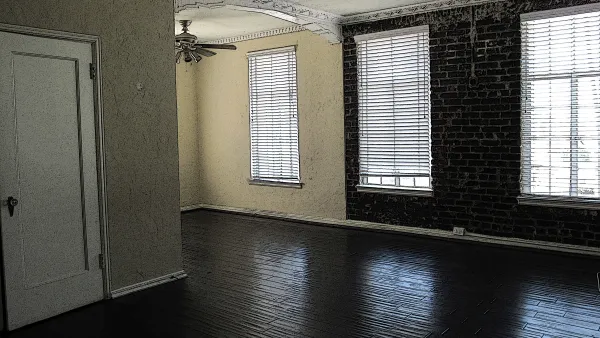
Spiking Rents Putting More People at Risk of Eviction
Housing costs across the country are becoming more and more unaffordable for low- and moderate-income households, a trend that began even before the COVID-19 pandemic.
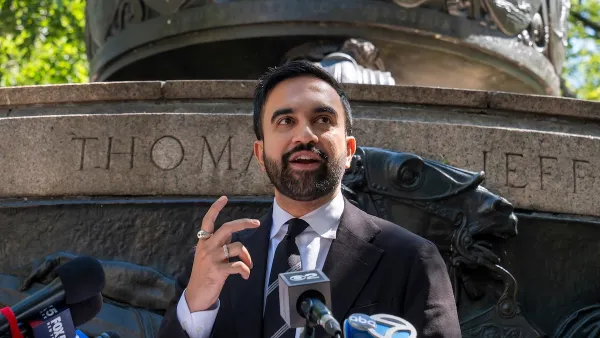
The Facts About Mamdani’s Proposed NYC Rent Freeze
The mayoral candidate has promised to freeze rent for close to a million New Yorkers. Could he actually do it?

Planetizen Federal Action Tracker
A weekly monitor of how Trump’s orders and actions are impacting planners and planning in America.

California plans to bury El Niño’s downpour
If the state plays its cards right, it may be able to store a billion acre-feet of El Niño’s water in aquifers.

Desperate measures: Advocates weigh draining Lake Powell to fill Colorado River
Draining the reservoir could reduce evaporation losses by a couple hundred thousand acre-feet.

Mamdani’s pied-à-terre tax survives legal challenge
A panel of judges found that the plaintiffs failed to demonstrate injury as a result of New York City's implementation of the tax.

Eastern Nebraska is running out of electricity
Data centers and electrification are straining eastern Nebraska’s grid, throttling economic development.

Seattle passes record-breaking transit services expansion
Proposition 1 will double the city’s transit tax to add 95,000 more bus trips and preserve 180,000 bus trips annually.

FREE Course: Walkable City 1: Why Walkability?
After describing his path towards focusing on walkability as the essence of good planning, Jeff Speck marches through his five principal reasons for making more walkable places.
Reinventing Malls: Planning Alchemy—Turning Gray Fields Into Gold
The course focuses on the opportunities and imperatives that shape reinvention of mall sites.

City of Rosemead
Rutgers University, Edward J. Bloustein School of Planning and Public Policy
One Hundred Miles
University of Michigan School for Environment and Sustainability (SEAS)
Hunter College, City University of New York (CUNY)
The Architects Foundation
City of Cambridge
Montrose County
The Pocatello Development Authority