Sluggish ridership rates and staffing shortages are dampening recovery. Looming budget gaps could make things even worse.


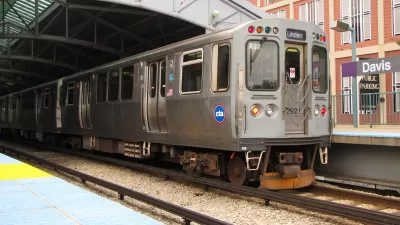
Transit ridership across the United States fell sharply when the pandemic hit in 2020, and most major cities still have not fully recovered. That’s particularly true for Chicago, the country’s second largest public transportation system.
According to an article from Chicago news outlet WGN9, CTA (Chicago) ridership is 60 percent recovered. In comparison, Los Angeles is 74 percent recovered and Washington, D.C. 76 percent recovered. Nationwide, public transit across all modes has recovered to 79 percent, according to the American Public Transportation Association
The WGN9 article details the drivers of the CTA’s sluggish recovery, which include service cuts, reliability issues, and staffing shortages. The cuts in service were intended to bring the schedule in line with demand, but between those cuts and not enough bus and rail operators to serve the runs, riders are suffering “a loss of confidence in the CTA to deliver on the most basic promises: trains and buses arriving on schedule,” report Mike Lowe and Austin Kleber.
Along with a projected 2026 budget gap of $730 million between CTA, Pace, and Metra now that federal COVID relief has come to an end, additional service cuts and employee layoffs lie ahead if additional revenue streams are not secured.
FULL STORY: CTA lags comparable cities in ridership recovery, staffing shortage remains a ‘crisis’

CTA underestimated Chicago transit ridership by 19 million trips
The agency is moving from using farebox data and manual video reviews to automatic counters that more accurately measure the total number of riders, whether or not they pay full fares.
For Better Public Transit, We Need Better Stories
Public transportation provides many often-overlooked benefits. We can do better at communicating the value of transit investments. We have good stories to tell.
Chicago Transit Agencies on Brink of Major Crisis
Without additional funding, regional transit agencies will be forced to cut services by 40 percent.

Planetizen Federal Action Tracker
A weekly monitor of how Trump’s orders and actions are impacting planners and planning in America.

The state-sanctioned urbicide of Austin
People don’t kill cities. Freeways do.

US to reduce Colorado River water deliveries to Mexico
A new Colorado Treaty amendment reduces Mexico’s Colorado River water allocation by 250,000 acre feet.

5 New England states march closer to 800 megawatt wind energy project
Securing federal approval for the project may be complicated under the Trump administration, which has historically been hostile towards domestic wind power.

Baltimore to break ground on $50 million Transit Priority Project
The project will bring faster bus trips, safer streets and better bike connections to Baltimore.

Airbnb launches $250 million 'last-dollar financing' housing accelerator, makes first investment in Austin
The company will put $6.4 million towards affordable housing development in Texas’ capital.

FREE Course: Walkable City 1: Why Walkability?
After describing his path towards focusing on walkability as the essence of good planning, Jeff Speck marches through his five principal reasons for making more walkable places.
Reinventing Malls: Planning Alchemy—Turning Gray Fields Into Gold
The course focuses on the opportunities and imperatives that shape reinvention of mall sites.


Eagle County Government
Harvard University Graduate School of Design
Nashville Planning Department
The Architects Foundation
University of Cincinnati Online
The Pocatello Development Authority
The Urban Renewal Agency of the City of Pocatello
Journal of the American Planning Association