New businesses in Birmingham, Alabama will no longer have to provide a minimum number of parking spaces.



The Birmingham, Alabama city council passed a “landmark” parking reform measure this week to eliminate minimum parking requirements for new businesses citywide, according to local news outlet WVTM 13. The measure, called the “Right Side Parking Initiative,” is part of the city’s plans to become more walkable, bikeable, and transit accessible.
“The city stated parking spaces will not be totally eliminated for new businesses, but will allow them flexibility in supporting their customers' needs,” and “The Americans with Disabilities Act requirements for parking will remain the same,” reports WVTM 13’s Shannon Delcambre.
With this reform, Birmingham joins the ranks of more than 70 U.S. cities to have eliminated parking minimums, including San Francisco, Ann Arbor, Michigan, Cincinnati, and Minneapolis. Research shows that removing parking mandates can also lower the cost of housing production, encourage affordable workforce housing, and reduces the heating effect on the environment, Delcambre writes.
FULL STORY: New parking reform in Birmingham to help city be more walkable, bikeable

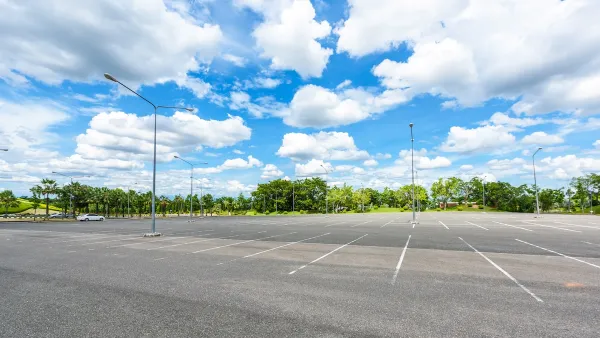
Parking Reform Yields New Housing
As more cities eliminate or reduce their minimum parking requirements, the impact on housing supply is coming into focus.
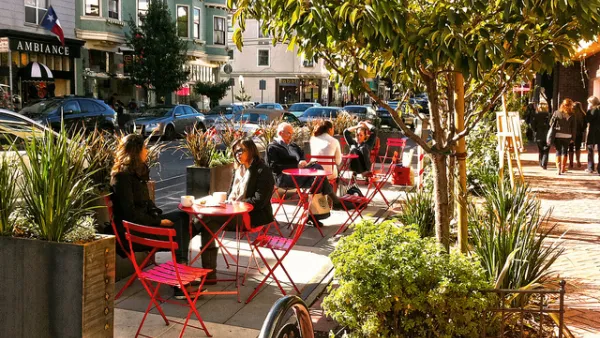
How Park(ing) Day Leads to Permanent Change
Small-scale interventions can lead the way to major parking reforms.

Is the Era of Over-Parking Over?
Cities like Vancouver are rethinking parking minimums as they try to meet climate goals, reduce traffic, and reallocate street space to other modes.

Planetizen Federal Action Tracker
A weekly monitor of how Trump’s orders and actions are impacting planners and planning in America.

The state-sanctioned urbicide of Austin
People don’t kill cities. Freeways do.

US to reduce Colorado River water deliveries to Mexico
A new Colorado Treaty amendment reduces Mexico’s Colorado River water allocation by 250,000 acre feet.

5 New England states march closer to 800 megawatt wind energy project
Securing federal approval for the project may be complicated under the Trump administration, which has historically been hostile towards domestic wind power.

Baltimore to break ground on $50 million Transit Priority Project
The project will bring faster bus trips, safer streets and better bike connections to Baltimore.

Airbnb launches $250 million 'last-dollar financing' housing accelerator, makes first investment in Austin
The company will put $6.4 million towards affordable housing development in Texas’ capital.

FREE Course: Walkable City 1: Why Walkability?
After describing his path towards focusing on walkability as the essence of good planning, Jeff Speck marches through his five principal reasons for making more walkable places.
Reinventing Malls: Planning Alchemy—Turning Gray Fields Into Gold
The course focuses on the opportunities and imperatives that shape reinvention of mall sites.

Eagle County Government
Harvard University Graduate School of Design
Nashville Planning Department
The Architects Foundation
University of Cincinnati Online
The Pocatello Development Authority
The Urban Renewal Agency of the City of Pocatello
Journal of the American Planning Association