Sensors installed along a segment of Interstate 94 could help improve safety, limit speeding, and alert officials to potholes and debris.


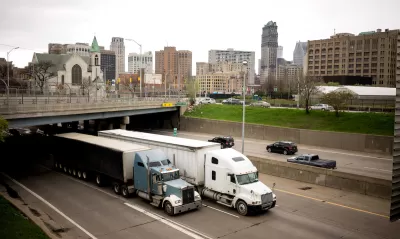
The Michigan Department of Transportation (MDOT) and Cavnue, a Washington, D.C.-based technology firm, are launching a “smart road” pilot project designed to make roads safer and traffic flow more efficient.
According to an article by Anne Snabes in The Detroit News, “The pilot is the first stage of a larger project, which envisions a technology-enabled express lane along each direction of I-94 between Ann Arbor and Detroit.”
Snabes adds that “It's one of several examples of how connected vehicle technology is being adopted on roads in Metro Detroit. The Macomb County Department of Roads has set up devices at all of its signalized intersections that will tell future cars information, such as if they're about to run a red light. Oakland County has added these devices to a small number of its intersections, and Wayne County is using technology to track salt trucks.”
The I-94 project involves a special road coating, sensor poles, and fiber installed under the roadway. The sensor poles collect data that will be used to communicate with vehicles to help reduce speeding, alert drivers to pedestrians and cyclists in intersections, and recognize things like debris and potholes in the roadway.
FULL STORY: How Connected Vehicles Are Changing Detroit’s Roads

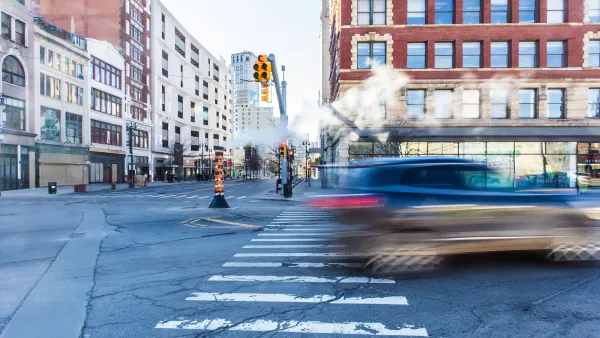
New Federal Grant Rules Could Kill Detroit Road Diets
Millions in federal dollars for safe streets could be in jeopardy after federal agencies changed conditions for grant funding.

New USDOT safety strategy highlights enforcement, embraces autonomous cars
The new National Roadway Safety Strategy emphasizes safety technology and enforcement and promises to further crack down on immigrant truck drivers with illicitly obtained licenses.
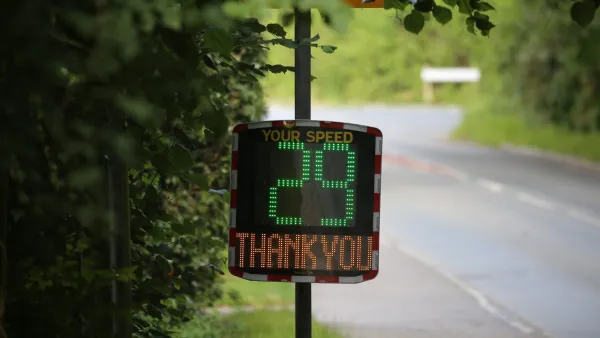
Austin road sign compliments safe drivers
An electronic display praises drivers who stay under the speed limit with personalized messages.

Planetizen Federal Action Tracker
A weekly monitor of how Trump’s orders and actions are impacting planners and planning in America.

The state-sanctioned urbicide of Austin
People don’t kill cities. Freeways do.

US to reduce Colorado River water deliveries to Mexico
A new Colorado Treaty amendment reduces Mexico’s Colorado River water allocation by 250,000 acre feet.

5 New England states march closer to 800 megawatt wind energy project
Securing federal approval for the project may be complicated under the Trump administration, which has historically been hostile towards domestic wind power.

Baltimore to break ground on $50 million Transit Priority Project
The project will bring faster bus trips, safer streets and better bike connections to Baltimore.

Airbnb launches $250 million 'last-dollar financing' housing accelerator, makes first investment in Austin
The company will put $6.4 million towards affordable housing development in Texas’ capital.

FREE Course: Walkable City 1: Why Walkability?
After describing his path towards focusing on walkability as the essence of good planning, Jeff Speck marches through his five principal reasons for making more walkable places.
Reinventing Malls: Planning Alchemy—Turning Gray Fields Into Gold
The course focuses on the opportunities and imperatives that shape reinvention of mall sites.

Eagle County Government
Harvard University Graduate School of Design
Nashville Planning Department
The Architects Foundation
University of Cincinnati Online
The Pocatello Development Authority
The Urban Renewal Agency of the City of Pocatello
Journal of the American Planning Association