A recently released report offers recommendations for keeping state parks healthy and robust, including acquiring additional land for conservation and recreation.


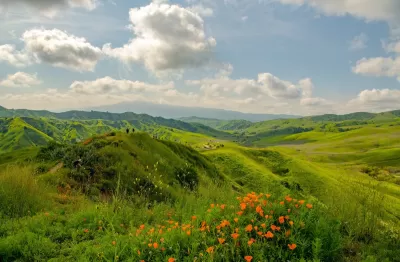
California's State Park System is the largest in the U.S. This system includes 279 separate park units on 1.4 million acres, with more than 280 miles of coastline, 625 miles of lake and river frontage, almost 15,000 campsites, and 3,000 miles of hiking, biking, and equestrian trails. However, these cherished spaces are now increasingly threatened by climate change. For example, ancient sequoia groves are burning in more frequent and severe wildfires, coastal parks are being eroded by rising sea levels and intensifying storms, and endangered species in state parks are losing vital habitat.
As reported by Tara Lynn Wagner, the California State Parks Foundation has just released a 70-page report entitled Building a Climate-Resilient California State Park System. It defines climate-resilient state parks as those which "can prepare for, adapt to, and recover from climate impacts." Specifically, this includes protecting natural and cultural resources, preserving park access, building climate-smart infrastructure, and educating Californians about parks and climate change. Climate-resilient parks also use clean energy and climate-smart land management to mitigate greenhouse gas emissions and contribute to statewide carbon neutrality.
The report offers the following recommendations:
- Rethink California State Parks’ representation in 30x30.
- Fund the full implementation of California State Parks’ Sea Level Rise Adaptation Strategy.
- Authorize and fund permanent climate resilience staff across relevant California State Parks divisions (or program areas or functions) for a multidisciplinary approach to building climate resilience into all aspects of park management.
- Expand California State Parks’ internal capacity to assess and scope adaptation projects.
- Extend funding for California State Parks’ Wildfire and Forest Resilience Program beyond its current expiration in FY 2027–28, including hiring authority for permanent staff positions.
- Establish a pilot program for California state parks as community climate resilience centers.
- Fund a robust California State Parks acquisition program.
For more information, please read the source article and the report.
Read the full story: California State Parks face threat of climate change — but could also be part of the solution

Public Parks as Climate Resilience Tools
Designed with green infrastructure, parks can mitigate flooding, reduce urban heat, and enhance climate resilience, offering cost-effective solutions to environmental challenges while benefiting communities.

Parks as Community Lifelines: Supporting Residents During Times of Crisis
The Los Angeles County Department of Parks and Recreation demonstrates how parks serve as vital community infrastructure by adapting to crises, offering public health services, disaster relief, and essential support for residents in need.

Study: How Urban Parks Can Support Biodiversity
Conservation and recreation can go hand in hand in urban green spaces designed to serve both humans and local wildlife.

Planetizen Federal Action Tracker
A weekly monitor of how Trump’s orders and actions are impacting planners and planning in America.

California plans to bury El Niño’s downpour
If the state plays its cards right, it may be able to store a billion acre-feet of El Niño’s water in aquifers.

Chicago breaks ground on $3 billion megadevelopment
The new neighborhood, titled Foundry Park, will one day host 3,700 residences.

California High-Speed Rail Authority CEO resigns after $600,000 scandal
Under Ian Choudri, the authority used taxpayer dollars to fund first class flights and trips to nightclubs.

Want to study the Missouri River? Soon, you may need unanimous approval from 10 states
Legislation would require 10 governors’ permission to study or build projects moving water outside the basin.

Desperate measures: Advocates weigh draining Lake Powell to fill Colorado River
Draining the reservoir could reduce evaporation losses by a couple hundred thousand acre-feet.

FREE Course: Walkable City 1: Why Walkability?
After describing his path towards focusing on walkability as the essence of good planning, Jeff Speck marches through his five principal reasons for making more walkable places.
Reinventing Malls: Planning Alchemy—Turning Gray Fields Into Gold
The course focuses on the opportunities and imperatives that shape reinvention of mall sites.

City of Rosemead
Rutgers University, Edward J. Bloustein School of Planning and Public Policy
One Hundred Miles
Hunter College, City University of New York (CUNY)
The Architects Foundation
University of Cincinnati Online
City of Cambridge
Montrose County
The Pocatello Development Authority