Events like the triathlon could be impacted if tests continue to reveal high levels of dangerous bacteria in Paris’ famous river.


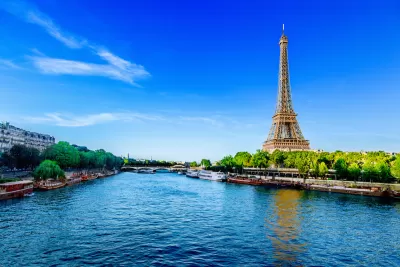
The River Seine in Paris could be too polluted to safely host Olympic swimming events in the upcoming summer Olympic games. According to an article in Euronews Green, “water sampling by the European arm of the Surfrider Foundation has revealed that bacteria - including ‘pollution of faecal origin’ - remains dangerously high.”
Swimming in the river has been prohibited since 1923 due to both pollution and dangerous boat traffic. Wastewater plants often dump untreated wastewater upstream. “1.9 million cubic metres of wastewater was discharged into the Seine in 2022.”
The city of Paris is undertaking a 1.4 billion Euro cleanup project to prepare the river for swimming. “It is building a 50,000 metre cubed rainwater storage basin upstream of the Austerlitz bridge. This underground reservoir - fed by a 700 metre long tunnel - is designed to hold water during storms, before releasing it back to the sewer system.” But progress remains slow and, according to Surfrider, all but one of 14 water samples “had alarmingly high amounts of the faecal bacteria enterococci and escherichia coli, with e.coli levels four times too high on one day.”
For now, the fate of some of this summer’s Olympic swimming events remains uncertain.
Read the full story: Sewage pollution could jeopardise Olympic swimming events in the River Seine, NGO warns

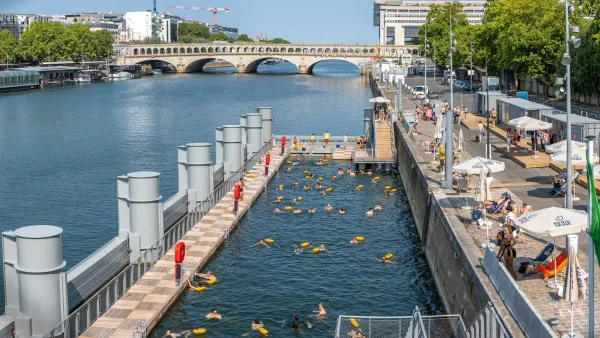
Paris is using Seine water to cool buildings
An underground network of pipes has been cooling public buildings since the 1990s.

Winter Road Salt is Making Waterways Toxic to Wildlife
Salt used to clear streets is accumulating in local creeks and rivers and seeping into groundwater, contaminating fresh water supplies.
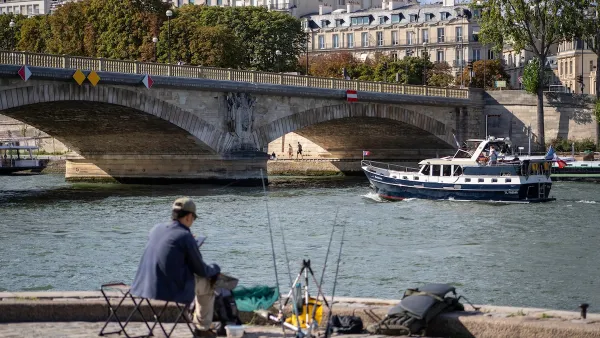
River Seine ‘Teeming’ With Life
Decades of restoration efforts are yielding positive results as dozens of species of fish return to the once-polluted waterway.

Planetizen Federal Action Tracker
A weekly monitor of how Trump’s orders and actions are impacting planners and planning in America.

The state-sanctioned urbicide of Austin
People don’t kill cities. Freeways do.

US to reduce Colorado River water deliveries to Mexico
A new Colorado Treaty amendment reduces Mexico’s Colorado River water allocation by 250,000 acre feet.

Nation's most wind-powered state turns to coal as data centers increase energy demand
For the first time in decades, Iowa has increased its generation of coal power.

NYC cools commuters with city's first rain garden above a bus stop
New York City officials say the plants in the rain garden can absorb 16 gallons of rainwater during heavy storms.

Brightline West’s future may rely on $6 billion federal loan
The company has until Nov. 2 to make a $400 million equity investment into its proposed high-speed rail line.

FREE Course: Walkable City 1: Why Walkability?
After describing his path towards focusing on walkability as the essence of good planning, Jeff Speck marches through his five principal reasons for making more walkable places.
Reinventing Malls: Planning Alchemy—Turning Gray Fields Into Gold
The course focuses on the opportunities and imperatives that shape reinvention of mall sites.

Eagle County Government
Harvard University Graduate School of Design
Nashville Planning Department
The Architects Foundation
University of Cincinnati Online
The Pocatello Development Authority
The Urban Renewal Agency of the City of Pocatello
Journal of the American Planning Association