A set of high-tech gates aimed at limiting fare evasion is already failing.


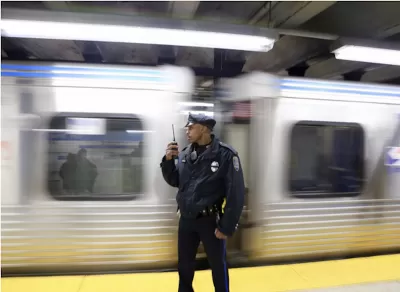
The Southeastern Pennsylvania Transportation Authority (SEPTA) introduced new fare gates aimed at reducing fare evasion and improving security. The gates were installed at the 69th Street station on the Market-Frankford Line.
According to an article from 6ABC, “The gates will utilize 3D technology to distinguish between adults, children and objects -- such as wheelchairs, strollers and luggage.” The agency will evaluate their success before potentially adding them to more stations.
An article in Philadelphia Magazine by Victor Fiorillo calls the gates “astonishingly easy to beat,” noting that there is a 14-inch gap at the bottom of the gates. In fact, a SEPTA employee said they already witnessed someone sliding under them. Additionally, the gates stay open long enough for two or even three people to pass through. Fiorillo writes, “A SEPTA staffer I spoke with at 69th Street laughed at the notion of SEPTA police doing anything about fare evasion. That staffer has worked for many years at 69th Street Station and has never seen a SEPTA cop do anything about fare-evaders.”
This all begs the question, is spending millions on reducing fare evasion worth it?
FULL STORY: SEPTA debuts new gates at 69th Street station in effort to prevent fare evasion, beef up security

Lawsuit Challenges SEPTA Fare Hikes
A class action suit calls fare raises an “arbitrary and capricious action” that required public hearings.
How Transit Architecture Impacts Real and Perceived Safety
More than a third of Americans believe major transit systems are too unsafe to ride. The built environment can change that.

Fare Evasion 'Quietly' Decriminalized in Philadelphia
More social justice advocates in more cities are winning the argument that transit fare evasion punishments don't fit the crime.

The state-sanctioned urbicide of Austin
People don’t kill cities. Freeways do.

US to reduce Colorado River water deliveries to Mexico
A new Colorado Treaty amendment reduces Mexico’s Colorado River water allocation by 250,000 acre feet.

New Jersey’s second-largest city bans standalone data centers
Jersey City will continue to allow co-location facilities, such as those meant for research institutions that store their own data.

Amtrak not solely to blame for New Jersey commuter rail's unreliability, report finds
A new study from the Garden State Initiative found that NJ Transit’s budget grew 20% across a 4 year period, but reliability declined significantly over the same period.

EPA erases limits on planet-warming pollution from power plants
Under Monday’s plan, power plants would still have some limits on how much mercury, arsenic and other contaminants they can emit.

Phoenix announces new on-demand transit service, more frequent RAPID buses
Both new services will launch in October, and are part of Phoenix's Project Effective Access Solutions for Easing Congestion.

FREE Course: Walkable City 1: Why Walkability?
After describing his path towards focusing on walkability as the essence of good planning, Jeff Speck marches through his five principal reasons for making more walkable places.
Reinventing Malls: Planning Alchemy—Turning Gray Fields Into Gold
The course focuses on the opportunities and imperatives that shape reinvention of mall sites.

Eagle County Government
Harvard University Graduate School of Design
Nashville Planning Department
The Architects Foundation
University of Cincinnati Online
The Pocatello Development Authority
The Urban Renewal Agency of the City of Pocatello
Journal of the American Planning Association