More social justice advocates in more cities are winning the argument that transit fare evasion punishments don't fit the crime.



Maura Ewing reports that the city of Philadelphia earlier this year quietly decriminalized fare evasion, joining a growing cohort of cities around the United States.
In Philadelphia, "[t]he policy change follows the lead of other city agencies that have moved toward a more rehabilitation-focused criminal justice system," according to Ewing.
Decriminalization doesn't mean that there are no consequences for evading fare in Philadelphia.
"Fare beaters caught today receive a $25 ticket, down from $300, and do not face criminal charges. Repeat offenders are granted four strikes before they are banned from SEPTA’s trains, buses and trolleys. Violating that ban constitutes a misdemeanor under the policy put into effect on Jan. 14, but the city district attorney’s office has agreed to consider these cases for diversion, offering social services in lieu of jail time."
Ewing also includes soundbites in support of the changes from from both Thomas J. Nestel, SEPTA’s chief of transit police, and Larry Krasner, Philadelphia district attorney.
FULL STORY: SEPTA quietly decriminalizes jumping turnstiles, lowers fines

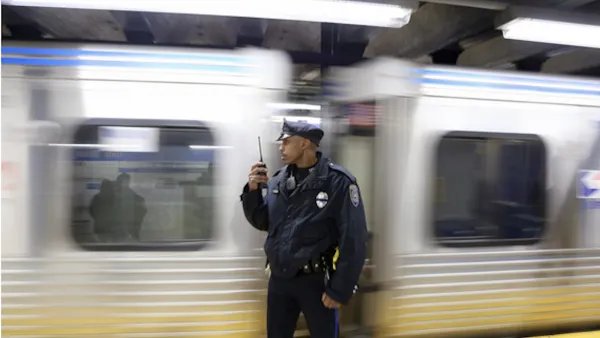
New Philly Fare Gates ‘Astonishingly Easy to Beat’
A set of high-tech gates aimed at limiting fare evasion is already failing.
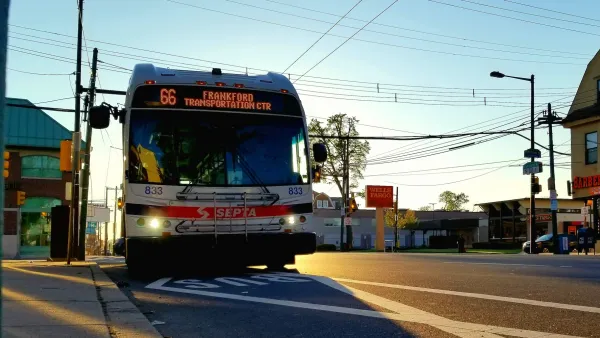
SEPTA's bus-mounted lane enforcement cameras cut travel times by up to 6%
The AI-assisted cameras have issued nearly 200,000 citations to drivers blocking bus lanes.
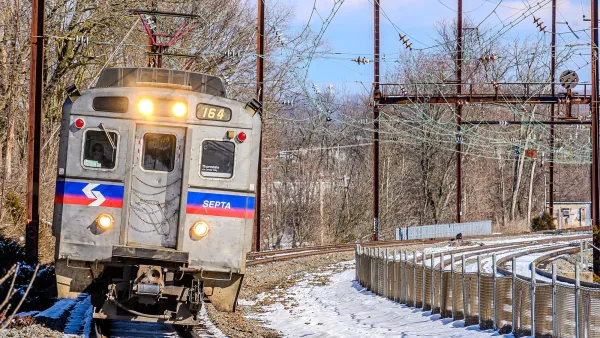
SEPTA Borrows Maryland's Rail Cars to Replace Fleet That Kept Catching Fire
The agency’s efforts to repair its Silverliner fleet is being hampered by supply chain delays.

The state-sanctioned urbicide of Austin
People don’t kill cities. Freeways do.

US to reduce Colorado River water deliveries to Mexico
A new Colorado Treaty amendment reduces Mexico’s Colorado River water allocation by 250,000 acre feet.

New Jersey’s second-largest city bans standalone data centers
Jersey City will continue to allow co-location facilities, such as those meant for research institutions that store their own data.

Amtrak not solely to blame for New Jersey commuter rail's unreliability, report finds
A new study from the Garden State Initiative found that NJ Transit’s budget grew 20% across a 4 year period, but reliability declined significantly over the same period.

EPA erases limits on planet-warming pollution from power plants
Under Monday’s plan, power plants would still have some limits on how much mercury, arsenic and other contaminants they can emit.

Phoenix announces new on-demand transit service, more frequent RAPID buses
Both new services will launch in October, and are part of Phoenix's Project Effective Access Solutions for Easing Congestion.

FREE Course: Walkable City 1: Why Walkability?
After describing his path towards focusing on walkability as the essence of good planning, Jeff Speck marches through his five principal reasons for making more walkable places.
Reinventing Malls: Planning Alchemy—Turning Gray Fields Into Gold
The course focuses on the opportunities and imperatives that shape reinvention of mall sites.

Eagle County Government
Harvard University Graduate School of Design
Nashville Planning Department
The Architects Foundation
University of Cincinnati Online
The Pocatello Development Authority
The Urban Renewal Agency of the City of Pocatello
Journal of the American Planning Association