State and local officials say the $1 billion project will heal neighborhoods divided by the Kensington Expressway, but community members say the proposed plan will exacerbate already poor air quality in the area.


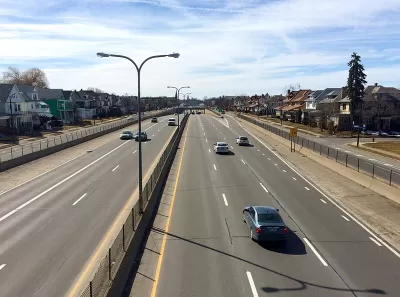
When it was built in the 1950s, the Kensington Expressway cleaved neighborhoods on the East Side of Buffalo, New York, apart and led to air quality-related health concerns for nearby residents. A new $1 billion project funded by the Bipartisan Infrastructure Law proposes to sink a three-quarter mile section of the highway and cap it with a park to reconnect the neighborhoods and restore a historic boulevard. But some locals are fighting it, saying it will only make the pollution worse, reports Benjamin Schneider in a Bloomberg CityLab article. The project’s environmental assessment projected that car exhaust pushed out either end of the tunnel by the airflow caused by the moving vehicles “would increase pollution levels by about 6% over current conditions in the areas immediately adjacent to the tunnel entrances, even as air quality would improve slightly on the cap itself,” Schneider writes.
According to Schneider, “the debate underscores the challenges facing the US Department of Transportation’s Reconnecting Communities program … that’s designed to redress the harms of urban highways built across predominantly Black neighborhoods during the 1950s and ’60s. Some of the biggest and most costly projects being funded by the program are freeway caps — a popular strategy for knitting neighborhoods back together without reducing the volume of vehicles or the emissions they produce.” He reports that Philadelphia, Atlanta, and Austin are considering using funding from the federal infrastructure act program for freeway caps.
The project is one of many of a growing “cap and cover” movement that state and local governments are hopping aboard, as reported by the Daily Beast. But questions about the long-term implications of these projects remain. A Colorado Public Radio News article about Denver’s new 4-acre cap park above I-70 that opened last year states, “Air quality concerns are only one reason anti-highway activists now see Denver’s park as a cautionary tale.” Among others are fears that the new public green space and park amenities will spur gentrification and displacement of existing community members.
FULL STORY: A Highway Cap Divides the City It Was Designed to Reconnect

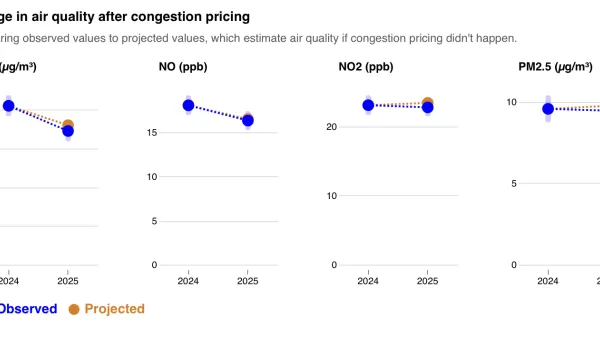
First study of NYC congestion zone’s air quality impact shows improvements
The study also examined air quality around freeways which experts worried would see increased traffic from people avoiding the tolls.
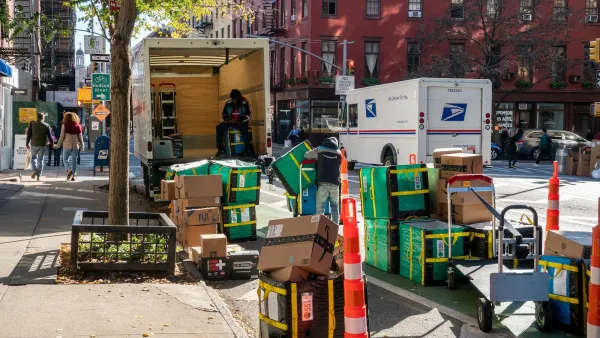
Report: 75% of NYC warehouses are in 'disadvantaged communities'
Low-income New Yorkers are 1.2 times more likely to live within half a mile of a warehouse.
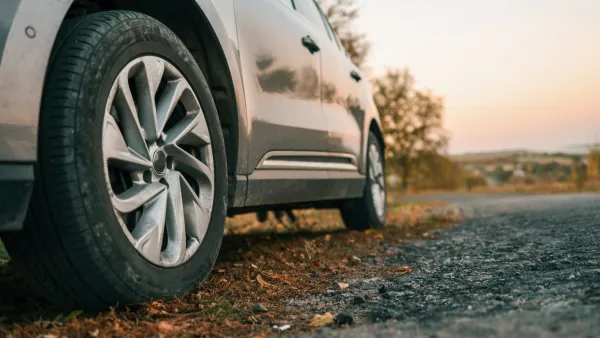
Study: Airborne tire pollution is harmful to human health
Rubber particles that wear off tires combine with other chemicals to create harmful airborne pollutants.

Planetizen Federal Action Tracker
A weekly monitor of how Trump’s orders and actions are impacting planners and planning in America.

The state-sanctioned urbicide of Austin
People don’t kill cities. Freeways do.

US to reduce Colorado River water deliveries to Mexico
A new Colorado Treaty amendment reduces Mexico’s Colorado River water allocation by 250,000 acre feet.

5 New England states march closer to 800 megawatt wind energy project
Securing federal approval for the project may be complicated under the Trump administration, which has historically been hostile towards domestic wind power.

Baltimore to break ground on $50 million Transit Priority Project
The project will bring faster bus trips, safer streets and better bike connections to Baltimore.

Airbnb launches $250 million 'last-dollar financing' housing accelerator, makes first investment in Austin
The company will put $6.4 million towards affordable housing development in Texas’ capital.

FREE Course: Walkable City 1: Why Walkability?
After describing his path towards focusing on walkability as the essence of good planning, Jeff Speck marches through his five principal reasons for making more walkable places.
Reinventing Malls: Planning Alchemy—Turning Gray Fields Into Gold
The course focuses on the opportunities and imperatives that shape reinvention of mall sites.


Eagle County Government
Harvard University Graduate School of Design
Nashville Planning Department
The Architects Foundation
University of Cincinnati Online
The Pocatello Development Authority
The Urban Renewal Agency of the City of Pocatello
Journal of the American Planning Association