Jarrett Walker calls for a more social approach to transit planning.


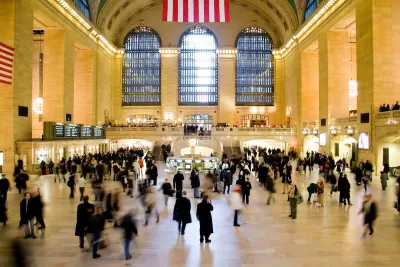
In an excerpt from his book, Human Transit, Revised Edition: How Clearer Thinking about Public Transit Can Enrich Our Communities and Our Lives, published in Next City, Jarrett Walker argues that American individualism is harming the nation’s public transit systems.
Using a quote from Elon Musk as an example, Walker notes that “With adequate funding and in the context of good city planning, public transit can do all of these things for vast numbers of people, though not for everyone and possibly not for Elon Musk.”
In fact, the way transit forces you to interact in some small way with strangers is one of its strengths. “At its most successful, a transit system’s ridership is as diverse as the city or community it serves. It’s full of all kinds of people making all kinds of trips, all being a bunch of random strangers to each other.”
When transit agencies struggle to create specialized services for various groups of people, the system as a whole can suffer from inefficiency. Walker recommends that, instead of considering user groups separately, “we must think of patterns that many different people will find useful, so that all those people end up on the same vehicle, sharing the expensive time of a single driver.” The diversity of a transit system’s ridership, for Walker, is indicative of its success.
FULL STORY: Individualism Is Making Public Transit Worse

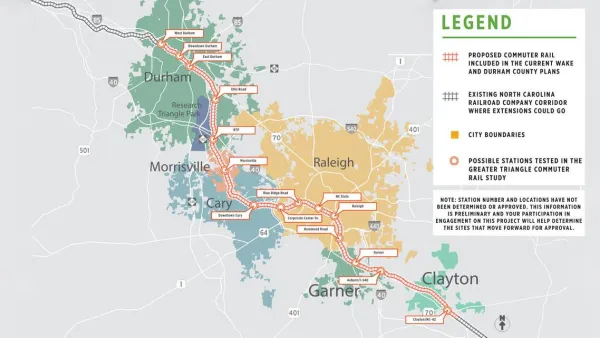
FTA Rejects North Carolina Commuter Rail Funding
As commuter patterns shift, so too do the transit funding preferences of the federal government.
Austin’s Project Connect Transit Plan Drastically Reduced
The details of drastic reductions to the proposed building program for Austin’s Project Connect long-range transit plan are now open for public comment.

Funding for Planned Bus Rapid Transit Routes Survives Scare in the Indiana General Assembly
Despite the temporary victory for transit advocates in Indianapolis, the battle over transit funding continuous in the Indiana General Assembly.

The state-sanctioned urbicide of Austin
People don’t kill cities. Freeways do.

US to reduce Colorado River water deliveries to Mexico
A new Colorado Treaty amendment reduces Mexico’s Colorado River water allocation by 250,000 acre feet.

New Jersey’s second-largest city bans standalone data centers
Jersey City will continue to allow co-location facilities, such as those meant for research institutions that store their own data.

Amtrak not solely to blame for New Jersey commuter rail's unreliability, report finds
A new study from the Garden State Initiative found that NJ Transit’s budget grew 20% across a 4 year period, but reliability declined significantly over the same period.

EPA erases limits on planet-warming pollution from power plants
Under Monday’s plan, power plants would still have some limits on how much mercury, arsenic and other contaminants they can emit.

Phoenix announces new on-demand transit service, more frequent RAPID buses
Both new services will launch in October, and are part of Phoenix's Project Effective Access Solutions for Easing Congestion.

FREE Course: Walkable City 1: Why Walkability?
After describing his path towards focusing on walkability as the essence of good planning, Jeff Speck marches through his five principal reasons for making more walkable places.
Reinventing Malls: Planning Alchemy—Turning Gray Fields Into Gold
The course focuses on the opportunities and imperatives that shape reinvention of mall sites.

Eagle County Government
Harvard University Graduate School of Design
Nashville Planning Department
The Architects Foundation
University of Cincinnati Online
The Pocatello Development Authority
The Urban Renewal Agency of the City of Pocatello
Journal of the American Planning Association