The legislation would call for speed-limiting technology on cars made and sold in the state that would keep speeds to no more than 10 miles over the posted speed limit.



A California bill proposed by state senator Scott Wiener could require vehicles sold in California to be equipped with speed governors, a mechanism that limits the vehicle’s top speed.
According to an article by Ricardo Cano in the San Francisco Chronicle, “The bill, introduced Wednesday, would require cars and trucks of the 2027 model year or later that are built or sold in California to include speed governors that would prohibit motorists from driving more than 10 mph over posted speed limits.” The bill would exempt emergency vehicles.
Cities are turning to lower speed limits as one tool for reducing roadway deaths. For pedestrians, the chance of dying after being hit by a vehicle dramatically increases with higher speeds.
The proposed bill would also require trucks over 10,000 pounds to be equipped with side underride guards, which prevent vehicles and people from going under trucks during a crash. Rear underride guards have been required since 1998—though the movement to mandate them began in 1967 after the grisly death of actress Jayne Mansfield in an underride crash.
FULL STORY: California could require car ‘governors’ that limit speeding to 10 mph over posted limits

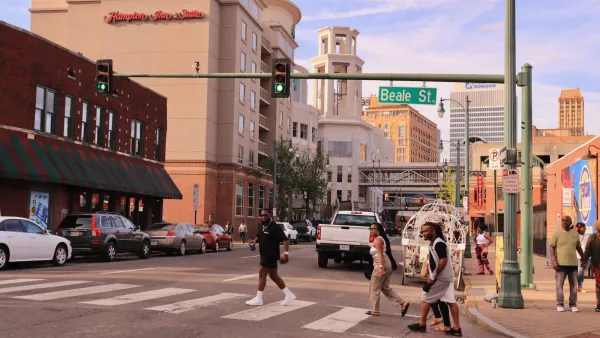
Memphis is the nation's most dangerous city for pedestrians
Memphis had the highest rate of traffic deaths for people walking in the US for two years in a row.

NYC Legislators Continue Fight to Set Own Speed Limits
Advocates say lower speed limits save lives and prevent fatal crashes on busy city streets.
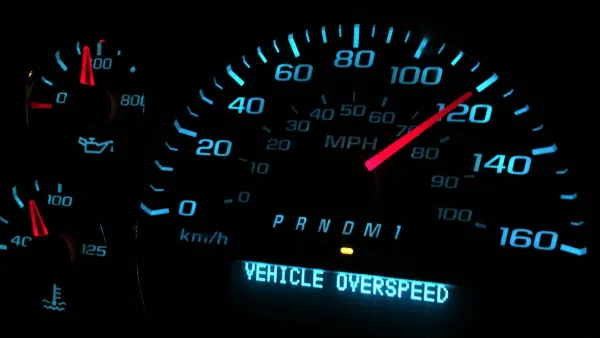
How Speed Governors Could Save Lives
Most personal vehicles can travel at speeds of over 100 miles per hour, far above any U.S. speed limit. Why?

Planetizen Federal Action Tracker
A weekly monitor of how Trump’s orders and actions are impacting planners and planning in America.

The state-sanctioned urbicide of Austin
People don’t kill cities. Freeways do.

US to reduce Colorado River water deliveries to Mexico
A new Colorado Treaty amendment reduces Mexico’s Colorado River water allocation by 250,000 acre feet.

5 New England states march closer to 800 megawatt wind energy project
Securing federal approval for the project may be complicated under the Trump administration, which has historically been hostile towards domestic wind power.

Baltimore to break ground on $50 million Transit Priority Project
The project will bring faster bus trips, safer streets and better bike connections to Baltimore.

Airbnb launches $250 million 'last-dollar financing' housing accelerator, makes first investment in Austin
The company will put $6.4 million towards affordable housing development in Texas’ capital.

FREE Course: Walkable City 1: Why Walkability?
After describing his path towards focusing on walkability as the essence of good planning, Jeff Speck marches through his five principal reasons for making more walkable places.
Reinventing Malls: Planning Alchemy—Turning Gray Fields Into Gold
The course focuses on the opportunities and imperatives that shape reinvention of mall sites.

Eagle County Government
Harvard University Graduate School of Design
Nashville Planning Department
The Architects Foundation
University of Cincinnati Online
The Pocatello Development Authority
The Urban Renewal Agency of the City of Pocatello
Journal of the American Planning Association