The program issued ‘mobility wallets’ to 1,000 residents who took over 67,000 trips.


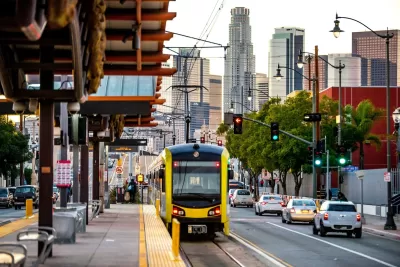
A one-year ‘universal basic mobility’ pilot project in Los Angeles is nearing its close, writes Maylin Tu in Next City, offering a model for how cities can improve mobility for low-income transit users, boost ridership, and reduce emissions.
Other cities have experimented with the concept of ‘transit wallets’ that give residents a fixed subsidy that can be used for any transit service or product (for example, recipients can save unused funds over several months to use toward purchasing an e-bike). In Los Angeles, the pilot program included 1,000 South Los Angeles residents.
“In addition to the mobility wallet, the pilot includes an e-bike lending library, an expansion of BlueLA, an electric vehicle car-share program and the installation of electric vehicle charging stations, among other initiatives.” Future phases will expand the program to another 2,600 residents from South L.A. and Los Angeles County, and Metro is working to secure federal funding for the program’s future expansion.
While the majority of trips using the program were taken on public transit, participants spent the most funds on ride-hailing and taxi services (likely because of their higher cost). “According to Metro, participants are taking the bus or train during normal commute times and taking ride-hailing services early in the morning or late at night, indicating that participants are using options like Uber and Lyft when transit options are less available.”
Read the full story: America’s Biggest Universal Basic Mobility Experiment Is Taking Place in L.A.

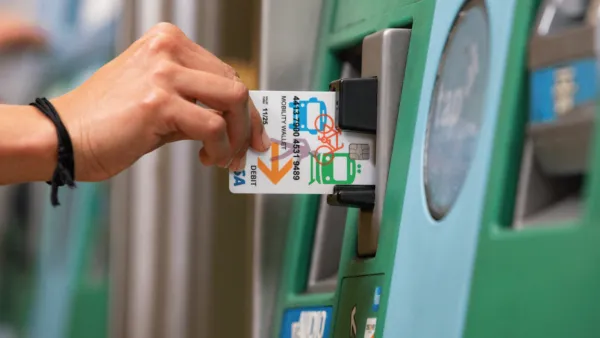
LA’s ‘Mobility Wallet’ Helps Bridge Transportation Gaps
The city gave 1,000 residents a $150 monthly transportation stipend that covered transit, bike share, ride hailing, and car rentals.

Can L.A. Metro Fund its Fareless Transit Pilot?
The Los Angeles County Metropolitan Transportation Authority Board of Directors has approved a program that would eliminate fares for students and low-income riders, but the program's future rests on finding sustainable funding sources.
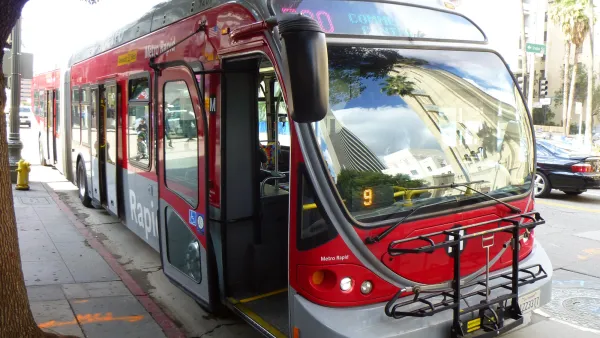
L.A. Metro Will Pilot Free Fares for Most Riders
The Los Angeles County Metropolitan Transportation Authority will let low-income residents and K-12 students ride for free starting in January 2022.

Amtrak, CN end decades-long dispute with eight-year agreement
The new operating agreement establishes an updated framework for the companies to work together, including processes to resolve disputes.

Northwest rail fans eager for Sept. 30 debut of Amtrak’s Airo fleet
Get ready for that new train smell and more seats. But they won’t go faster or run more frequently on the Cascades route in Washington and Oregon.

Judges permit Denver to divert 77,000 acre feet from the Colorado River for reservoir expansion
Overuse and climate change have caused the Colorado River’s water levels to plummet.

NYC to turn city-owned property into thousands of homes
The city has scheduled a public hearing regarding the development for October.

Buses travel at 5mph along this route in NYC. The Bronx's first-ever busway looks to change that
Prior to the busway, buses on the Bx36 route traveled as slowly as 5 miles per hour.

Pittsburg launches 'EZ permits,' aims for one-day turnaround for low-risk permits
The pilot ‘fast lane’ for permits is part of a bundle of modernization efforts for Pittsburg’s permitting process.

FREE Course: Walkable City 1: Why Walkability?
After describing his path towards focusing on walkability as the essence of good planning, Jeff Speck marches through his five principal reasons for making more walkable places.
Reinventing Malls: Planning Alchemy—Turning Gray Fields Into Gold
The course focuses on the opportunities and imperatives that shape reinvention of mall sites.

City of Thousand Oaks
City of Wisconsin Rapids
Harvard University Graduate School of Design
The Architects Foundation
University of Cincinnati Online
The Pocatello Development Authority
The Urban Renewal Agency of the City of Pocatello