While many Southwest cities are looking for ways to conserve water and limit growth as water supplies become strained, one town is pressing ahead with rapid development.


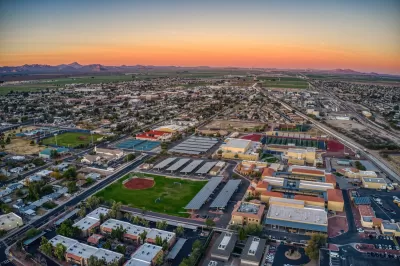
In an article for The Guardian, Oliver Milman describes how a fast-growing Arizona community is looking for new water sources to support its growing population, even as water resources across the Southwest become more strained.
“Buckeye expects to one day contain as many as 1.5 million people, rivaling or even surpassing Phoenix – the sixth largest city in the US, which sits in a county that uses roughly 2bn gallons of water a day – by furthering the tendrils of suburbia, with its neat lawns, snaking roads and large homes, into the baking desert.”
Buckeye has no plans to slow down its growth, with its mayor saying, “Personally, my view is that we are still full steam ahead.” The city is looking at several solutions, including bringing in water from California or Mexico. “Perhaps the most “crazy” of the ideas is the one that would involve building a desalination plant in the Mexican town of Puerto Peñasco, perched on the edge of the Gulf of California, to suck up seawater and then send the treated water in a pipeline several hundred miles north to Arizona.”
The state itself is also considering new water sources. “About a third of the state’s water supply comes from the Colorado River, which has shrunk as temperatures have risen. Last year, under a mechanism where Arizona shares water with other states, its allotment of Colorado River water was cut by 21%.”
Arizona has seen some success when it comes to water conservation: “somehow Arizona uses less water than it did in the 1950s despite now having 500% more people,” Milman writes. But as conditions become hotter and drier, the past pay not be a good indicator for the future. “Arizona may be able to move the sea from Mexico, but somehow out-engineering the climate crisis in the longer term will be an even more grueling feat.”
FULL STORY: Pipeline dreams: the desert city out to surpass Phoenix by importing water

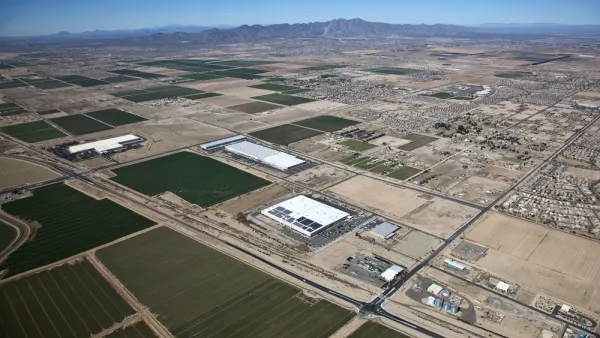
Arizona Tapping Groundwater to Fuel Suburban Growth
Critics say Arizona’s growth patterns are unsustainable and dangerous, given the depleted Colorado River and the state’s deepening reliance on groundwater.
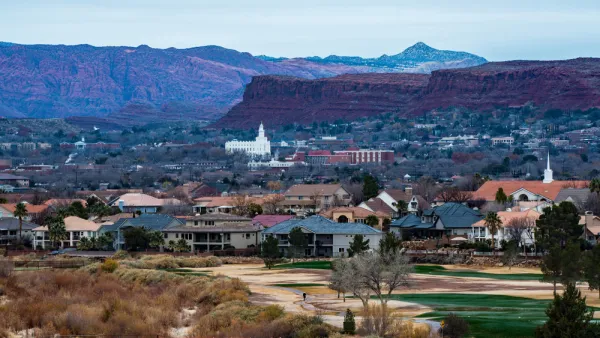
Can Southwest Utah’s Water Supply Handle its Explosive Growth?
A remote corner of the state is the nation’s fastest-growing metro area, but concerns about water supplies across the Southwest signal an uncertain future.
Nevada Bans the Use of Colorado River Water for Ornamental Grass
AB 356 could be "the most aggressive municipal water conservation measure that's been taken in the western United States."

The state-sanctioned urbicide of Austin
People don’t kill cities. Freeways do.

US to reduce Colorado River water deliveries to Mexico
A new Colorado Treaty amendment reduces Mexico’s Colorado River water allocation by 250,000 acre feet.

New Jersey’s second-largest city bans standalone data centers
Jersey City will continue to allow co-location facilities, such as those meant for research institutions that store their own data.

Amtrak not solely to blame for New Jersey commuter rail's unreliability, report finds
A new study from the Garden State Initiative found that NJ Transit’s budget grew 20% across a 4 year period, but reliability declined significantly over the same period.

EPA erases limits on planet-warming pollution from power plants
Under Monday’s plan, power plants would still have some limits on how much mercury, arsenic and other contaminants they can emit.

Phoenix announces new on-demand transit service, more frequent RAPID buses
Both new services will launch in October, and are part of Phoenix's Project Effective Access Solutions for Easing Congestion.

FREE Course: Walkable City 1: Why Walkability?
After describing his path towards focusing on walkability as the essence of good planning, Jeff Speck marches through his five principal reasons for making more walkable places.
Reinventing Malls: Planning Alchemy—Turning Gray Fields Into Gold
The course focuses on the opportunities and imperatives that shape reinvention of mall sites.

Eagle County Government
Harvard University Graduate School of Design
Nashville Planning Department
The Architects Foundation
University of Cincinnati Online
The Pocatello Development Authority
The Urban Renewal Agency of the City of Pocatello
Journal of the American Planning Association