The rush to secure coastal leases for wind energy production is causing some critics to call for stronger scrutiny from regulatory agencies.


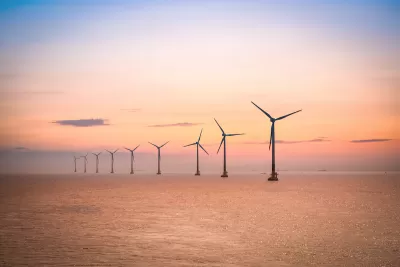
The rapid growth of offshore wind projects in California is prompting concern from some residents and environmental groups leery of the potential of massive wind farms to transform the coastal environment in unpredictable ways.
As Julie Cart explains in an article for CALmatters, “The state’s blueprint envisions offshore wind farms producing 25 gigawatts of electricity by 2045, powering 25 million homes and providing about 13% of the power supply.” Last year, the federal government auctioned off 583 square miles off the Northern and Central California coast for wind leases.
“The projects will be a giant experiment: No other floating wind operations are in such deep waters.” Additionally, “Each of the wind farms off Humboldt and Morro Bay will require an extensive network of offshore and onshore development, including miles of undersea transmission lines, expanded ports, new or upgraded onshore substations and electrical distribution networks.”
Potential risks include the overindustrialization of coastal areas, the disruption of migrating sea life and birds, and excessively high maintenance costs. The California Coastal Commission, one of the agencies responsible for permitting, acknowledges the timeline is somewhat rushed, but claims that “through ‘adaptive management’ — the ability to adjust policies and requirements as conditions change — detrimental effects can be avoided or mitigated.”
Read the full story: “A massive enterprise’: California’s offshore wind farms are on a fast track

California presses forward on offshore wind
The state is taking steps to prepare its grid and port infrastructure for offshore wind projects despite the federal government's pushback on the technology.
Trump Administration to Pay Energy Firm $1 Billion to Kill Wind Farms in Favor of Fossil Fuel Projects
TotalEnergies will forfeit its lease on two proposed wind energy projects off the coasts of New York and North Carolina.
Nation’s Largest Offshore Wind Project, Suspended by Trump, Restarts Construction
A judge issued a temporary restraining order against the Trump administration’s suspension of five East Coast offshore wind projects.

Planetizen Federal Action Tracker
A weekly monitor of how Trump’s orders and actions are impacting planners and planning in America.

The state-sanctioned urbicide of Austin
People don’t kill cities. Freeways do.

US to reduce Colorado River water deliveries to Mexico
A new Colorado Treaty amendment reduces Mexico’s Colorado River water allocation by 250,000 acre feet.

NYC cools commuters with city's first rain garden above a bus stop
New York City officials say the plants in the rain garden can absorb 16 gallons of rainwater during heavy storms.

Brightline West’s future may rely on $6 billion federal loan
The company has until Nov. 2 to make a $400 million equity investment into its proposed high-speed rail line.

LA Metro’s ultimatum: no extra buses for LA28 if federal funding isn’t imminently secured
If Metro does not provide additional buses, LA28 organizers will have to find a new way to manage Olympic traffic. LA28’s budget does not include a line item for transit.

FREE Course: Walkable City 1: Why Walkability?
After describing his path towards focusing on walkability as the essence of good planning, Jeff Speck marches through his five principal reasons for making more walkable places.
Reinventing Malls: Planning Alchemy—Turning Gray Fields Into Gold
The course focuses on the opportunities and imperatives that shape reinvention of mall sites.

Eagle County Government
Harvard University Graduate School of Design
Nashville Planning Department
The Architects Foundation
University of Cincinnati Online
The Pocatello Development Authority
The Urban Renewal Agency of the City of Pocatello
Journal of the American Planning Association