The city wants to build the nation’s largest composting facility as part of its ‘zero waste’ efforts.


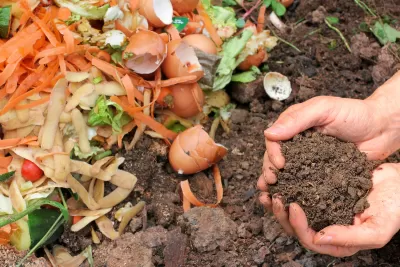
A $4 million Environmental Protection Agency (EPA) grant will help the city of Baltimore build the nation’s largest municipally managed composting facility, reports Christine Condon in the Baltimore Sun.
The proposed Bowley’s Lane Composting Facility will likely break ground in 2025. “According to its 10-Year Solid Waste Management Plan, Baltimore City already had plans to expand the Eastern Sanitation Yard along Bowleys Lane, near Moravia Road, to include a transfer station for trash trucks. According to an EPA fact sheet, the composting facility would be co-located with the new transfer station.”
The solar-powered facility will be able to process 12,000 tons of organic material each year. As Condon notes, “In 2021, Maryland legislators passed a law requiring certain large generators of food waste, such as higher education institutions, to separate their scraps for composting. But the law only applies to facilities within 30 miles of a compost facility with the capacity to handle their materials.”
FULL STORY: Baltimore receives federal funding to build composting facility

First New U.S. Waste-to-Energy Plant in 20 Years to Open in Florida
Waste-to-energy plants, or incinerators, are classified as renewable power plants by the EPA. A controversial Baltimore plant is under construction as well. More common in Europe, they may be catching on stateside due to low recycling rates.
City Gives Incentives To Recycle
In Corpus Christi, Texas, officials have entered a public-private partnership to give people more reasons to recycle.
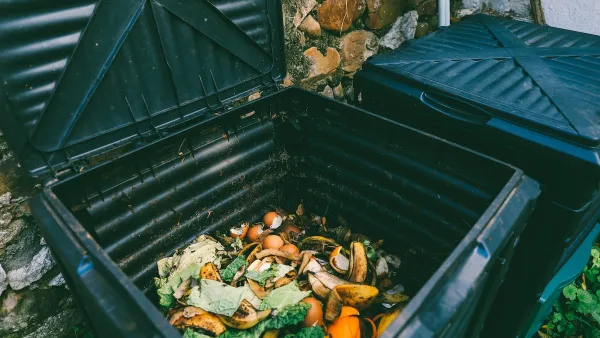
Massachusetts Has the Nation’s Only Successful Food Waste Ban
The state has reduced its methane emissions by 25.7 percent per ton of waste following a law that seeks to eliminate food waste from landfills.

Planetizen Federal Action Tracker
A weekly monitor of how Trump’s orders and actions are impacting planners and planning in America.

The state-sanctioned urbicide of Austin
People don’t kill cities. Freeways do.

US to reduce Colorado River water deliveries to Mexico
A new Colorado Treaty amendment reduces Mexico’s Colorado River water allocation by 250,000 acre feet.

Mamdani overhauls NYC's Vision Zero plan with 100 new policy goals
The overhaul aims to reduce traffic deaths and make streets safer for pedestrians, cyclists and drivers through lower speed limits, new safety infrastructure and more.

Amtrak not solely to blame for New Jersey commuter rail's unreliability, report finds
A new study from the Garden State Initiative found that NJ Transit’s budget grew 20% across a 4 year period, but reliability declined significantly over the same period.

EPA erases limits on planet-warming pollution from power plants
Under Monday’s plan, power plants would still have some limits on how much mercury, arsenic and other contaminants they can emit.

FREE Course: Walkable City 1: Why Walkability?
After describing his path towards focusing on walkability as the essence of good planning, Jeff Speck marches through his five principal reasons for making more walkable places.
Reinventing Malls: Planning Alchemy—Turning Gray Fields Into Gold
The course focuses on the opportunities and imperatives that shape reinvention of mall sites.

Eagle County Government
Harvard University Graduate School of Design
Nashville Planning Department
The Architects Foundation
University of Cincinnati Online
The Pocatello Development Authority
The Urban Renewal Agency of the City of Pocatello
Journal of the American Planning Association