In Corpus Christi, Texas, officials have entered a public-private partnership to give people more reasons to recycle.


The partnership with Recyclebank rewards residents based on the weight of their recyclables. The more a household recycles, the more "rewards" they can earn from local stores. It comes as the city reduces the frequency of recycling pickup to once a week, with bigger bins and a "single stream" where all recycling can go into the same bin.
"The program could cost up to $1.1 million a year, which the city would collect with $1.20 fees on monthly city utility bills, Solid Waste Director Lawrence Mikolajczyk said.
'There is a cost,' Assistant City Manager Oscar Martinez said. "One of the things we were striving to avoid was an increase in fees. We said, 'Let's not add any rate increase when we're switching to once-a-week pickup.'"
Read the full story: City may give incentives to recycle

Toughest Recyclers In the West (Or Anywhere)?
The city of San Francisco approves a plan to require composting and recycling citywide by this fall, with fines kicking in within two years.
States, Cities Keep Eye On Plastic Bags
The Texas Legislature is considering a bill that mirrors efforts in cities across the state and nation to reduce the use of plastic bags or charge for their use.
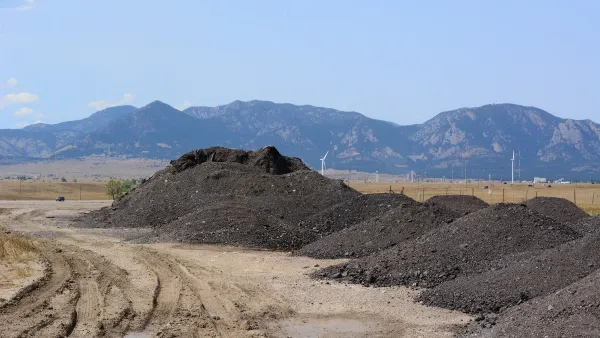
Colorado Ramps Up Rural Recycling Program
The state is creating a framework for building better access to recycling facilities and services for rural residents and businesses.

Planetizen Federal Action Tracker
A weekly monitor of how Trump’s orders and actions are impacting planners and planning in America.

Amtrak, CN end decades-long dispute with eight-year agreement
The new operating agreement establishes an updated framework for the companies to work together, including processes to resolve disputes.

Judges permit Denver to divert 77,000 acre feet from the Colorado River for reservoir expansion
Overuse and climate change have caused the Colorado River’s water levels to plummet.

Idaho may see an 18% drop in federal surface transit funding — the largest estimated cut in the US
Transit systems in rural communities are much more reliant on federal funding to provide their services.

How ‘post-disaster gentrification’ alters neighborhoods after natural calamities
After hurricanes, fires or other calamities, the original residents of a community are often replaced by younger, wealthier residents.

Maryland local governments examine if they should have more power to raise property taxes
Maryland’s housing market is out of reach for the majority of moderate-income residents.

FREE Course: Walkable City 1: Why Walkability?
After describing his path towards focusing on walkability as the essence of good planning, Jeff Speck marches through his five principal reasons for making more walkable places.
Reinventing Malls: Planning Alchemy—Turning Gray Fields Into Gold
The course focuses on the opportunities and imperatives that shape reinvention of mall sites.

Harvard University Graduate School of Design
KFH Group Inc.
Greater Baltimore Committee
The Architects Foundation
University of Cincinnati Online
The Pocatello Development Authority
The Urban Renewal Agency of the City of Pocatello