The end of an Oregon freeway project didn't get much fanfare, but the victory is worth celebrating.


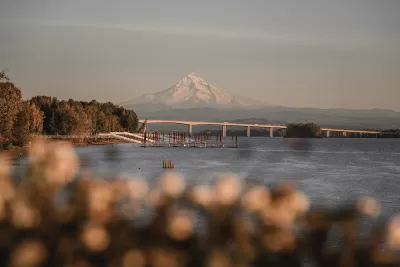
In a piece in Streetsblog USA originally published on City Observatory, Joe Cortright describes the hard-won battle of Portland, Oregon’s anti-freeway advocates as the Oregon Department of Transportation (ODOT) unceremoniously “deleted” a proposed widening project on Interstate 205 due to “revenue uncertainty.”
As Cortright notes, “This is how bad projects die: Agencies finally, and reluctantly, concede that they don’t have the money to pay for them, and that they are so bad that no one can be convinced to appropriate (or borrow) the money needed to move them forward.” The battle to stop freeway expansions is often a slog, and the final win, if and when it comes, often amounts to a “bureaucratic footnote.”
Cortright hopes this was just a “first small victory” for freeway fighters in Oregon. “Oregon DOT continues to maintain the ‘extend and pretend’ fiction that its now-$1.9 billion Rose Quarter project is still alive, but it too, will have to yield to the fiscal reality that the highway department is essentially broke and doesn’t have the resources to maintain the roads it currently has, much less build enormously expensive new ones.”
FULL STORY: This is What Victory Looks like, Freeway Fighters

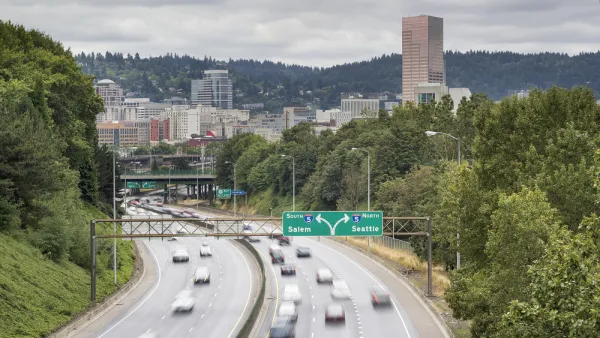
Oregon Youth Activists Protest Highway Expansion
A group of young climate activists are demanding an end to traffic-inducing road expansion projects and a renewed commitment to sustainable, transit-oriented transportation.
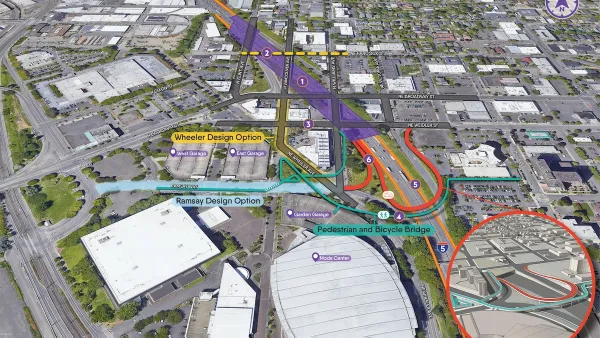
Portland Advocates Call on Feds to Oppose Freeway Expansion
The Oregon DOT is requesting a federal grant to fund a controversial freeway expansion through the Rose Quarter.
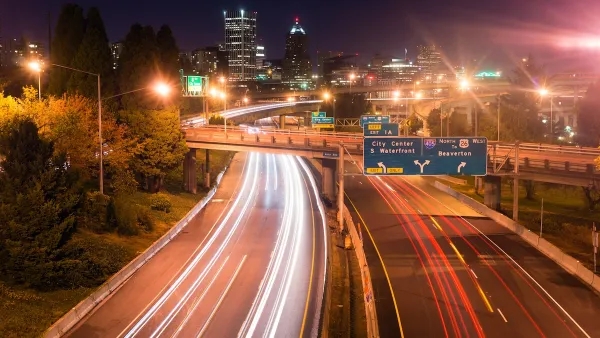
USDOT Denies Portland Freeway Expansion Grant
The agency declined the Oregon Department of Transportation’s request for $750 million to fund the I-5 Rose Quarter Improvement Project.

The state-sanctioned urbicide of Austin
People don’t kill cities. Freeways do.

US to reduce Colorado River water deliveries to Mexico
A new Colorado Treaty amendment reduces Mexico’s Colorado River water allocation by 250,000 acre feet.

New Jersey’s second-largest city bans standalone data centers
Jersey City will continue to allow co-location facilities, such as those meant for research institutions that store their own data.

Amtrak not solely to blame for New Jersey commuter rail's unreliability, report finds
A new study from the Garden State Initiative found that NJ Transit’s budget grew 20% across a 4 year period, but reliability declined significantly over the same period.

EPA erases limits on planet-warming pollution from power plants
Under Monday’s plan, power plants would still have some limits on how much mercury, arsenic and other contaminants they can emit.

Phoenix announces new on-demand transit service, more frequent RAPID buses
Both new services will launch in October, and are part of Phoenix's Project Effective Access Solutions for Easing Congestion.

FREE Course: Walkable City 1: Why Walkability?
After describing his path towards focusing on walkability as the essence of good planning, Jeff Speck marches through his five principal reasons for making more walkable places.
Reinventing Malls: Planning Alchemy—Turning Gray Fields Into Gold
The course focuses on the opportunities and imperatives that shape reinvention of mall sites.

Eagle County Government
Harvard University Graduate School of Design
Nashville Planning Department
The Architects Foundation
University of Cincinnati Online
The Pocatello Development Authority
The Urban Renewal Agency of the City of Pocatello
Journal of the American Planning Association