The Los Angeles City Council approved environmental review documents for the long-awaited Silver Lake Reservoir Master Plan, clearing the way to remake a defunct reservoir into active green and park space.


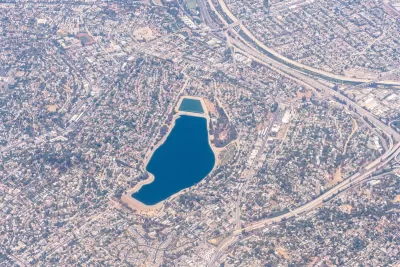
The long process of planning and designing a new future for the Silver Lake Reservoir in Los Angeles, a political drama a decade-and-half in the making, has reached a major culmination.
“The Los Angeles City Council has voted to adopt the findings of a final environmental impact report for the Silver Lake Reservoir master plan, which would convert roughly 116 acres of the 127-acre Silver Lake and Ivanhoe reservoir complex into park space,” reports Steven Sharp for Urbanize Los Angeles.
A 2.5-mile landscaped promenade weaves through seven different design components, including an expansion of the existing “Silver Lake Meadow” park space, and other features, such “the Knoll,” the “Eucalyptus Grove,” and more.
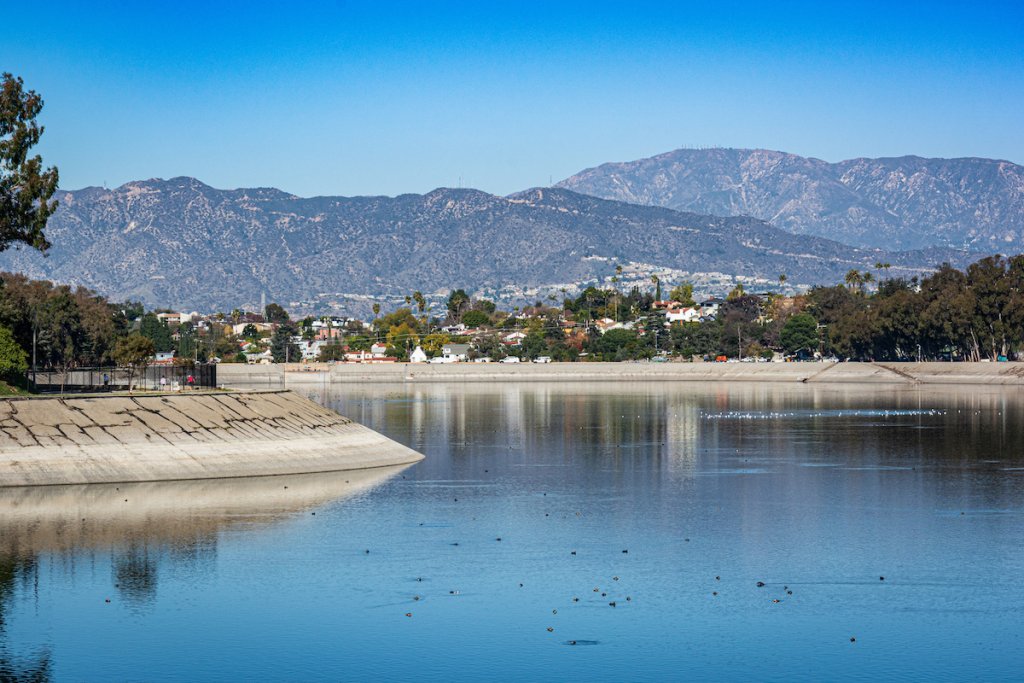
Previous plans to allow “direct access to the water through floating docks and opportunities for kayaking have been removed,” explains Sharp. “Instead, the only access to the water will be provided through paths and observational terraces built within wetland area.”
The reservoir was built under the leadership of William Mulholland and completed in 1908. Sharp also provided news coverage of the master plan’s draft environmental impact report when released in October 2022.
The plan still requires funding, however. The city hopes to compete for federal and state grants for the project, potentially completing construction in phases, depending on available funding.
The source article, linked below, includes a full collection of conceptual renderings included with the adopted master plan.
FULL STORY: L.A. City Council signs off on Silver Lake Reservoir master plan

Designing New Parks for Los Angeles
One of the most park-poor major cities in the U.S., Los Angeles is in the midst of a slight park renaissance, with a few new major projects in the works. A new exhibition looks at the state of new parks design in L.A.
LA unveils plans to reconnect MacArthur Park
The construction of Wilshire Boulevard split the park in two in 1934.
Delivering on the Promise of Parks
In LA County, even amid budget challenges, new parks are opening, targeted investments are being made in underserved communities, and long-term plans are guiding progress — demonstrating a sustained commitment to parks as essential infrastructure.

The state-sanctioned urbicide of Austin
People don’t kill cities. Freeways do.

US to reduce Colorado River water deliveries to Mexico
A new Colorado Treaty amendment reduces Mexico’s Colorado River water allocation by 250,000 acre feet.

New Jersey’s second-largest city bans standalone data centers
Jersey City will continue to allow co-location facilities, such as those meant for research institutions that store their own data.

Amtrak not solely to blame for New Jersey commuter rail's unreliability, report finds
A new study from the Garden State Initiative found that NJ Transit’s budget grew 20% across a 4 year period, but reliability declined significantly over the same period.

EPA erases limits on planet-warming pollution from power plants
Under Monday’s plan, power plants would still have some limits on how much mercury, arsenic and other contaminants they can emit.

Phoenix announces new on-demand transit service, more frequent RAPID buses
Both new services will launch in October, and are part of Phoenix's Project Effective Access Solutions for Easing Congestion.

FREE Course: Walkable City 1: Why Walkability?
After describing his path towards focusing on walkability as the essence of good planning, Jeff Speck marches through his five principal reasons for making more walkable places.
Reinventing Malls: Planning Alchemy—Turning Gray Fields Into Gold
The course focuses on the opportunities and imperatives that shape reinvention of mall sites.

Eagle County Government
Harvard University Graduate School of Design
Nashville Planning Department
The Architects Foundation
University of Cincinnati Online
The Pocatello Development Authority
The Urban Renewal Agency of the City of Pocatello
Journal of the American Planning Association