Drive-thru fast food restaurants might be a staple of American life, but several U.S. cities are actively considering prohibiting the development of new drive-thrus for the benefit of traffic safety, air quality, and congestion.


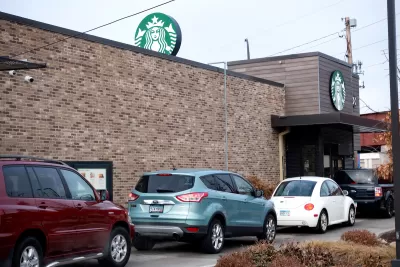
Not many U.S. cities have taken the radical step up prohibiting the development of drive-thru operations like fast food restaurants and coffee shops. Minneapolis ended drive-thru development in 2019, but the list of cities prioritizing traffic safety and air quality over driver convenience is relatively small.
Now city planners in Golden, Colorado are considering an ordinance that would limit, or even ban, the development of drive-thrus in the city.
John Aguilar reports in a paywalled article for the Denver Post that Golden has launched what is expected to be a months-long process to explore the potential to limit, or entirely prohibit, drive-thrus in the city.
“Councilman Rob Reed, who with Brown brought the idea forward for consideration, said the detractions of drive-thrus are evident,” reports Aguilar. “They require huge amounts of asphalt, which exacerbates the urban heat island effect common to many paved-over areas. More notably, there’s the impact on air quality, with motorists spewing emissions as they inch forward for that crispy chicken sandwich, bank withdrawal or venti latte.”
Aguilar reports that the changes to drive-thru rules will be considered as part of the city’s ongoing process to revise its zoning code. “Reed said he doesn’t expect Golden to make any decisions on the matter until next spring, at the earliest,” writes Aguilar.
As for the “No-Drive-Thrus Club,” Aguilar also notes that, in addition to Minneapolis, Long Beach in California issued a temporary ban on drive-thrus in 2019 and the Salt lake City Council is expected to vote on its own drive-thru ban for a part of the city in just a few weeks.
Read the full story: Can there be too many drive-thrus? One Colorado city is considering whether to impose a limit [paywall]

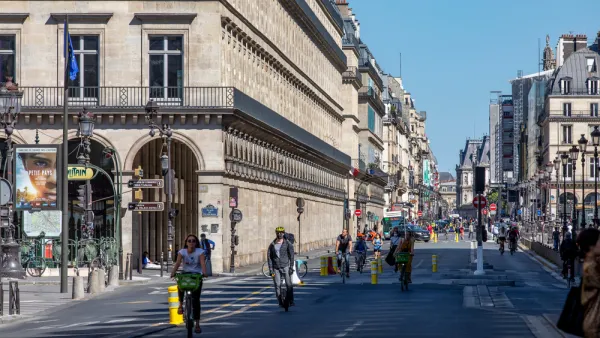
Europe Building a Post-Car Future
While the United States mobilizes to transition to electric cars, cities and countries in Europe are transitioning to fewer cars.
One Vote Left for Proposed Citywide Ban of New Drive-Throughs in Minneapolis
The city of Minneapolis could achieve another first of land use regulation next week if the City Council votes to prohibit the construction of all drive-through facilities in the entire city.
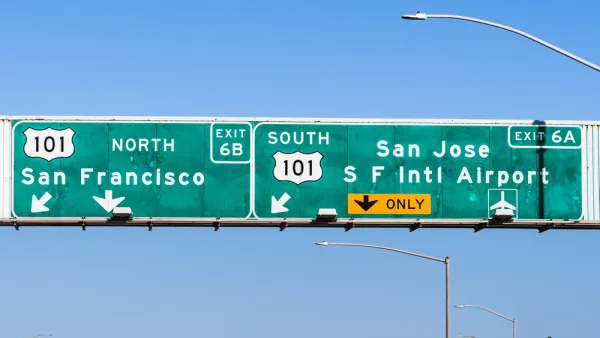
101 Freeway in California Slower Than Ever After Widening, Locals Say
Induced demand strikes again.

Planetizen Federal Action Tracker
A weekly monitor of how Trump’s orders and actions are impacting planners and planning in America.

California plans to bury El Niño’s downpour
If the state plays its cards right, it may be able to store a billion acre-feet of El Niño’s water in aquifers.

Chicago breaks ground on $3 billion megadevelopment
The new neighborhood, titled Foundry Park, will one day host 3,700 residences.

Satanic Place Names
From streams and lakes to valleys and canyons, I mapped more than 1,000 places named after the Devil.

California High-Speed Rail Authority CEO resigns after $600,000 scandal
Under Ian Choudri, the authority used taxpayer dollars to fund first class flights and trips to nightclubs.

Want to study the Missouri River? Soon, you may need unanimous approval from 10 states
Legislation would require 10 governors’ permission to study or build projects moving water outside the basin.

FREE Course: Walkable City 1: Why Walkability?
After describing his path towards focusing on walkability as the essence of good planning, Jeff Speck marches through his five principal reasons for making more walkable places.
Reinventing Malls: Planning Alchemy—Turning Gray Fields Into Gold
The course focuses on the opportunities and imperatives that shape reinvention of mall sites.

City of Rosemead
Rutgers University, Edward J. Bloustein School of Planning and Public Policy
One Hundred Miles
Hunter College, City University of New York (CUNY)
The Architects Foundation
University of Cincinnati Online
City of Cambridge
Montrose County
The Pocatello Development Authority