The new cameras are designed to reduce travel time for buses and limit speeding at dangerous intersections.


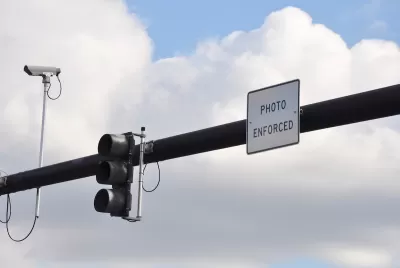
New traffic enforcement cameras are coming to Seattle in September, reports Ryan Packer in The Urbanist, expanding a pilot program approved in 2020. The Seattle Department of Transportation (SDOT) announced three locations that will receive new cameras to ticket drivers who block a marked crosswalk or mid-street box. and enforce the dedicated transit lane on the West Seattle Bridge.
According to Packer, “The new cameras all target locations with long-standing complaints of low compliance with traffic laws and look poised to have a positive impact on mobility for transit riders and pedestrians alike.”
“These three additional cameras will bring the total number of cameras active under the state pilot program to 11, with one location (Fifth Avenue and Olive Way) acting as both a transit-lane and a block-the-box camera.” The pilot program that made the cameras possible was initially scheduled to expire this summer, but was extended to 2025.
Data obtained by The Urbanist after the pilot program began showed that “the cameras were having their intended effect of impacting future driver behavior, though the relatively small number of cameras in the city didn’t provide a huge sample size and more data may very well show more repeat offenders.”
Read the full story: Seattle Plans Expansion of Block-the-Box and Transit Lane Cameras This Fall
Traffic Camera Revenues to Fund Capacity-Building Programs in Washington State
Revenue from Washington's traffic enforcement cameras will go in part toward efforts to assist small communities in applying for grants and accessing funding opportunities.
After San Francisco installed traffic cameras, speeding dropped by 80%
The city was allowed to install speed cameras as part of a five-year pilot program approved by California in 2023.
USDOT Blocks Federal Funding for Traffic Cameras
Applicants to the Safe Streets and Roads for All grant program will not be allowed to use funds for automated traffic enforcement.

Planetizen Federal Action Tracker
A weekly monitor of how Trump’s orders and actions are impacting planners and planning in America.

California plans to bury El Niño’s downpour
If the state plays its cards right, it may be able to store a billion acre-feet of El Niño’s water in aquifers.

Desperate measures: Advocates weigh draining Lake Powell to fill Colorado River
Draining the reservoir could reduce evaporation losses by a couple hundred thousand acre-feet.

Los Angeles just elected an urban planner as its mayor
Transportation analysts are optimistic that Raman will be more aggressive in addressing transit issues than Bass.

Mamdani’s pied-à-terre tax survives legal challenge
A panel of judges found that the plaintiffs failed to demonstrate injury as a result of New York City's implementation of the tax.

Eastern Nebraska is running out of electricity
Data centers and electrification are straining eastern Nebraska’s grid, throttling economic development.

FREE Course: Walkable City 1: Why Walkability?
After describing his path towards focusing on walkability as the essence of good planning, Jeff Speck marches through his five principal reasons for making more walkable places.
Reinventing Malls: Planning Alchemy—Turning Gray Fields Into Gold
The course focuses on the opportunities and imperatives that shape reinvention of mall sites.

City of Rosemead
Rutgers University, Edward J. Bloustein School of Planning and Public Policy
One Hundred Miles
University of Michigan School for Environment and Sustainability (SEAS)
Hunter College, City University of New York (CUNY)
The Architects Foundation
City of Cambridge
Montrose County
The Pocatello Development Authority