Heat waves are causing damage and delays on commuter trains from New Jersey to Dallas.


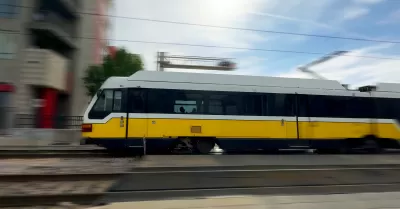
Delays on Dallas Area Rapid Transit (DART) trains last week were potentially caused by heat, reports Zaeem Shaikh in The Dallas Morning News. “DART spokesman Gordon Shattles said that a damaged overhead catenary line near the station was to blame, and that it was harmed by the excessive heat.”
According to Shaikh, “The damaged line caused delays throughout the central business district, he said, and shuttle buses and a train shuttle are in place for passengers.” Service was back on track on Wednesday.
As Shaikh explains, “Catenary lines are a system of overhead wires used to supply electricity to the light rail vehicles, which are equipped with a pantograph. The pantograph, attached to the roof of the vehicle, presses against the underside of the lowest overhead wire, the contact wire, according to the Southeastern Pennsylvania Transportation Authority.”
The implications for public transit as extreme heat becomes more common could be vast. In New Jersey, a similar problem has been affecting NJ Transit and Amtrak trains, stopping trains and delaying thousands of commuters.
FULL STORY: Heat may have played a role in DART rail delays in downtown Dallas, agency says

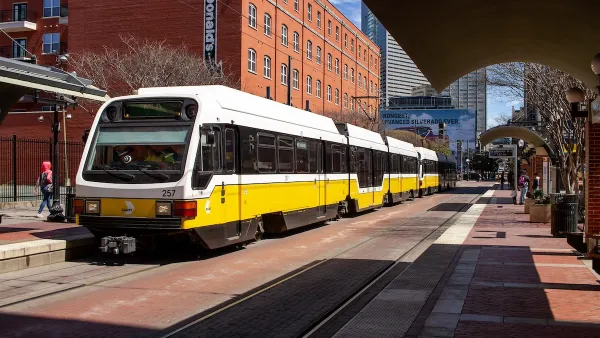
DARTSpace Platform Streamlines Dallas TOD Application Process
The Dallas transit agency hopes a shorter permitting timeline will boost transit-oriented development around rail stations.
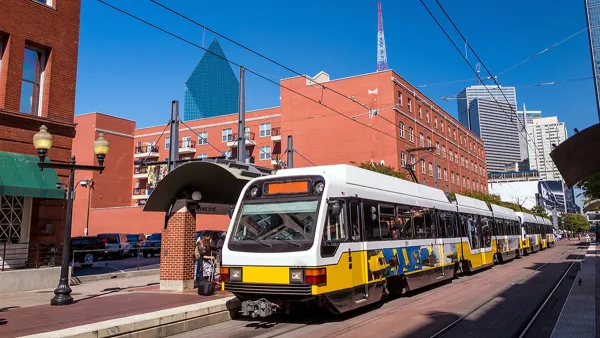
New DART Board Members Actually Ride Transit
Dallas rapid transit organization takes the rare step of bringing riders and transit advocates onto their board.
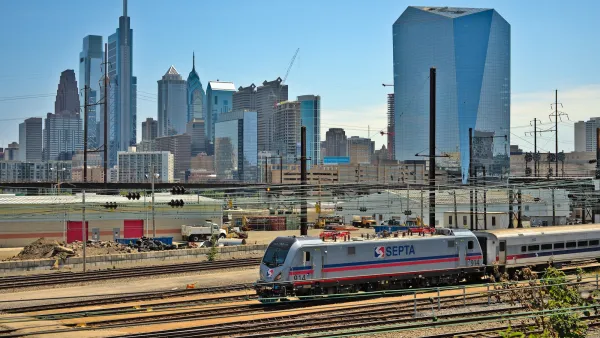
Extreme heat forces Amtrak, SEPTA to slow trains
High temperatures affect train tracks, electrical equipment and other key infrastructure.

Planetizen Federal Action Tracker
A weekly monitor of how Trump’s orders and actions are impacting planners and planning in America.

The state-sanctioned urbicide of Austin
People don’t kill cities. Freeways do.

US to reduce Colorado River water deliveries to Mexico
A new Colorado Treaty amendment reduces Mexico’s Colorado River water allocation by 250,000 acre feet.

Mamdani overhauls NYC's Vision Zero plan with 100 new policy goals
The overhaul aims to reduce traffic deaths and make streets safer for pedestrians, cyclists and drivers through lower speed limits, new safety infrastructure and more.

Amtrak not solely to blame for New Jersey commuter rail's unreliability, report finds
A new study from the Garden State Initiative found that NJ Transit’s budget grew 20% across a 4 year period, but reliability declined significantly over the same period.

EPA erases limits on planet-warming pollution from power plants
Under Monday’s plan, power plants would still have some limits on how much mercury, arsenic and other contaminants they can emit.

FREE Course: Walkable City 1: Why Walkability?
After describing his path towards focusing on walkability as the essence of good planning, Jeff Speck marches through his five principal reasons for making more walkable places.
Reinventing Malls: Planning Alchemy—Turning Gray Fields Into Gold
The course focuses on the opportunities and imperatives that shape reinvention of mall sites.

Eagle County Government
Harvard University Graduate School of Design
Nashville Planning Department
The Architects Foundation
University of Cincinnati Online
The Pocatello Development Authority
The Urban Renewal Agency of the City of Pocatello
Journal of the American Planning Association