Funding from the Low or No Emission Vehicle federal program will help the city replace its buses with new electric and other zero- or low-emission vehicles.


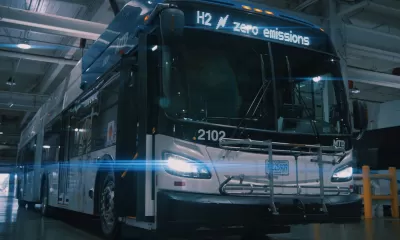
According to an article by Daja Clayton for WAND, the Champaign-Urbana Mass Transit District will receive $6.6 million in federal funds to buy new zero- or low-emission buses for its public transit fleet.
“We have a unique approach here in Champaign-Urbana because we have solar cells that are providing the electricity for the creation of hydrogen to fuel the buses,” explained Senator Dick Durbin, who made the announcement in Urbana.
“The MTD grant is part of an almost $2-billion program announced by the U.S. Federal Transportation Agency to allow states and cities to buy American-made hybrid buses.” The Low/No program, as it’s known, has been criticized for setting aside funding specifically for low-emission vehicles such as clean diesel buses, rather than letting 100 percent of funds be used for electric and zero-emissions options.
Read the full story: Champaign-Urbana Mass Transit District to replace hybrid buses with zero and low-emission transit buses

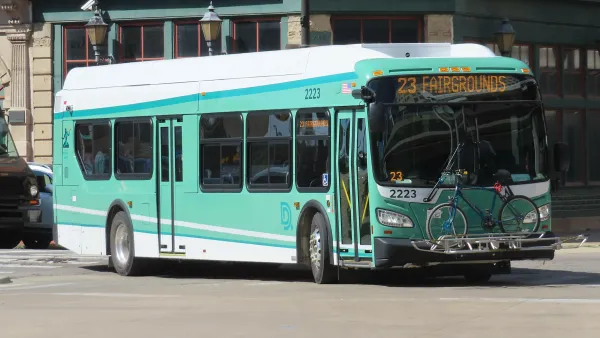
Michigan Transit Systems Awarded Federal Grants for Clean Vehicles
Federal grants are helping to ease the transition to electric and hybrid buses.
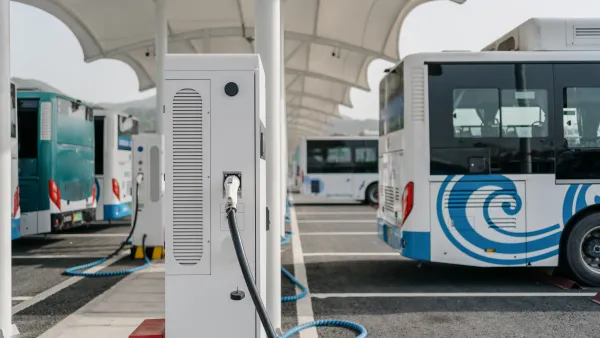
Flaws in Federal Clean Transit Programs
Two programs designed to help transit agencies shift to electric and zero-emission fleets contain rules that could slow the adoption of zero-emission vehicles.
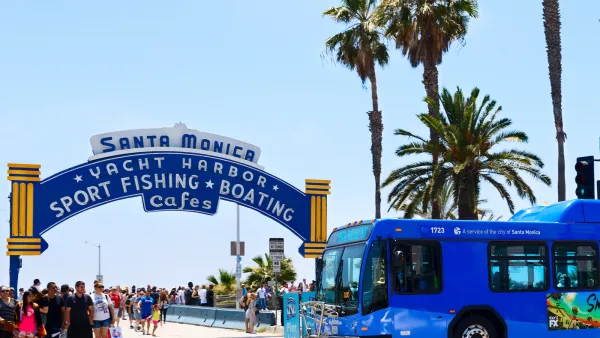
Santa Monica starts work on $56M electric bus project
Big Blue Bus plans to fully electrify its fleet by 2032.

Planetizen Federal Action Tracker
A weekly monitor of how Trump’s orders and actions are impacting planners and planning in America.

California plans to bury El Niño’s downpour
If the state plays its cards right, it may be able to store a billion acre-feet of El Niño’s water in aquifers.

Desperate measures: Advocates weigh draining Lake Powell to fill Colorado River
Draining the reservoir could reduce evaporation losses by a couple hundred thousand acre-feet.

Chicago Avenue bridge construction delays enrages city leaders
The bridge has been closed since 2025. The city originally aimed to re-open it in December, and now expects to finish construction in 2027.

NYC bus network redesign speeds up Queens buses
Rush routes have seen a 4.6% speed increase after the redesign.

California High-Speed Rail Authority picks trainset manufacturer
The California High-Speed Rail Authority aims to start servicing passengers by 2033.

FREE Course: Walkable City 1: Why Walkability?
After describing his path towards focusing on walkability as the essence of good planning, Jeff Speck marches through his five principal reasons for making more walkable places.
Reinventing Malls: Planning Alchemy—Turning Gray Fields Into Gold
The course focuses on the opportunities and imperatives that shape reinvention of mall sites.

City of Rosemead
Rutgers University, Edward J. Bloustein School of Planning and Public Policy
One Hundred Miles
Hunter College, City University of New York (CUNY)
The Architects Foundation
University of Cincinnati Online
City of Cambridge
Montrose County
The Pocatello Development Authority