Still recovering from the long-term impacts of Hurricane Katrina, the city is looking to build out and modernize its transit system to improve mobility for its many transit-dependent residents.



In an article for Governing, Jared Brey outlines plans to improve transit on land and water in New Orleans on the heels of the New Orleans Regional Transit Authority hiring a new CEO earlier this year.
In addition to opening a new ferry building this summer—“a major accessibility upgrade for the ferry system”—RTA plans to overhaul its bus network, which took a major hit after Hurricane Katrina in 2005. “According to The Data Center, just 4 percent of New Orleanians take public transit to work as of 2021, compared to 14 percent in 2000.”
To improve bus service, “RTA has begun collecting funding for a new downtown transit hub, and it has secured grants this year to buy new electric buses and to make upgrades to the ferry terminal in Algiers Point. It’s also in the early stages of planning its first-ever bus rapid transit (BRT) line — a service that could potentially slash commuting times for residents coming from outlying neighborhoods to the downtown job centers.”
According to the agency, which says roughly 22,000 people live within a quarter-mile of the line’s proposed stops, “The proposed 15-mile route would have fewer stops than traditional bus service, but, if it works correctly, more frequent and faster service with priority on the roadways.”
Read the full story: Keeping Transit on Pace With a Changing New Orleans

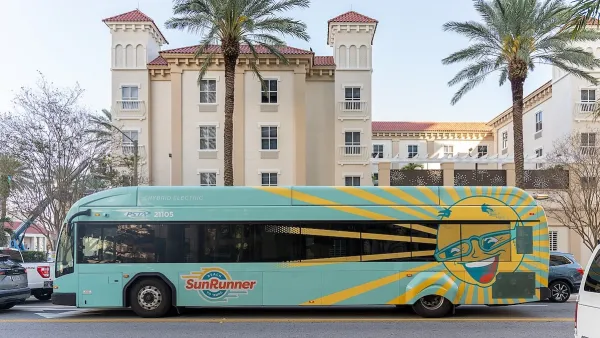
Florida DOT Orders Removal of St. Pete Bus Lane
The state says a popular BRT line has increased crashes and traffic on a state-owned portion of its corridor, prompting it to call for its reversal.

Miami to Launch America's First Fully Electric Bus Rapid Transit Line
The project, led by Miami-Dade County, will link Dadeland South to Florida City via a 20-mile dedicated lane.
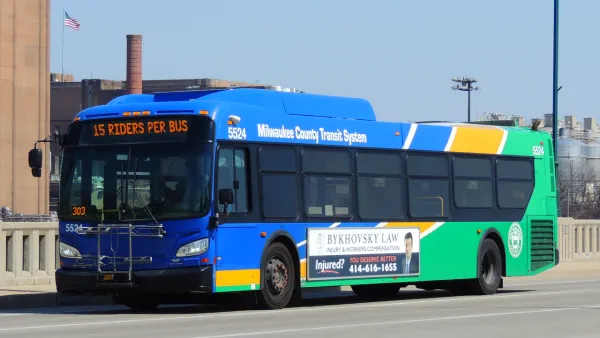
Postponed Milwaukee BRT Project at Least a Decade Away
The county’s transit system won’t pursue a second rapid bus line due to financial constraints.

Planetizen Federal Action Tracker
A weekly monitor of how Trump’s orders and actions are impacting planners and planning in America.

California plans to bury El Niño’s downpour
If the state plays its cards right, it may be able to store a billion acre-feet of El Niño’s water in aquifers.

Chicago breaks ground on $3 billion megadevelopment
The new neighborhood, titled Foundry Park, will one day host 3,700 residences.

LA may place emergency ban on karaoke room permits
If Councilwoman Heather Hutt’s proposal passes, the moratorium would last between 45 days and one year.

City officials are dumping billions of gallons of sewage into the Chicago River
This year, the Racine Avenue sewage pumping station has poured over 10 billion gallons of sewage into the Chicago River.

Move over, LA: St. Louis gears up for Olympics, invests millions in downtown redevelopment
The Missouri city will host the 2028 Olympic soccer group stage and knockout matches.

FREE Course: Walkable City 1: Why Walkability?
After describing his path towards focusing on walkability as the essence of good planning, Jeff Speck marches through his five principal reasons for making more walkable places.
Reinventing Malls: Planning Alchemy—Turning Gray Fields Into Gold
The course focuses on the opportunities and imperatives that shape reinvention of mall sites.

City of Rosemead
Rutgers University, Edward J. Bloustein School of Planning and Public Policy
One Hundred Miles
Hunter College, City University of New York (CUNY)
The Architects Foundation
University of Cincinnati Online
City of Cambridge
Montrose County
The Pocatello Development Authority