How one master-planned development used lower-density urbanism principles to build a community focused on affordability, sustainability, and conservation.


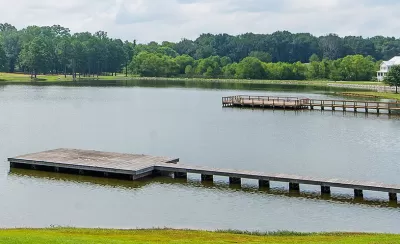
In a long read in Common Edge, Steve Mouzon defends the utility of lower-density zoning and New Urbanist principles that may be more appropriate in certain settings, including places already slated for sprawl, with existing sprawl, or growing small towns.
The best vehicle for implementing principles illustrated here at the scale of a neighborhood, hamlet, or village is not a major production builder, as these principles violate almost all of their conventional industrial practices. Instead, look to the record of stronger New Urbanist developers who are no strangers to doing things considered unconventional by the Industrial Development Complex in the interest of better places with stronger lifetime returns.
Mouzon outlines his four principles for accomplishing lower-density urbanism in suburban and small town settings. These include compact development that allows for preservation of open space, “listening to the land,” creating a range of housing values, and bringing in a mix of uses.
Mouzon uses the example of a community called the Waters, a project he worked on near Montgomery, Alabama, describing how conscious design decisions helped the development reduce needed infrastructure, conserve more open space and preserve the character of the site, create opportunities for social interaction through front-facing porches and walkable spaces, and raise property values. The article offers an in-depth and instructive look at how a from-scratch planned development can use design principles to limit sprawl and conserve open space.
FULL STORY: What’s the Point of Lower-Density Urbanism?

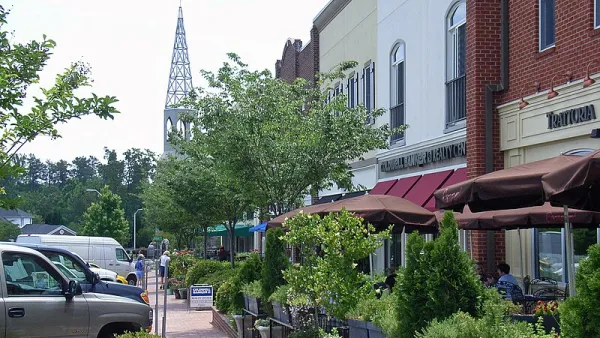
A ‘New Urbanism’ Travelogue
I visited three New Urbanist developments in North Carolina. Here's what I liked, what I didn't like, and what I learned.

Utah’s Daybreak Shows a Way Forward for American Suburbs
Suburban dwellers are increasingly calling for more mixed-use development, walkability, and access to transit.
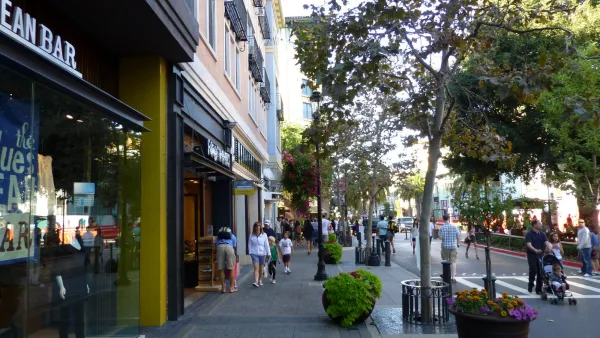
Can Urbanist Islands Make a Difference Where Sprawl Reigns?
The product of a single developer, San Jose's Santana Row is a pocket of urbanism in a sea of sprawl. But can it influence development patterns beyond its bounds, and should it?

The state-sanctioned urbicide of Austin
People don’t kill cities. Freeways do.

US to reduce Colorado River water deliveries to Mexico
A new Colorado Treaty amendment reduces Mexico’s Colorado River water allocation by 250,000 acre feet.

New Jersey’s second-largest city bans standalone data centers
Jersey City will continue to allow co-location facilities, such as those meant for research institutions that store their own data.

Amtrak not solely to blame for New Jersey commuter rail's unreliability, report finds
A new study from the Garden State Initiative found that NJ Transit’s budget grew 20% across a 4 year period, but reliability declined significantly over the same period.

EPA erases limits on planet-warming pollution from power plants
Under Monday’s plan, power plants would still have some limits on how much mercury, arsenic and other contaminants they can emit.

Phoenix announces new on-demand transit service, more frequent RAPID buses
Both new services will launch in October, and are part of Phoenix's Project Effective Access Solutions for Easing Congestion.

FREE Course: Walkable City 1: Why Walkability?
After describing his path towards focusing on walkability as the essence of good planning, Jeff Speck marches through his five principal reasons for making more walkable places.
Reinventing Malls: Planning Alchemy—Turning Gray Fields Into Gold
The course focuses on the opportunities and imperatives that shape reinvention of mall sites.

Eagle County Government
Harvard University Graduate School of Design
Nashville Planning Department
The Architects Foundation
University of Cincinnati Online
The Pocatello Development Authority
The Urban Renewal Agency of the City of Pocatello
Journal of the American Planning Association