Inspired by Barcelona’s superblocks, the program aims to limit car traffic in small areas to improve safety and create new park spaces.


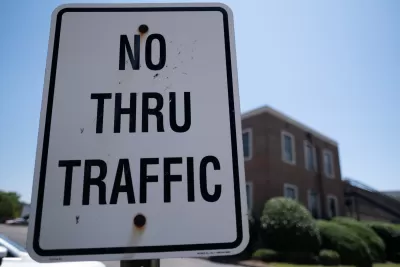
A new “Park Block” program in Los Angeles could create sections of car-light streets that eliminate cut-through traffic and reclaim space for other public uses. The program is inspired by similar concepts such as Barcelona’s ‘superblocks,’ explains Steven Sharp in Urbanize LA.
The program was proposed by 14th District City Councilmember Kevin de León and approved by the city council this week.
A city staff report notes that “[Park Blocks] can create instant public open space with substantial shade, outdoor recreation, greening and storm water capture in communities desperate for parks.”
The L.A. Department of Transportation (LADOT) is now tasked with identifying a site for the city’s first Park Block in de León’s 14th council district and developing an application process for future blocks, “with priority given to neighborhoods with high incidents of vehicle collisions and low access to open space.”
Read the full story: L.A. City Council green lights "Park Block" pilot program

The number of kids walking to school dropped from over 50% to 11% since the 1960s
Unsafe pedestrian infrastructure makes walking to school dangerous or impossible for a growing number of American students.
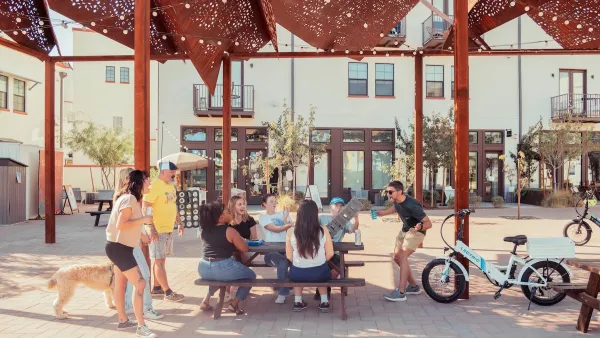
After Culdesac's success in Tempe, Mesa approves new 1,000-unit 'car-light' development
Culdesac Mesa will take the same transit-oriented approach with a compact, walkable design and access to transit and shared mobility options.
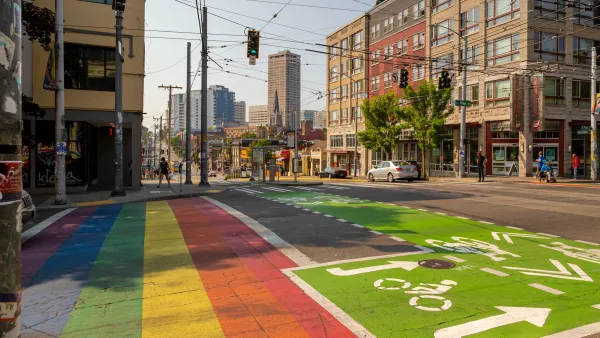
Seattle Creates 4 ‘Low-pollution Neighborhoods’
The pilot program is designed to reduce air pollution and increase access to transit and safe walking and biking infrastructure.

Planetizen Federal Action Tracker
A weekly monitor of how Trump’s orders and actions are impacting planners and planning in America.

California plans to bury El Niño’s downpour
If the state plays its cards right, it may be able to store a billion acre-feet of El Niño’s water in aquifers.

Desperate measures: Advocates weigh draining Lake Powell to fill Colorado River
Draining the reservoir could reduce evaporation losses by a couple hundred thousand acre-feet.

In Texas, data centers are swallowing promised parkland
Residents who moved to Taylor, Texas for a rural community now have to contend with three data centers in their backyard.

How a Chicago-sized wind farm beat the odds and powered on
The project spanned five presidential administrations and a standoff with a U.S. military base.

MTA gives itself 30 days to transform pit into basketball court
The site has been under construction since 2022; the city originally estimated it would finish the court in 2024.

FREE Course: Walkable City 1: Why Walkability?
After describing his path towards focusing on walkability as the essence of good planning, Jeff Speck marches through his five principal reasons for making more walkable places.
Reinventing Malls: Planning Alchemy—Turning Gray Fields Into Gold
The course focuses on the opportunities and imperatives that shape reinvention of mall sites.

City of Rosemead
Rutgers University, Edward J. Bloustein School of Planning and Public Policy
One Hundred Miles
Hunter College, City University of New York (CUNY)
The Architects Foundation
University of Cincinnati Online
City of Cambridge
Montrose County
The Pocatello Development Authority