City officials tasked with addressing the impacts of extreme heat highlight the importance of aligning the efforts of multiple city departments.


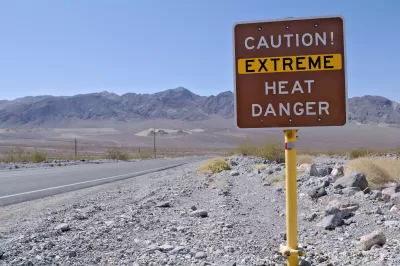
During a webinar led by The Climate Center, government officials and experts weighed in on how cities and municipal ‘heat officers’ must coordinate across agencies to address the risks of extreme heat. Ysabelle Kempe outlines some key points in Smart Cities Dive.
Kempe points to a recent Los Angeles project, a small shade structure installed at city bus stops that became the target of heavy criticism from people who saw it as ineffective and wasteful. “[I]ts designers and the city defended it as an experimental effort to work around the coordination, years of planning and hundreds of thousands of dollars needed to install even modest infrastructure projects.”
Los Angeles chief heat officer Marta Segura acknowledged the difficulties, saying, “From the outset, a big part of this work has been un-siloing, coordinating and collaborating, and building plans with other departments.”
According to Braden Kay, manager of California’s Extreme Heat and Community Resilience Program, “Local governments that don’t have a role dedicated to extreme heat response can turn to community planners, civil engineers, public works professionals, emergency managers and public health officials.”
Read the full story: Extreme heat is changing the structure of local governance

How Extreme Heat Impacts Children
As summers get hotter and more dangerous, parents can take steps to protect kids from heat-related illnesses.

Study: Heat Deaths on the Rise, Predicted to Increase
As intense heat waves become more common, the risk of heat-related deaths is rising.
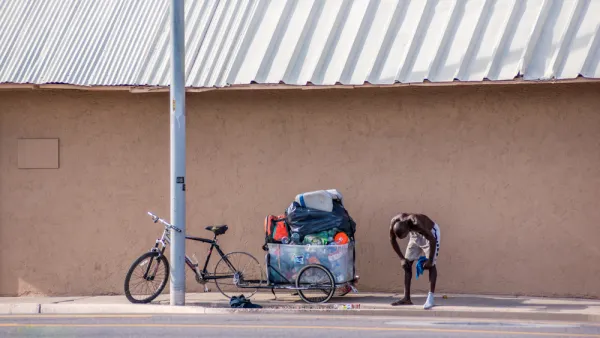
Deadly Contact Burns Rising in the Southwest
As heat waves become more frequent and severe, hospitals are seeing more patients admitted with serious, sometimes life-threatening burns from asphalt and other outdoor surfaces.

Planetizen Federal Action Tracker
A weekly monitor of how Trump’s orders and actions are impacting planners and planning in America.

California plans to bury El Niño’s downpour
If the state plays its cards right, it may be able to store a billion acre-feet of El Niño’s water in aquifers.

Desperate measures: Advocates weigh draining Lake Powell to fill Colorado River
Draining the reservoir could reduce evaporation losses by a couple hundred thousand acre-feet.

US buildings threatened, destroyed by fires set to triple by 2060
Researchers found a high fire risk for socioeconomically vulnerable neighborhoods in the American West.

LA residents may be allowed to paint their own crosswalks
Councilwoman Katy Yaroslavsky put out a motion instructing the Los Angeles Department of Public Transportation to study the feasibility of allowing volunteers to paint crosswalks.

Dallas moves to overhaul its zoning code
The city's zoning reform will allow more multi-family and mixed-use developments.

FREE Course: Walkable City 1: Why Walkability?
After describing his path towards focusing on walkability as the essence of good planning, Jeff Speck marches through his five principal reasons for making more walkable places.
Reinventing Malls: Planning Alchemy—Turning Gray Fields Into Gold
The course focuses on the opportunities and imperatives that shape reinvention of mall sites.

City of Rosemead
Rutgers University, Edward J. Bloustein School of Planning and Public Policy
One Hundred Miles
Hunter College, City University of New York (CUNY)
The Architects Foundation
University of Cincinnati Online
City of Cambridge
Montrose County
The Pocatello Development Authority