A rule requiring the city to provide shelter for unhoused people is being eroded as city officials claim local agencies can’t keep up with growing demand.


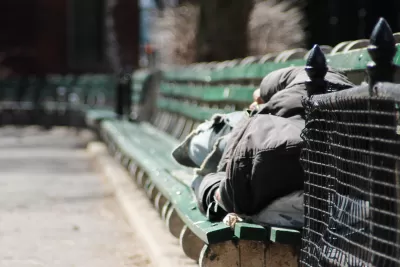
A longstanding ‘right to shelter’ mandate in New York City is slowly being rolled back in response to an influx of migrants seeking asylum, causing alarm among housing advocates who say the policy has been instrumental in keeping the city’s unsheltered population low, despite the high number of unhoused residents. Sarah Holder and Kriston Capps cover the story for Bloomberg CityLab.
“The city says that the mayor does not seek to end New York’s right to shelter, but rather is asking the court for relief, since no party could have imagined the current situation when the consent decree was signed four decades ago.” As of 2021, the city’s network of shelters can accommodate 65,000 people, making unsheltered homelessness in New York a fraction of what it is in other cities with high unhoused populations.
The administration says the city is now having a hard time fulfilling the obligations of the decree as more people arrive in the city seeking shelter. “Under the mandate, homeless families with children who arrive at a shelter before 10 p.m. must be given a shelter bed the same night they request one, and single adults must be taken in within a day.” The city says demand grew by 75 percent in the last year.
Some housing advocates say the policy does need to be updated to support the adoption of more modern solutions such as the ‘housing first’ approach. As it stands, Ann Oliva, CEO for the nonprofit National Alliance to End Homelessness, says “the city is wedded to funding shelters at the expense of more permanent solutions.”
Read the full story: What Ending ‘Right to Shelter’ Could Mean for New York City’s Homeless Population

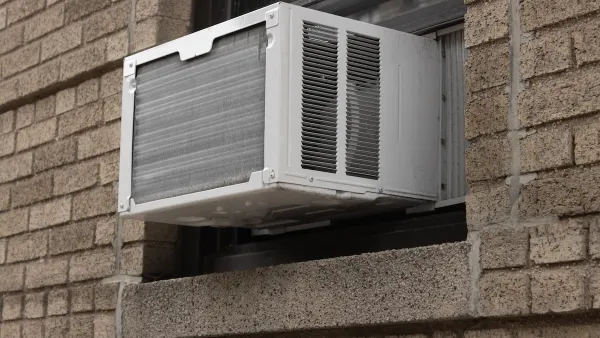
Thousands of NYC Shelter Residents Lack Air Conditioning
Even in the depths of extreme heat, many shelters prohibit residents from installing AC units.
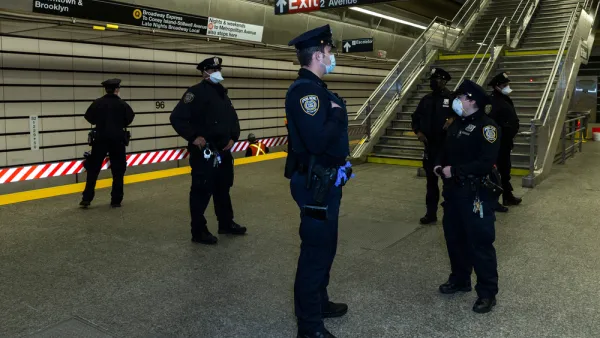
More Unhoused New Yorkers Died in 2021 Than in any Prior Year
New York City saw its deadliest year for people living in shelters or public spaces, with the pandemic and a rise in deadly overdoses fueling a fatal epidemic.
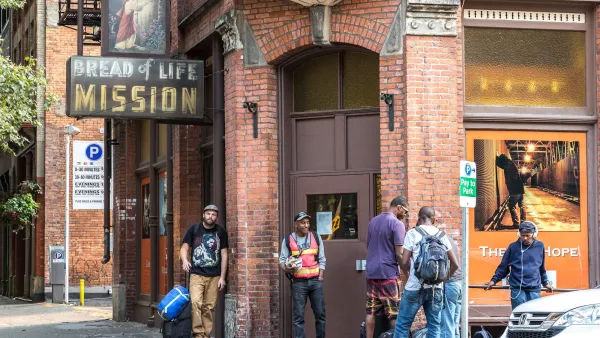
Seattle mayor pledges to build 500 shelter units by June
The Seattle Times editorial board expresses cautious optimism about the mayor's ambitious supportive housing plan.

Planetizen Federal Action Tracker
A weekly monitor of how Trump’s orders and actions are impacting planners and planning in America.

The state-sanctioned urbicide of Austin
People don’t kill cities. Freeways do.

US to reduce Colorado River water deliveries to Mexico
A new Colorado Treaty amendment reduces Mexico’s Colorado River water allocation by 250,000 acre feet.

Nation's most wind-powered state turns to coal as data centers increase energy demand
For the first time in decades, Iowa has increased its generation of coal power.

NYC cools commuters with city's first rain garden above a bus stop
New York City officials say the plants in the rain garden can absorb 16 gallons of rainwater during heavy storms.

Brightline West’s future may rely on $6 billion federal loan
The company has until Nov. 2 to make a $400 million equity investment into its proposed high-speed rail line.

FREE Course: Walkable City 1: Why Walkability?
After describing his path towards focusing on walkability as the essence of good planning, Jeff Speck marches through his five principal reasons for making more walkable places.
Reinventing Malls: Planning Alchemy—Turning Gray Fields Into Gold
The course focuses on the opportunities and imperatives that shape reinvention of mall sites.

Greater Baltimore Committee
Eagle County Government
Harvard University Graduate School of Design
The Architects Foundation
University of Cincinnati Online
The Pocatello Development Authority
The Urban Renewal Agency of the City of Pocatello
Journal of the American Planning Association