Kimble’s interest in topics related to urban planning spawned from research and writing about food systems in the borderlands of Arizona. She then moved to Austin in the midst of the city’s update of its Land Development Code.


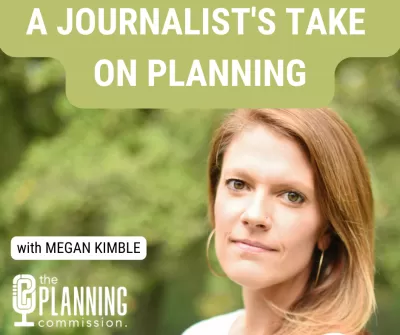
Austin, Texas, is feeling the pressures of intense growth and lack of affordable housing. This has impacted land development, transportation, food systems, and fair housing efforts. Megan Kimble has been on the front lines, chronicling these efforts and unearthing the linkages among them since relocating to Austin from Tucson in 2017.
“The best part about being a journalist is you get to inhabit other people’s professions and worlds, and once you get tired of them you can move onto another topic,” said Kimble.
Kimble’s 2015 book Unprocessed unearthed the underbelly of our food systems. From that perspective, she began to understand how access to opportunities in cities was predicated on where people lived.
“A lot of attention was paid to physical access to food,” Kimble told The Planning Commission Podcast. “That’s really important but I started covering transportation because, if you drive, then you can have access to all the things that you need. If you rely on public transportation, you are much more dependent on the resources that are around you in your neighborhood.”
This also ties into zoning policies, as Kimble has learned in covering the $10 million, decade-long effort by the City of Austin to update its land development code.
Kimble outlines what is occurring in Austin related to the code update. “The biggest thing that has prevented a new land development code is NIMBY opposition,” she said. Protest rights, which are also rooted in racism and segregation, are granted under Texas law and have played a major role in stalling the effort in the courts.
“It’s largely white, wealthy homeowners who have an enormous amount of power by state law and that has gummed up the whole process such that city leaders have not been able to get anything done,” said Kimble.
The sprawl stemming from the City of Austin’s inability to grow at higher densities has led Texas DOT to plan for wider highways around and through Austin.
“What TxDOT is doing is fairly rational” due to the demand created by the sprawl, said Kimble. That's doesn't mean they aren't skirting environmental laws and ignoring the lessons learned after 60 years of highway building and expansion with little effect on reducing congestion.
The Planning Commission is a spirited debate by planners, for planners. This independent outlet for all things planning explores the serious and lighter sides of the profession, poses probing and creative questions to guests, and always pairs the episode guest and topic with a choice libation. Listen to the podcast for a special offer from Planetizen.
FULL STORY: The Planning Commission Podcast, Season 2 Episode 14: A Journalist's Take On Planning

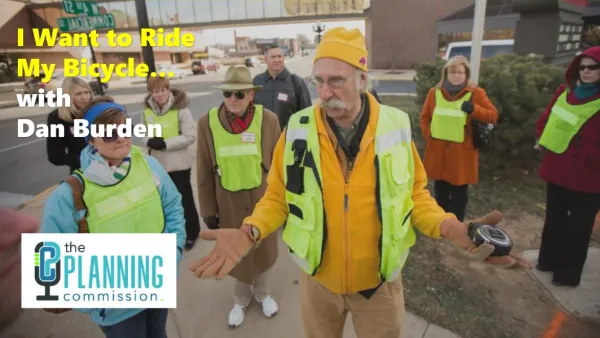
I Want to Ride My Bicycle: Exploring the Career of the Legendary Dan Burden
Dan Burden joins The Planning Commission Podcast for a look back on his career, his accomplishments, and what's next for The Johnny Appleseed of Walkability.

An Ounce of Prevention is Worth a Pound of Cure
Author Kristina Marusic explores her book, A New War on Cancer, with The Planning Commission Podcast.

Let's Get Some Things Straight: ADA in America
The Planning Commission Podcast: Exploring Universal Design

Planetizen Federal Action Tracker
A weekly monitor of how Trump’s orders and actions are impacting planners and planning in America.

The state-sanctioned urbicide of Austin
People don’t kill cities. Freeways do.

US to reduce Colorado River water deliveries to Mexico
A new Colorado Treaty amendment reduces Mexico’s Colorado River water allocation by 250,000 acre feet.

5 New England states march closer to 800 megawatt wind energy project
Securing federal approval for the project may be complicated under the Trump administration, which has historically been hostile towards domestic wind power.

Baltimore to break ground on $50 million Transit Priority Project
The project will bring faster bus trips, safer streets and better bike connections to Baltimore.

Airbnb launches $250 million 'last-dollar financing' housing accelerator, makes first investment in Austin
The company will put $6.4 million towards affordable housing development in Texas’ capital.

FREE Course: Walkable City 1: Why Walkability?
After describing his path towards focusing on walkability as the essence of good planning, Jeff Speck marches through his five principal reasons for making more walkable places.
Reinventing Malls: Planning Alchemy—Turning Gray Fields Into Gold
The course focuses on the opportunities and imperatives that shape reinvention of mall sites.

Eagle County Government
Harvard University Graduate School of Design
Nashville Planning Department
The Architects Foundation
University of Cincinnati Online
The Pocatello Development Authority
The Urban Renewal Agency of the City of Pocatello
Journal of the American Planning Association