Data storytelling refers to the ability to effectively communicate insights from data using narratives and visualizations. When done right, it can be used to put data insights into context and inspire action from decisionmakers.


There is no question that our world has become increasingly data-driven. While not everyone is involved in data collection, analysis, visualization, or storytelling, we are all becoming more dependent on data to guide, inform, and justify our work. Thus, we should embrace the use of data to advance our work in the same ways that we have grown accustomed to relying on data-driven devices like smartphones, fitness trackers, and global positioning system (GPS) navigation in our daily lives.
In this blog post, park planner Clement Lau explains the importance of data visualization and storytelling, with a focus on parks and recreation. For good examples of data visualization, he suggests that readers take a look at the National Recreation and Park Association (NRPA)’s Park Pulse Surveys and how the survey results are presented and summarized in infographics, charts, etc. Another example is how the Los Angeles County Department of Parks and Recreation (DPR) presents the key findings of its 2016 and 2022 Parks Needs Assessments in maps, graphs, and infographics in fact sheets, executive summaries, and final reports.
We often hear the expression that “numbers speak for themselves,” but this is not necessarily true. Lau points out that it really takes time, effort and skills to make sense of, present and communicate insights from data. For more information, please read the source article.
FULL STORY: The Importance of Data Visualization and Storytelling in Parks and Recreation


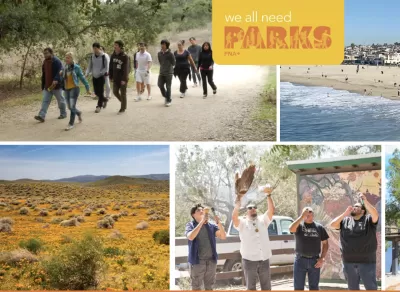
An App for California State Parks
California's Department of Parks and Recreation is getting into the app business. It is hoped that CaliParks will help improve access to the state's parks for young people and minorities.
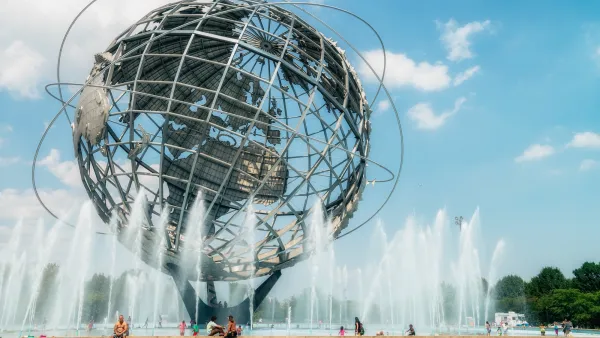
Historic Queens park is getting a $120M upgrade
The borough's largest park will undergo significant upgrades for accessibility, flood mitigation and historic preservation.
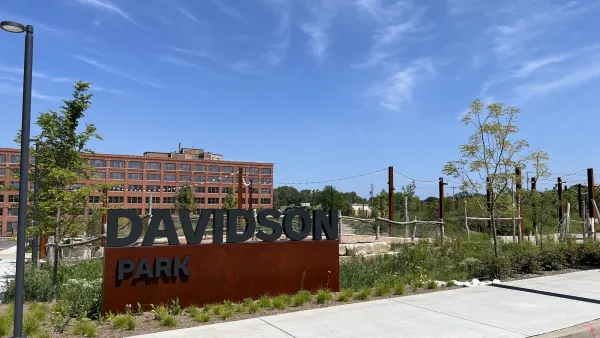
Harley-Davidson turned a Milwaukee parking lot into a green oasis
The park, adjacent to Harley-Davidson headquarters, doubles as stormwater retention infrastructure.

The state-sanctioned urbicide of Austin
People don’t kill cities. Freeways do.

US to reduce Colorado River water deliveries to Mexico
A new Colorado Treaty amendment reduces Mexico’s Colorado River water allocation by 250,000 acre feet.

New Jersey’s second-largest city bans standalone data centers
Jersey City will continue to allow co-location facilities, such as those meant for research institutions that store their own data.

Amtrak not solely to blame for New Jersey commuter rail's unreliability, report finds
A new study from the Garden State Initiative found that NJ Transit’s budget grew 20% across a 4 year period, but reliability declined significantly over the same period.

EPA erases limits on planet-warming pollution from power plants
Under Monday’s plan, power plants would still have some limits on how much mercury, arsenic and other contaminants they can emit.

Phoenix announces new on-demand transit service, more frequent RAPID buses
Both new services will launch in October, and are part of Phoenix's Project Effective Access Solutions for Easing Congestion.

FREE Course: Walkable City 1: Why Walkability?
After describing his path towards focusing on walkability as the essence of good planning, Jeff Speck marches through his five principal reasons for making more walkable places.
Reinventing Malls: Planning Alchemy—Turning Gray Fields Into Gold
The course focuses on the opportunities and imperatives that shape reinvention of mall sites.

Eagle County Government
Harvard University Graduate School of Design
Nashville Planning Department
The Architects Foundation
University of Cincinnati Online
The Pocatello Development Authority
The Urban Renewal Agency of the City of Pocatello
Journal of the American Planning Association