Amtrak has final federal approval for train speeds of 110 miles per hour between Joliet and Alton, culminating almost ten years of planning and investing.


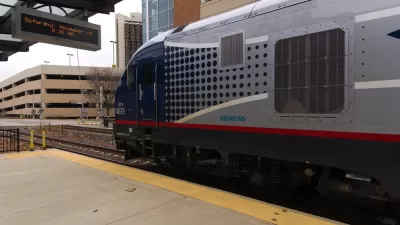
Amtrak and the Illinois Department of Transportation (IDOT) have received federal approval for maximum speeds up to 110 mph for most of the Chicago-St. Louis corridor, primarily between the Amtrak stations in Joliet and Alton, according to an Amtrak press release published on May 3. The new top speeds of trains on Lincoln Service and Texas Eagle trains would finally achieve a goal first identified on Planetizen in 2014.
“Until now, 90 mph has been the maximum authorized speed on the tracks owned by Union Pacific Railroad. Amtrak operates Lincoln Service and other trains under a contract with IDOT,” according to the press release.
Additional news coverage of the new top speeds on the route is available in an article by Joey Schneider for Fox 2 Now.
“Amtrak is hopeful the change will reduce times for its Lincoln Service round-trips, which also stop in Quincy and Carbondale, and the Texas Eagle, which runs from Chicago to Dallas with a St. Louis stop,” explains Schneider.
More reading from frequently delayed development of high-speed rail on the Chicago-St. Louis Corridor can be found in the Planetizen archive:
- $102 Million Brings Chicago-St. Louis High Speed Rail a Step Closer (September 2014)
- Faster Chicago to St. Louis Trains Likely to Increase Car Traffic (July 2016)
- Chicago to St. Louis Amtrak Still Not Up to Speed (January 2019)
- Higher Speeds from St. Louis to Chicago Delayed Again for Amtrak (September 2019)
- Amtrak Hits New Top Speeds Between St. Louis and Chicago (December 2021)
FULL STORY: 110 mph Schedules Coming for Amtrak Chicago-St. Louis Corridor

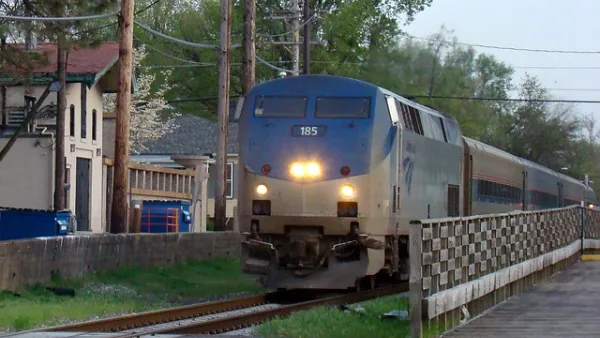
Higher Speeds from St. Louis to Chicago Delayed Again for Amtrak
Long awaited improvements on the Amtrak route between Chicago and St. Louis are being delayed again, this time because of trouble installing positive train control (PTC).

Chicago to St. Louis Amtrak Still Not Up to Speed
The higher speed train route between the two cities, funded by the recession-era stimulus package, is capable of 90 to 110 mph, but is stuck at 78.
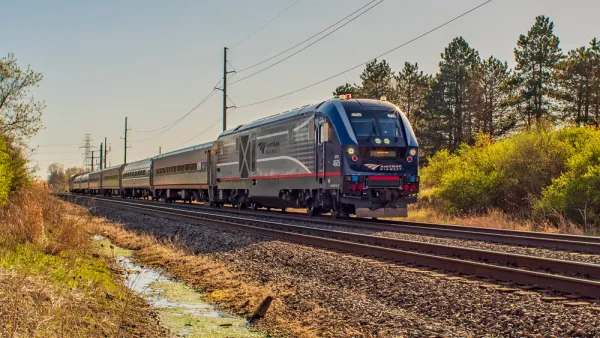
Amtrak Hits New Top Speeds Between St. Louis and Chicago
A project that won funding from federal stimulus programs during the Obama administration is finally paying off on the Amtrak route between Chicago and St. Louis.

The state-sanctioned urbicide of Austin
People don’t kill cities. Freeways do.

US to reduce Colorado River water deliveries to Mexico
A new Colorado Treaty amendment reduces Mexico’s Colorado River water allocation by 250,000 acre feet.

New Jersey’s second-largest city bans standalone data centers
Jersey City will continue to allow co-location facilities, such as those meant for research institutions that store their own data.

Amtrak not solely to blame for New Jersey commuter rail's unreliability, report finds
A new study from the Garden State Initiative found that NJ Transit’s budget grew 20% across a 4 year period, but reliability declined significantly over the same period.

EPA erases limits on planet-warming pollution from power plants
Under Monday’s plan, power plants would still have some limits on how much mercury, arsenic and other contaminants they can emit.

Phoenix announces new on-demand transit service, more frequent RAPID buses
Both new services will launch in October, and are part of Phoenix's Project Effective Access Solutions for Easing Congestion.

FREE Course: Walkable City 1: Why Walkability?
After describing his path towards focusing on walkability as the essence of good planning, Jeff Speck marches through his five principal reasons for making more walkable places.
Reinventing Malls: Planning Alchemy—Turning Gray Fields Into Gold
The course focuses on the opportunities and imperatives that shape reinvention of mall sites.

Eagle County Government
Harvard University Graduate School of Design
Nashville Planning Department
The Architects Foundation
University of Cincinnati Online
The Pocatello Development Authority
The Urban Renewal Agency of the City of Pocatello
Journal of the American Planning Association