The higher speed train route between the two cities, funded by the recession-era stimulus package, is capable of 90 to 110 mph, but is stuck at 78.


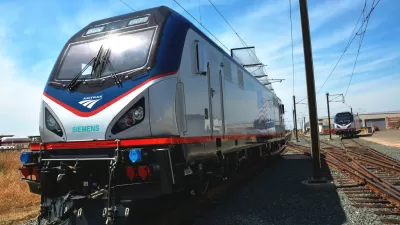
The massive project to upgrade train speeds between Chicago and St. Louis is mostly complete, but the 110 mph speeds have yet to be achieved. "Delays in installing and testing new GPS-related safety technology have kept Amtrak trains from hitting high speeds of 90 mph during 2018 as the Illinois Department of Transportation had predicted," Mark Schlinkmann reports for the St. Louis Post-Dispatch. Worse still, Illinois Department of Transportation (IDOT) is no longer targeting the 110 mph speeds the project aimed for when the project began.
The Positive Train Control (PTC) requirements that Congress imposed after the projects inception are not fully tested on the Union Pacific-owned crossings, meaning trains currently cannot move above 79 miles per hour. "Union Pacific spokeswoman Hannah Bolte said her railroad is '100 percent committed' to doing what's necessary to achieve 110 on the route," Schlinkmann writes. In the meantime, IDOT anticipates trains will not reach 90 mph top speeds until summer this year.
Read the full story: Amtrak riders between St. Louis and Chicago are still waiting for 90 and 110 mph speeds

Higher Speeds from St. Louis to Chicago Delayed Again for Amtrak
Long awaited improvements on the Amtrak route between Chicago and St. Louis are being delayed again, this time because of trouble installing positive train control (PTC).
Chicago-St. Louis Corridor Trains Cleared for 110-mph Speeds
Amtrak has final federal approval for train speeds of 110 miles per hour between Joliet and Alton, culminating almost ten years of planning and investing.
Amtrak Hits New Top Speeds Between St. Louis and Chicago
A project that won funding from federal stimulus programs during the Obama administration is finally paying off on the Amtrak route between Chicago and St. Louis.

Planetizen Federal Action Tracker
A weekly monitor of how Trump’s orders and actions are impacting planners and planning in America.

California plans to bury El Niño’s downpour
If the state plays its cards right, it may be able to store a billion acre-feet of El Niño’s water in aquifers.

Chicago breaks ground on $3 billion megadevelopment
The new neighborhood, titled Foundry Park, will one day host 3,700 residences.

California High-Speed Rail Authority CEO resigns after $600,000 scandal
Under Ian Choudri, the authority used taxpayer dollars to fund first class flights and trips to nightclubs.

Want to study the Missouri River? Soon, you may need unanimous approval from 10 states
Legislation would require 10 governors’ permission to study or build projects moving water outside the basin.

Desperate measures: Advocates weigh draining Lake Powell to fill Colorado River
Draining the reservoir could reduce evaporation losses by a couple hundred thousand acre-feet.

FREE Course: Walkable City 1: Why Walkability?
After describing his path towards focusing on walkability as the essence of good planning, Jeff Speck marches through his five principal reasons for making more walkable places.
Reinventing Malls: Planning Alchemy—Turning Gray Fields Into Gold
The course focuses on the opportunities and imperatives that shape reinvention of mall sites.

City of Rosemead
Rutgers University, Edward J. Bloustein School of Planning and Public Policy
One Hundred Miles
Hunter College, City University of New York (CUNY)
The Architects Foundation
University of Cincinnati Online
City of Cambridge
Montrose County
The Pocatello Development Authority