The ‘town zoning’ category would create more flexibility and encourage developers to build more affordable, transit-oriented housing.



A proposed new zoning category would add flexibility to Austin’s zoning code, reports Mike Christen in the Austin Business Journal.
The new category, dubbed ‘town zoning’ (TZ), “would allow both residential and pedestrian-oriented commercial development with base building heights of up to 60 feet and up to 95% impervious cover. Site development and parking standards could be modified on a case-by-case basis if a developer pledges to make affordable at least 10% of the project's "incremental increase in units" — defined as the total number of residential units minus the number under base development standards.” Additionally, “Rental units would be reserved for those making 60% of the median family income level while units for sale could go to those making up to 80% MFI.”
Commissioner Greg Anderson emphasized that the proposal is a small concession in lieu of a broader update to the city’s zoning and land use rules. “This comes up very short from a new land development code but this will help us get a lot of housing units and whatever else makes sense for certain sites, in places where we can’t do those things today because we don’t have the tools to do them.”
The proposal was approved by the Planning Commission “nearly unanimously,” but needs to be drafted and approved by another committee before coming before the City Council.
Read the full story: Austin could get new zoning category encouraging housing development

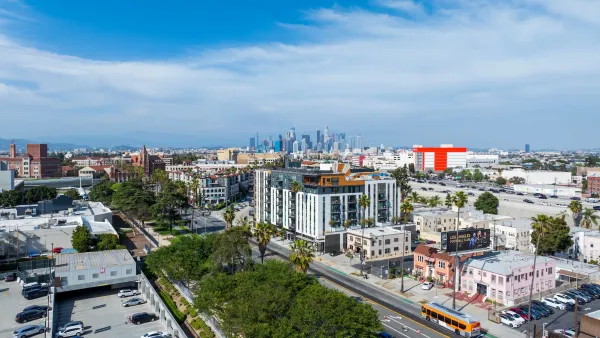
LA delays state housing mandate with 'low-rise ordinance'
The new ordinance allows the city to delay implementing SB 79, a state law requiring more density near transit.
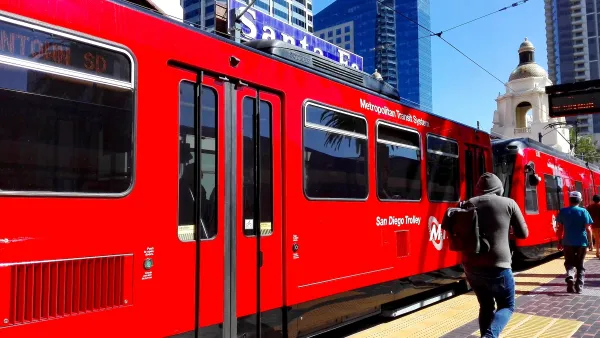
San Diego wants to limit upzoning law to just 16% of transit-adjacent parcels
The city's planning director says some areas are unfit for immediate upzoning due to a lack of resources or hazards such as wildfire risk.
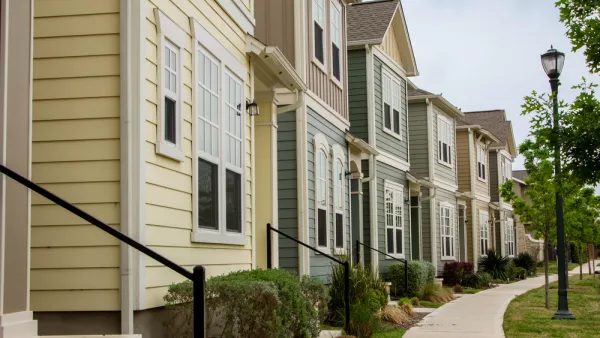
Austin Reduces Minimum Lot Size
Smaller lot sizes for single-family homes can make construction more affordable and homeownership available to more households.

Planetizen Federal Action Tracker
A weekly monitor of how Trump’s orders and actions are impacting planners and planning in America.

The state-sanctioned urbicide of Austin
People don’t kill cities. Freeways do.

US to reduce Colorado River water deliveries to Mexico
A new Colorado Treaty amendment reduces Mexico’s Colorado River water allocation by 250,000 acre feet.

Nation's most wind-powered state turns to coal as data centers increase energy demand
For the first time in decades, Iowa has increased its generation of coal power.

NYC cools commuters with city's first rain garden above a bus stop
New York City officials say the plants in the rain garden can absorb 16 gallons of rainwater during heavy storms.

Brightline West’s future may rely on $6 billion federal loan
The company has until Nov. 2 to make a $400 million equity investment into its proposed high-speed rail line.

FREE Course: Walkable City 1: Why Walkability?
After describing his path towards focusing on walkability as the essence of good planning, Jeff Speck marches through his five principal reasons for making more walkable places.
Reinventing Malls: Planning Alchemy—Turning Gray Fields Into Gold
The course focuses on the opportunities and imperatives that shape reinvention of mall sites.

Greater Baltimore Committee
Eagle County Government
Harvard University Graduate School of Design
The Architects Foundation
University of Cincinnati Online
The Pocatello Development Authority
The Urban Renewal Agency of the City of Pocatello
Journal of the American Planning Association