Acknowledging the impact the city’s proposed congestion pricing program could have on underserved neighborhoods, the agency plans to spend over $130 million in revenue from the program on air filtration, trees, and other pollution reduction measures.


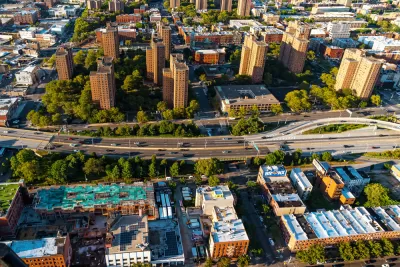
New York City’s Metropolitan Transportation Authority (MTA) announced tentative plans to spend at least $130 million in revenue from the city’s proposed congestion pricing program to address air pollution in some of the city’s most underserved neighborhoods, where critics of the program say traffic diverted from tolled roads will exacerbate poor air quality and put residents at even higher risk for asthma and other diseases.
As a story by Ana Ley for The New York Times explains, “One busy highway which could get more traffic as a result of the congestion pricing program is the Cross Bronx Expressway, a key artery for commercial traffic that is flanked by residential buildings holding about 220,000 Bronx residents, most of whom are people of color.” One version of the proposed congestion pricing plan estimates new truck traffic on the Cross Bronx would increase soot on the corridor by roughly 5 percent.
“The proposal, first reported by Streetsblog and confirmed by people familiar with the matter, includes plans to install air filtration units in some schools near highways, and to reduce overnight toll rates to encourage commercial vehicles to drive during off-peak hours.” This is in part a response to federal regulations that require agencies to mitigate the harm caused by diverted traffic. The proposed plan would also dedicate $25 million to asthma treatment in the Bronx and $5 million to landscaping along roads, as well as plans to renovate parks and green spaces. The plan requires approval from federal officials and the MTA board.
Read the full story: M.T.A. Plans to Use Congestion Pricing Funds to Address Bronx Pollution

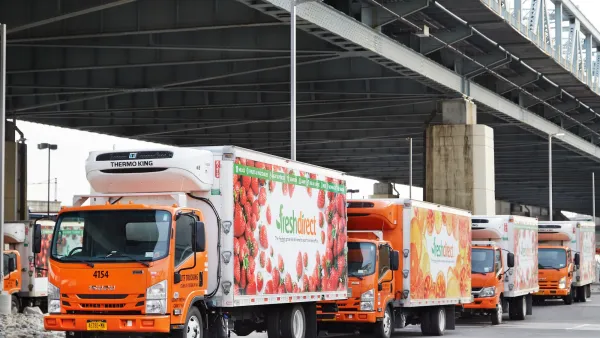
NYC Congestion Pricing Revenue Will Fund up to 1,000 Hybrid Refrigerated Trucks
Traffic to the Hunts Point Produce Market causes increased rates of asthma in surrounding neighborhoods.
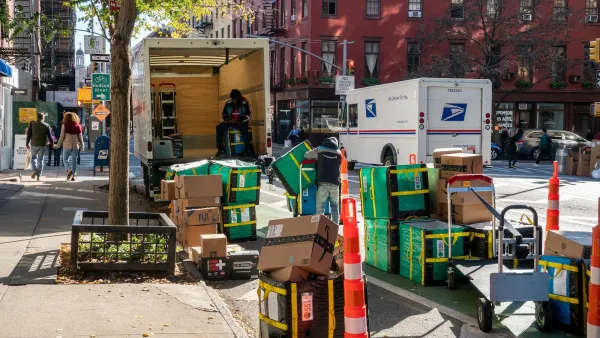
Report: 75% of NYC warehouses are in 'disadvantaged communities'
Low-income New Yorkers are 1.2 times more likely to live within half a mile of a warehouse.
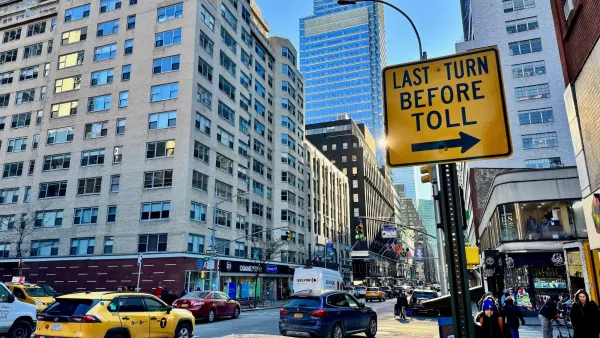
NYC Congestion Pricing Cut Air Pollution by 22% in 6 Months
The program reduced vehicle entries into the toll zone by 11 percent.

Planetizen Federal Action Tracker
A weekly monitor of how Trump’s orders and actions are impacting planners and planning in America.

The state-sanctioned urbicide of Austin
People don’t kill cities. Freeways do.

US to reduce Colorado River water deliveries to Mexico
A new Colorado Treaty amendment reduces Mexico’s Colorado River water allocation by 250,000 acre feet.

Nation's most wind-powered state turns to coal as data centers increase energy demand
For the first time in decades, Iowa has increased its generation of coal power.

NYC cools commuters with city's first rain garden above a bus stop
New York City officials say the plants in the rain garden can absorb 16 gallons of rainwater during heavy storms.

Brightline West’s future may rely on $6 billion federal loan
The company has until Nov. 2 to make a $400 million equity investment into its proposed high-speed rail line.

FREE Course: Walkable City 1: Why Walkability?
After describing his path towards focusing on walkability as the essence of good planning, Jeff Speck marches through his five principal reasons for making more walkable places.
Reinventing Malls: Planning Alchemy—Turning Gray Fields Into Gold
The course focuses on the opportunities and imperatives that shape reinvention of mall sites.

Greater Baltimore Committee
Eagle County Government
Harvard University Graduate School of Design
The Architects Foundation
University of Cincinnati Online
The Pocatello Development Authority
The Urban Renewal Agency of the City of Pocatello
Journal of the American Planning Association