The program reduced vehicle entries into the toll zone by 11 percent.


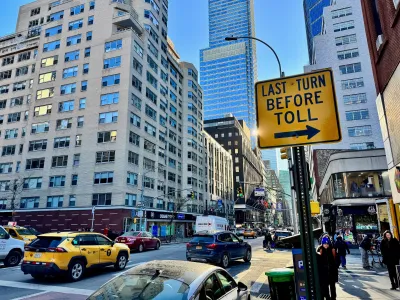
New York City’s congestion pricing program continues to live up to its promises, cutting air pollution by 22 percent in its first six months. According to an article by Paul Day in Air Quality News, “The improvements grew stronger over time, suggesting drivers are increasingly adapting their behavior.”
Air quality monitors showed that the benefits extended beyond the congestion pricing zone. Pollution levels also fell significantly in all five of the city’s boroughs. As study co-lead author Timothy Fraser explained, “This tells us that congestion pricing didn’t simply relocate air pollution to the suburbs by rerouting traffic. Instead, folks are likely choosing cleaner transportation options altogether, like riding public transportation or scheduling deliveries at night.”
The data is concurrent with traffic data, which shows that vehicle entries into the toll zone dropped by 11 percent overall, and by 18 percent for heavy-duty trucks that emit some of the worst pollutants.
FULL STORY: NYC congestion pricing cuts air pollution by 22% in six months

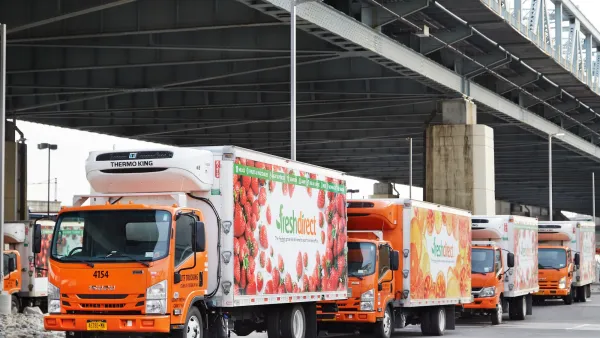
NYC Congestion Pricing Revenue Will Fund up to 1,000 Hybrid Refrigerated Trucks
Traffic to the Hunts Point Produce Market causes increased rates of asthma in surrounding neighborhoods.
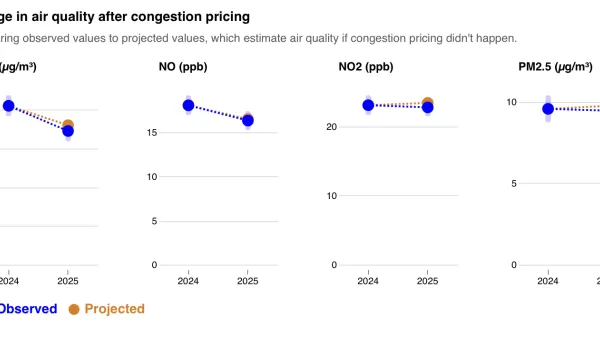
First study of NYC congestion zone’s air quality impact shows improvements
The study also examined air quality around freeways which experts worried would see increased traffic from people avoiding the tolls.
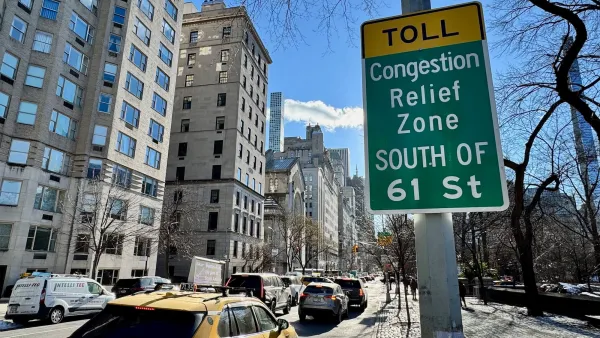
Study: NYC congestion pricing didn't impact parking demand
A city report shows that free parking, not congestion pricing, is the main driver of limited parking demand in the city.

Planetizen Federal Action Tracker
A weekly monitor of how Trump’s orders and actions are impacting planners and planning in America.

The state-sanctioned urbicide of Austin
People don’t kill cities. Freeways do.

US to reduce Colorado River water deliveries to Mexico
A new Colorado Treaty amendment reduces Mexico’s Colorado River water allocation by 250,000 acre feet.

Baltimore to break ground on $50 million Transit Priority Project
The project will bring faster bus trips, safer streets and better bike connections to Baltimore.

Airbnb launches $250 million 'last-dollar financing' housing accelerator, makes first investment in Austin
The company will put $6.4 million towards affordable housing development in Texas’ capital.

Guerilla urbanists are building DIY bus stop benches in Chicago
A before-and-after of one of the bus stops with a new bench. The new benches are not officially sanctioned or permitted, but the residents who placed them hope they will be the start of a network of DIY benches across the city.

FREE Course: Walkable City 1: Why Walkability?
After describing his path towards focusing on walkability as the essence of good planning, Jeff Speck marches through his five principal reasons for making more walkable places.
Reinventing Malls: Planning Alchemy—Turning Gray Fields Into Gold
The course focuses on the opportunities and imperatives that shape reinvention of mall sites.

Eagle County Government
Harvard University Graduate School of Design
Nashville Planning Department
The Architects Foundation
University of Cincinnati Online
The Pocatello Development Authority
The Urban Renewal Agency of the City of Pocatello
Journal of the American Planning Association