An interstate project decades in the making is being investigated by federal authorities for claims that it would perpetuate historically racist land use patterns.


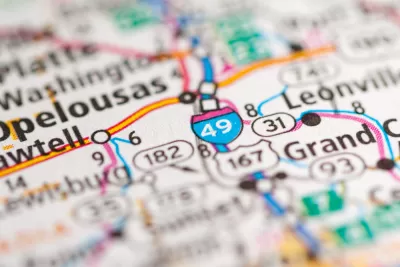
A federal civil rights investigation could alter the design of an interstate expansion project in Lafayette, Louisiana that has been ongoing for four decades. As Stephen Marcantel reports in The Current, if a similar case in Houston is any indication, the I-49 Connector project will likely go forward with changes and mitigation measures.
The investigation is the result of a resident complaint claiming that “the Connector’s path was laid along lines drawn in a 1923 ordinance that bisected Lafayette into white and Black communities” and would perpetuate the inequities created by the city’s historic segregation policies.
The case highlights the ongoing struggle of urban communities to gain recognition of the damage caused by freeway construction, despite federal initiatives like the Reconnecting Communities Act. However, “Some argue the Connector itself represents a way to fix a broken situation along the Thruway. Neighborhoods there have been in limbo for decades, lacking investment while the project hung in the air incomplete.” Shawn Wilson, outgoing director of the Louisiana Department of Transportation and Development and a supporter of the project, wrote in a statement, “While I understand this project will not meet the approval of everyone, and some opponents will go to great lengths to stop it, one thing we know for sure is that doing nothing is an unacceptable alternative.”
Federal officials could, like in the Houston case, require a range of changes to the plan, including “Air quality monitoring, sound barriers for neighborhoods, lighting and sidewalks for improved pedestrian safety, flood mitigation, connecting neighborhoods, improving public transit and creating green spaces.”
FULL STORY: How a civil rights investigation could alter the I-49 Connector


Santa Monica Offers Affordable Housing to Residents Displaced by Freeway Construction
A new program seeks to make restitution for the damage inflicted on Black communities by highway construction and urban renewal.
Freeway Expansions Continue to Threaten Black and Brown Communities
Despite calls to center equity in infrastructure projects, highway construction and expansion still disproportionately impacts communities of color, according to a Los Angeles Times investigation.
Milwaukee mayor abandons highway removal plan
Mayor Johnson spoke in opposition to a proposed plan to turn part of I-794 into an at-grade boulevard, expressing concerns about traffic.

Planetizen Federal Action Tracker
A weekly monitor of how Trump’s orders and actions are impacting planners and planning in America.

The state-sanctioned urbicide of Austin
People don’t kill cities. Freeways do.

US to reduce Colorado River water deliveries to Mexico
A new Colorado Treaty amendment reduces Mexico’s Colorado River water allocation by 250,000 acre feet.

5 New England states march closer to 800 megawatt wind energy project
Securing federal approval for the project may be complicated under the Trump administration, which has historically been hostile towards domestic wind power.

Baltimore to break ground on $50 million Transit Priority Project
The project will bring faster bus trips, safer streets and better bike connections to Baltimore.

Airbnb launches $250 million 'last-dollar financing' housing accelerator, makes first investment in Austin
The company will put $6.4 million towards affordable housing development in Texas’ capital.

FREE Course: Walkable City 1: Why Walkability?
After describing his path towards focusing on walkability as the essence of good planning, Jeff Speck marches through his five principal reasons for making more walkable places.
Reinventing Malls: Planning Alchemy—Turning Gray Fields Into Gold
The course focuses on the opportunities and imperatives that shape reinvention of mall sites.

Eagle County Government
Harvard University Graduate School of Design
Nashville Planning Department
The Architects Foundation
University of Cincinnati Online
The Pocatello Development Authority
The Urban Renewal Agency of the City of Pocatello
Journal of the American Planning Association