Federal workers are pushing back on a return to the office, citing the environmental benefits of eliminating daily commuting.


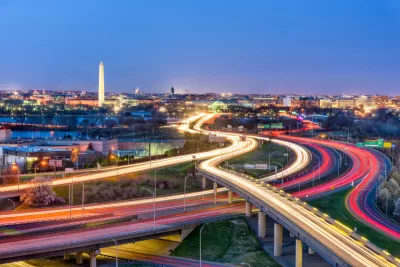
After the U.S. House of Representatives passed a bill calling for federal employees to return to their physical offices this month, the largest union of federal employees is pushing back, saying that remote work is healthier for the planet. According to a piece by Maxine Joselow in The Washington Post, “the American Federation of Government Employees points to research showing that telework curbs climate pollution caused by commuting in gas-powered cars.”
For others, like D.C. Mayor Muriel Bowser, mandating a return to the office is one way to revitalize Washington, D.C.’s downtown, which thousands of businesses have fled since the start of the pandemic. But with over 80 percent of U.S. commuters driving to work in private vehicles, reducing trips to work could significantly impact carbon emissions in the transportation sector. According to Gregory Keoleian, director of the University of Michigan’s Center for Sustainable Systems, one-quarter of federal employees switching to remote work could reduce emissions by 750,000 metric tons of carbon dioxide annually.
FULL STORY: Telework is better for the planet, federal union argues

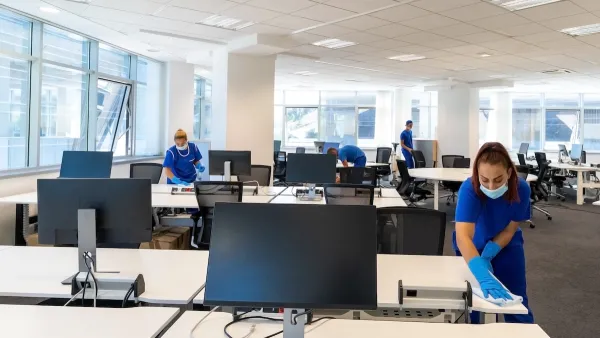
The Ripple Effects of Remote Work
The number of Americans who work from home rose sharply during the pandemic and remains high, posing important questions about the future of transportation and housing.
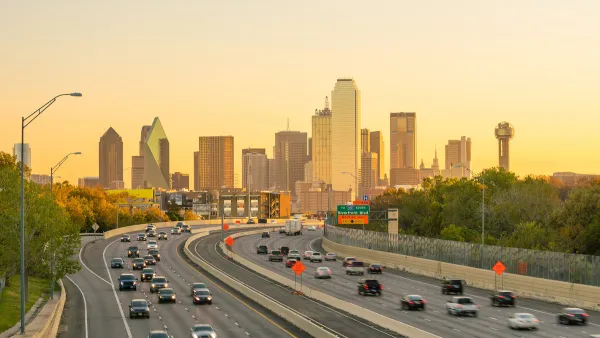
How to Reduce Excess Vehicle Travel
Some experts claim that remote work is the most effective way to reduce vehicle travel, but my research indicates that improving and encouraging walking, bicycling, and public transit can provide larger impacts and benefits.
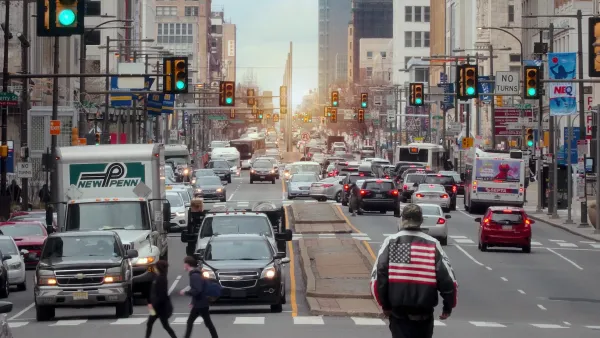
US workers spend nearly an hour a day commuting
High housing costs and return-to-office policies are forcing more American workers to live farther from work, pushing the average daily commute time to nearly an hour.

Planetizen Federal Action Tracker
A weekly monitor of how Trump’s orders and actions are impacting planners and planning in America.

The state-sanctioned urbicide of Austin
People don’t kill cities. Freeways do.

US to reduce Colorado River water deliveries to Mexico
A new Colorado Treaty amendment reduces Mexico’s Colorado River water allocation by 250,000 acre feet.

LA Metro’s ultimatum: no extra buses for LA28 if federal funding isn’t imminently secured
If Metro does not provide additional buses, LA28 organizers will have to find a new way to manage Olympic traffic. LA28’s budget does not include a line item for transit.

Colorado’s Largest Data Center Could Rise Next to Homes — Without a Public Hearing
The proposed campus would consume 11 times the power of Denver International Airport; as it has across the country, opposition mounts.

5 New England states march closer to 800 megawatt wind energy project
Securing federal approval for the project may be complicated under the Trump administration, which has historically been hostile towards domestic wind power.

FREE Course: Walkable City 1: Why Walkability?
After describing his path towards focusing on walkability as the essence of good planning, Jeff Speck marches through his five principal reasons for making more walkable places.
Reinventing Malls: Planning Alchemy—Turning Gray Fields Into Gold
The course focuses on the opportunities and imperatives that shape reinvention of mall sites.

Eagle County Government
Harvard University Graduate School of Design
Nashville Planning Department
The Architects Foundation
University of Cincinnati Online
The Pocatello Development Authority
The Urban Renewal Agency of the City of Pocatello
Journal of the American Planning Association